
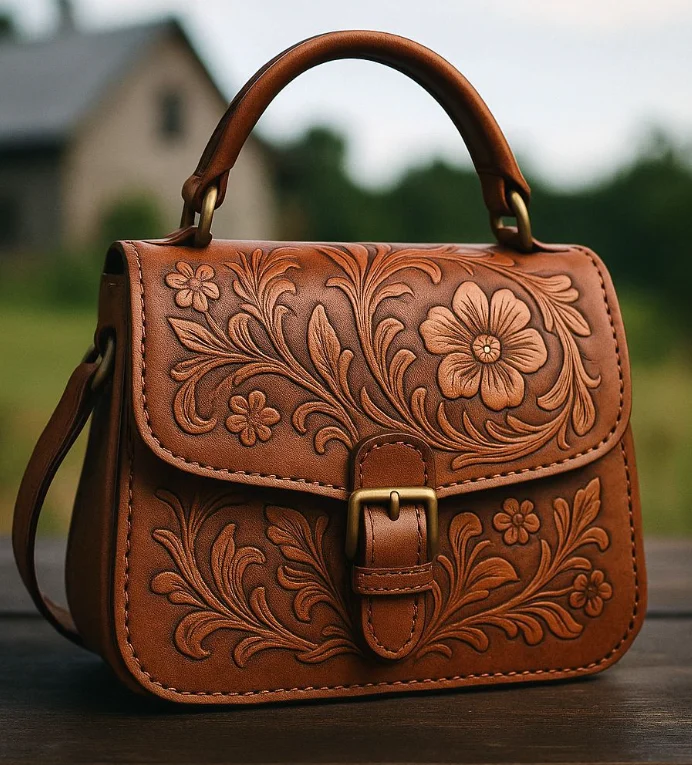
The landscape of public gatherings has undergone a seismic shift over the last decade, transitioning from a free-for-all of personal expression to a highly regulated environment where security protocols dictate our fashion choices. Central to this transformation is the "Clear Bag Policy," a mandate that has rippled through the worlds of professional sports, high-octane music festivals, and even educational institutions. While the demand for high-quality craftsmanship—such as full-grain leather embossed floral handbags—remains a staple for daily life and formal occasions, the pragmatic necessity of transparent gear has birthed a new category of essential accessories. Among the leaders in this functional niche is the USPECLARE Clear Mini Backpack, a product that exemplifies the intersection of safety compliance, affordability, and youthful utility.
To understand the significance of a $9.99 transparent backpack, one must first examine the origin of the stadium-approved movement. Initiated primarily by the NFL in 2013, the clear bag policy was designed to accelerate fan entry into stadiums while enhancing safety by providing security personnel with an unobstructed view of a bag’s contents. This policy was quickly adopted by the NBA, NHL, and major concert venues worldwide. Consequently, the consumer’s dilemma shifted from choosing a bag based on brand prestige to choosing one based on "gate-ready" dimensions and transparency. The USPECLARE Mini Backpack addresses this specific market need, providing a compact 10x8x4-inch solution that meets the standard 12x12x6-inch requirements of most major venues.
The construction of transparent bags has evolved significantly from the flimsy plastic pouches of the past. Modern iterations, like those offered by USPECLARE, utilize heavy-duty, cold-resistant PVC (Polyvinyl Chloride). This material is chosen for its clarity and its ability to withstand temperature fluctuations without cracking—a common failure point in cheaper plastics. At a 0.6mm thickness, the material offers a balance between structural integrity and flexibility. Unlike a full-grain leather handbag which relies on the natural fibers of animal hide for its strength and longevity, a clear PVC bag relies on the quality of its heat-sealed seams and reinforced stitching. For parents purchasing these for children or for festival-goers seeking a lightweight option, the durability of the straps is paramount. USPECLARE employs cross-stitching at the shoulder strap attachments, ensuring that the bag can handle the weight of water bottles, mobile phones, and external batteries without tearing.
While the primary driver for purchasing a clear backpack is utility, the aesthetic component cannot be ignored. The "mini" silhouette has seen a resurgence in fashion, popularized by luxury brands that have experimented with PVC and vinyl in their seasonal collections. By adopting this smaller form factor, the USPECLARE backpack bridges the gap between a utilitarian security tool and a trendy accessory. For children, the transparency offers a fun way to display their belongings, while for adults, it provides a "minimalist" look that can be customized with colorful internal pouches or designer keychains. This customization allows users to maintain a sense of privacy for smaller items—such as wallets or hygiene products—while still complying with the transparency requirements of security checkpoints.
The economic accessibility of the USPECLARE Clear Mini Backpack is perhaps its most compelling feature. Priced at under ten dollars, it positions itself as a "low-barrier" purchase for families and occasional event-attendees. In an era where premium leather goods can cost hundreds of dollars, the affordability of high-quality PVC accessories ensures that safety compliance does not become a financial burden. However, this price point also invites a discussion on the lifecycle of the product. Unlike canvas bags or leather goods that develop a patina and age gracefully over decades, PVC is a synthetic material that requires specific care to maintain its crystal-clear appearance. Users are encouraged to clean the surface with a simple damp cloth and mild soap, avoiding harsh chemicals that can cause the plastic to "cloud" or yellow over time due to UV exposure.
Beyond the stadium gates, the utility of the clear mini backpack extends into the realm of education and workplace security. Many school districts across North America have implemented clear bag policies as part of their comprehensive safety strategies. For younger students, a mini backpack is ergonomically superior to full-sized versions, reducing the strain on developing shoulders and backs. In the workplace—particularly in high-security environments like distribution centers, correctional facilities, and airports—transparent bags are often mandatory for employees. The USPECLARE model serves these demographics effectively, providing enough space for essentials like keys, ID badges, and snacks without the bulk of a traditional rucksack.
The environmental footprint of transparent accessories is a topic of increasing interest among conscious consumers. While full-grain leather is a byproduct of the meat industry and canvas is often made from biodegradable cotton, PVC is a petroleum-based product. Manufacturers are increasingly looking toward TPU (Thermoplastic Polyurethane) as a more eco-friendly alternative, though PVC remains the standard for the $9.99 price bracket due to its cost-efficiency and superior clarity. To mitigate environmental impact, consumers are encouraged to view these bags as long-term tools rather than disposable single-use items. By choosing a model with reinforced straps and thicker plastic, the "throwaway" culture associated with cheap stadium gear can be curtailed.
In terms of logistics, the "stadium-approved" label is a critical marketing differentiator. For a product to be truly stadium-approved, it must not only be clear but must also adhere to specific size constraints. A bag that is too large, even if transparent, will be rejected at the gate, leading to a frustrating experience where fans must either return to their vehicles or pay for expensive locker rentals. The USPECLARE Mini Backpack’s dimensions are specifically tailored to clear these hurdles. Its dual-pocket design—a large main compartment and a smaller front accessory pocket—allows for organized storage, which further speeds up the inspection process as guards can quickly scan different sections of the bag.
The rise of the clear bag is also a reflection of a broader societal trend toward transparency and the "nothing to hide" philosophy. In the digital age, where privacy is often debated, our physical belongings have become the next frontier of public visibility. For some, the clear bag is a symbol of the loss of privacy; for others, it is a small concession for the collective peace of mind found in secure public spaces. Regardless of the philosophical stance, the market data suggests that the demand for these items is only growing. The USPECLARE brand has tapped into this by focusing on the "Little Boys & Girls" demographic, recognizing that children are often the most affected by changing school and event policies.
When comparing the USPECLARE Clear Mini Backpack to the luxurious allure of an embossed floral leather handbag, we see two different sides of the modern consumer’s wardrobe. The leather bag represents identity, craft, and personal history. The clear backpack represents participation, safety, and the shared rules of the modern world. Both have their place. A person might use the leather handbag for a dinner date or a business meeting, but when Sunday afternoon rolls around and the stadium lights flicker on, the clear backpack becomes the indispensable companion.
As we look to the future, the integration of technology into these transparent vessels is the next logical step. We may soon see clear bags with integrated solar panels for charging devices or RFID-blocking transparent pouches to protect digital data while keeping physical items visible. For now, the USPECLARE Clear Mini Backpack stands as a testament to the power of functional design. It proves that a product does not need to be expensive or made of exotic materials to solve a real-world problem. For $9.99, it offers a ticket to the game, a pass to the concert, and a sense of preparedness in an unpredictable world. It is a humble, transparent shield that allows life’s most exciting moments to proceed with one less worry.