
As the global manufacturing landscape grapples with an unprecedented convergence of economic and operational pressures, the unveiling of transformative technology becomes a pivotal moment for the industry. At the upcoming PACK EXPO, Syntegon, a global leader in processing and packaging technology, is set to introduce its "neXt" packaging solution to the North American market for the very first time. This launch represents more than just a new iteration of machinery; it is a comprehensive response to the systemic challenges currently hollowing out the margins of food manufacturers worldwide. From the relentless rise of raw material and energy costs to the crippling shortage of skilled technical labor, the industry is at a crossroads. Syntegon’s neXt system arrives as a modular, intelligent, and highly automated framework designed to navigate these complexities through a philosophy of future-proofing and operational autonomy.
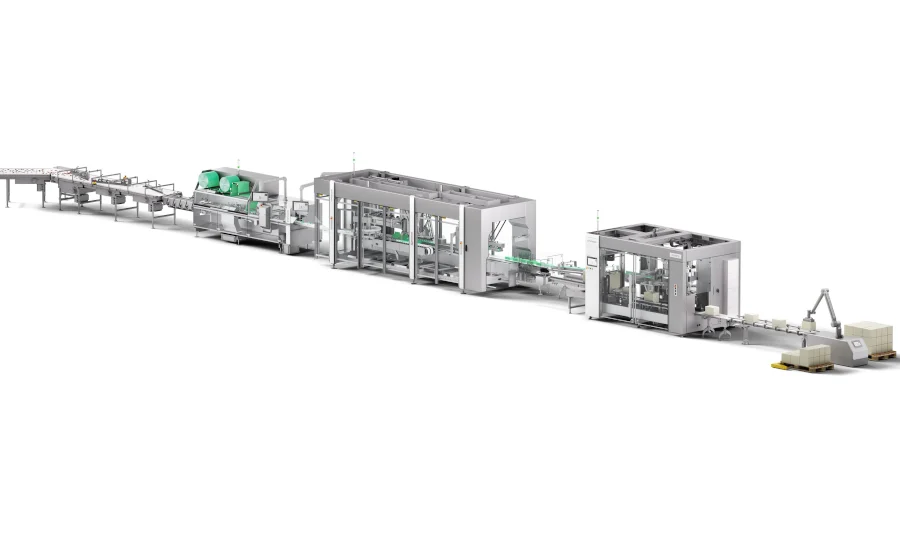
The neXt system is built upon a foundation of three core guiding principles: seamless operation, smart decisions, and touchless automation. These are not merely marketing catchphrases but are the architectural pillars of a system designed to eliminate the traditional bottlenecks of the packaging line. By integrating these principles, Syntegon aims to provide manufacturers with a pathway to transition from rigid, high-maintenance production lines to fluid, self-optimizing ecosystems. The North American debut will feature a live, integrated demonstration of this synergy, showcasing how primary and secondary packaging can function as a singular, cohesive unit.
Central to this debut are two flagship platforms: the HFX flow-wrapping system for primary packaging and the TRX topload cartoning system for secondary packaging. When combined with Syntegon’s sophisticated robotic pick-and-place technology, these machines form an end-to-end solution that addresses the entire lifecycle of a product’s journey from the processing line to the shipping case. The live demonstration at Booth S-3514 is expected to be a focal point of the event, illustrating how high-speed production can coexist with extreme flexibility and minimal human intervention.
One of the most significant shifts in the neXt architecture is its move toward total modularity. In the past, purchasing a packaging machine was often a static investment; the machine’s capabilities were fixed at the time of purchase, and any major change in product dimensions or packaging material often required the acquisition of entirely new assets. Syntegon has dismantled this model with the neXt system. Both the HFX and TRX platforms are designed as "building blocks." They are inherently retrofit-capable, allowing manufacturers to scale their operations or pivot to new market trends without the traditional capital expenditure associated with a full line replacement. As requirements evolve—whether that means a shift toward sustainable, paper-based films or the need for advanced digital tracking—the neXt system allows for the seamless addition of new automation functions and sealing technologies.
The "touchless automation" aspect of the neXt system is perhaps its most provocative feature, specifically targeting the "human element" of production which has become a significant vulnerability due to labor shortages. Syntegon’s approach seeks to automate recurring, non-value-adding activities that typically require a dedicated operator. This is achieved through a sophisticated interplay between the machinery and autonomous mobile robots (AMRs). In a traditional setup, an operator must manually monitor and replace film reels or cardboard blanks, leading to downtime if the timing is missed. Under the neXt framework, AMRs independently supply the machines with materials, while high-performance splicing systems in the flow-wrapping units enable film changes without stopping the line. This creates a "dark factory" capability where packaging lines can operate for extended periods—potentially hours—without a single human touch. This does not merely replace workers; it elevates them, freeing up the remaining staff to focus on high-level quality control and strategic oversight rather than the rote physical labor of material replenishment.
The HFX platform, which will be represented at the show by the HFX3 model, is a powerhouse of primary packaging. Designed for medium- to high-speed production, the HFX3 is capable of reaching speeds of up to 1,000 products per minute. However, speed is only part of the equation. In today’s market, the ability to handle a diverse range of materials is paramount. The HFX3 is engineered to support a wide variety of both cold- and heat-sealing technologies, specifically optimized to process eco-friendly, paper-based materials without compromising the integrity of the seal or the speed of the line. This is a critical development as global regulations tighten around plastic usage. The machine’s physical flexibility is equally impressive, accommodating product lengths ranging from 2 to 12 inches and widths from 0.5 to 7.5 inches, making it an ideal choice for everything from small confectionery items to larger bakery products.
Moving down the line, the TRX platform extends this modular philosophy into the realm of secondary packaging. As the link between the primary wrap and the final retail carton, the TRX platform is designed to be as compact as it is capable. One of the primary pain points for secondary packaging has always been the complexity of format changes. Transitioning a machine from a 6-count box to a 12-count box often requires hours of mechanical adjustments and a high degree of technical expertise. The TRX platform revolutionizes this process with guided, verified, or even semi-automated format-change features. Syntegon claims that format changes can now be completed in as little as 10 minutes. Furthermore, the system significantly reduces the number of physical format parts required, which simplifies inventory management and reduces the margin for error. This makes the machinery accessible even to less experienced operators, directly mitigating the impact of the skilled labor gap.
The TRX21, which will be on display, demonstrates the scalable output of the TRX family. While the platform as a whole can reach speeds of 200 cartons per minute, the TRX21 is optimized for an infeed speed of up to 1,500 products per minute and an output of 80 cartons per minute. This high-speed infeed capability ensures that the secondary packaging stage never becomes a bottleneck for the lightning-fast HFX flow-wrapper preceding it.
Beyond the hardware, the neXt system is defined by its "smart decision" capabilities. This involves the integration of advanced software that monitors machine health and performance in real-time. By utilizing IIoT (Industrial Internet of Things) connectivity, the neXt system provides operators and plant managers with actionable data, allowing for predictive maintenance rather than reactive repairs. This data-driven approach ensures that the "seamless operation" promised by Syntegon is maintained over the long term, maximizing the Total Cost of Ownership (TCO) for the manufacturer.
The debut of the neXt system at PACK EXPO comes at a time when North American food manufacturers are under immense pressure to modernize. The era of the "standard" production line is ending, replaced by a need for agility. Consumer preferences are shifting faster than ever, with a demand for variety packs, sustainable materials, and personalized packaging styles. A rigid production line is a liability in such an environment. Syntegon’s neXt system, with its modular architecture and autonomous capabilities, offers a blueprint for a more resilient manufacturing future. It provides the tools to handle today’s high-speed demands while remaining flexible enough to adapt to the unknown requirements of tomorrow. For attendees at PACK EXPO, the Syntegon booth will offer a glimpse into a future where the packaging line is no longer a series of isolated machines, but a singular, intelligent, and nearly autonomous entity.