
The global packaging industry is currently witnessing a tectonic shift in geographic focus, as major players pivot their capital and innovation toward Latin America. Long viewed as a region of untapped potential, the vast territory stretching from the Rio Grande to Tierra del Fuego has evolved into a sophisticated battlefield for flexible packaging dominance. Driven by a potent mix of rapid urbanization, a burgeoning middle class with rising disposable incomes, and the strategic "nearshoring" of manufacturing, Latin America is no longer just a peripheral market; it is a central pillar of global expansion strategies. Recent developments from industry leaders like UFlex, AeroFlexx, Goglio, and Kraft Heinz underscore a broader trend: the region’s consumer habits are maturing, and the packaging sector is racing to keep pace with demands for sustainability, convenience, and specialized performance.
In Mexico, the momentum is particularly palpable in the industrial corridors of Altamira. UFlex Limited, the Indian multinational that stands as a titan in the global packaging and solutions space, recently signaled its commitment to the Americas by commissioning its first overseas woven polypropylene (WPP) bags manufacturing plant. This is not a modest entry; it is a $52 million statement of intent. Spanning a massive 10-acre footprint, the facility is designed to serve a market that many observers might overlook: the high-performance pet food sector.
The logic behind UFlex’s investment is rooted in a fundamental shift in Latin American demographics and social behavior. As Jeevaraj Gopal Pillai, President of Flexible Packaging and New Product Development at UFlex, has noted, the "humanization" of pets is a powerful economic engine across both North and South America. In cities from Mexico City to Buenos Aires, pets are increasingly viewed as family members, leading to a surge in demand for premium, nutrient-dense kibble that requires specialized packaging to maintain freshness and prevent spoilage. WPP bags offer the durability and moisture resistance necessary for these high-value products. By establishing a local manufacturing base in Mexico, UFlex is not only tapping into the domestic market but also positioning itself as a key supplier for the entire Western Hemisphere, leveraging Mexico’s strategic trade agreements and proximity to the United States.
Further south, the innovation narrative shifts from durability to sustainability and liquid logistics. AeroFlexx, a company that has gained international acclaim for its disruptive liquid packaging technology, is making aggressive moves into Central America and the Andean region. Through a strategic partnership with Plastic Films Internacional SA (PLAFILM), AeroFlexx is introducing its unique "air-supported" flexible packaging to Colombia, Venezuela, and the surrounding territories.
The AeroFlexx technology represents a radical departure from traditional rigid plastic bottles. By using a flexible film that gains structure through integrated air ribs, the packaging uses significantly less plastic, reduces shipping weight, and offers a superior consumer experience through controlled dispensing. This partnership is a classic example of synergy: AeroFlexx provides the cutting-edge, award-winning technology (evidenced by its selection for the 2026 Steve Fairfield Memorial Award for Flexible Packaging Innovation), while PLAFILM provides the indispensable local market intelligence and established relationships with multinational corporations operating in the region. For manufacturers in Colombia and Central America, this move offers a path toward meeting ambitious ESG (Environmental, Social, and Governance) targets without sacrificing the economic efficiency of their supply chains.
The coffee-rich landscape of Brazil provides another focal point for this regional transformation. Brazil is the world’s undisputed heavyweight champion of green coffee production, but the value-added segment—roasted and packaged coffee—is where the real industrial battle is being fought. Goglio, the Italian leader in flexible packaging and degassing valves, has moved to consolidate its footprint in the South American giant. Through its subsidiary, Mega Goglio, the company recently finalized the 100% acquisition of Cristal Embalagens, a specialist producer based in Morro da Fumaça, Santa Catarina.

This acquisition is a masterstroke of vertical and horizontal integration. Goglio has maintained a commercial presence in Brazil for fifteen years, but its recent shift toward direct production—starting with the 2023 acquisition of Mega Embalagens—marks a new era of localized dominance. By absorbing Cristal Embalagens, Goglio is securing its grip on the coffee packaging supply chain. The synergy allows them to provide sophisticated barrier films and valve technology to Brazilian roasters who are increasingly looking to export finished products rather than just raw beans. It is a play for the heart of the Brazilian economy, ensuring that as long as the world drinks coffee, Goglio will be the one wrapping it.
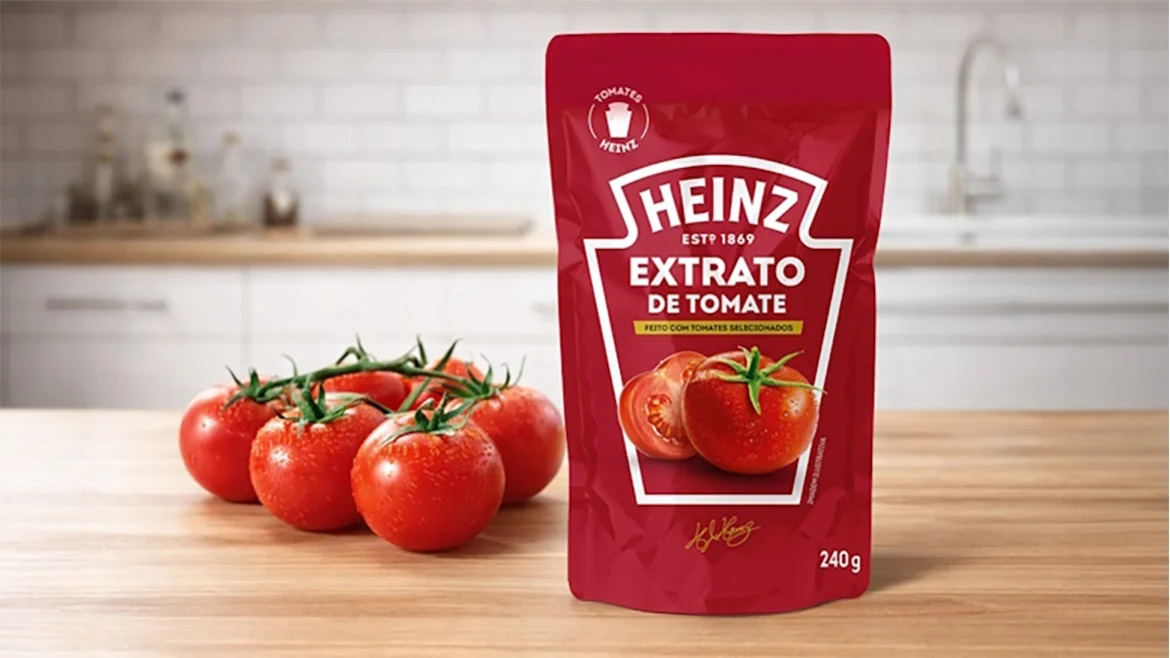
While industrial suppliers are building the infrastructure, consumer-facing giants are reinventing how staple goods reach the kitchen table. Kraft Heinz Brasil is a prime example of this evolution. The company has set an ambitious goal to double its Brazilian revenues by 2030, and the cornerstone of this strategy is a pivot toward flexible formats in traditional categories. The recent launch of Heinz-branded tomato paste in a 240-gram stand-up pouch is more than just a product rollout; it is a strategic repositioning.
Traditionally, tomato paste in Brazil was often sold in rigid cans or glass jars. However, the shift to the stand-up pouch (SUP) format reflects a global trend toward "pouchification." For the consumer, the pouch offers easier storage, less waste, and a lower price point. For Kraft Heinz, the benefits are even more profound. The pouches are filled at the company’s Nova Goiás facility using tomatoes grown entirely within Brazil, creating a localized "seed-to-shelf" ecosystem. This reduces the carbon footprint associated with importing packaging materials and allows for more efficient logistics, as empty pouches take up a fraction of the space required by empty cans or jars. It is a calculated move to dominate the tomato-based product category by aligning with the modern Brazilian consumer’s preference for convenience and brand prestige.
The convergence of these four distinct stories—UFlex in Mexico, AeroFlexx in the Andean region, Goglio in the southern Brazilian industrial heartland, and Kraft Heinz in the agricultural center of Goiás—paints a picture of a region in the midst of an industrial renaissance. Several macro-economic factors are fueling this "Packaging Gold Rush."
First, the fragility of global supply chains exposed during the early 2020s has led to a "regionalization" of manufacturing. Companies are no longer content to ship packaging components halfway across the world. They want production close to the point of consumption. Second, the regulatory environment in Latin America is increasingly favoring sustainable alternatives. Countries like Chile and Mexico are implementing strict plastic reduction laws, forcing companies to innovate with flexible, recyclable, and lightweight materials. Third, the rise of e-commerce in Latin America, which has seen some of the highest growth rates globally, requires packaging that can survive the "last mile" of delivery without the bulk of traditional rigid containers.
As we look toward the end of the decade, the investments made by these companies will likely serve as the blueprint for the next generation of global trade. The transition from rigid to flexible packaging is not merely a change in material; it is a fundamental rethinking of how resources are used, how brands communicate with consumers, and how multinational corporations navigate a world of localized demands.
The message from Altamira to Santa Catarina is clear: Latin America is no longer just a market for finished goods; it is a sophisticated hub for packaging innovation. Whether it is a bag of premium dog food in Mexico, a sustainable soap refill in Colombia, a vacuum-sealed brick of coffee in Brazil, or a pouch of tomato paste in a Goiânia kitchen, the future of the global packaging industry is being written in the languages of the South. These expansions signify a vote of confidence in the region’s economic resilience and its pivotal role in the global supply chain of the 21st century. For those watching the industry, the sights are set firmly on Latin America, where the next chapter of flexible packaging excellence is already unfolding.