
In the contemporary landscape of corporate branding, the distinction between "promotional merchandise" and "retail-grade luxury" has become the primary battleground for brand managers seeking to leave a lasting impression. For the modern B2B buyer, a bag is no longer just a vessel for a logo; it is a complex engineering project that must balance aesthetic audacity with industrial-strength durability and seamless international distribution. The Bag Workshop recently demonstrated this synergy through a high-stakes collaboration with a premier creative agency, transforming a conceptual vision of a dual-strap, multi-material carryall into a tangible reality for a global audience. This project serves as a definitive case study in how technical manufacturing expertise and sophisticated logistical planning can elevate a brand’s physical touchpoints from the mundane to the extraordinary.
The project was initiated by a creative agency renowned for its uncompromising approach to brand experiences. Their client required a product that defied the conventions of the standard tote bag—an "unusual, reliable, and durable" accessory that felt like a premium retail acquisition. The agency’s brief was technically demanding, calling for a dual-handle system featuring both short hand-carry straps and long shoulder straps, integrated into two distinct designs: a high-clarity transparent tote and a sleek, weather-resistant vertical canvas bag. To execute this, The Bag Workshop had to move beyond traditional assembly methods, employing advanced material science and structural reinforcement techniques to ensure the final products could withstand the rigors of daily professional use across multiple continents.
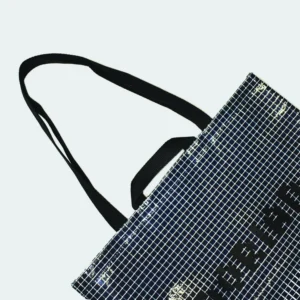
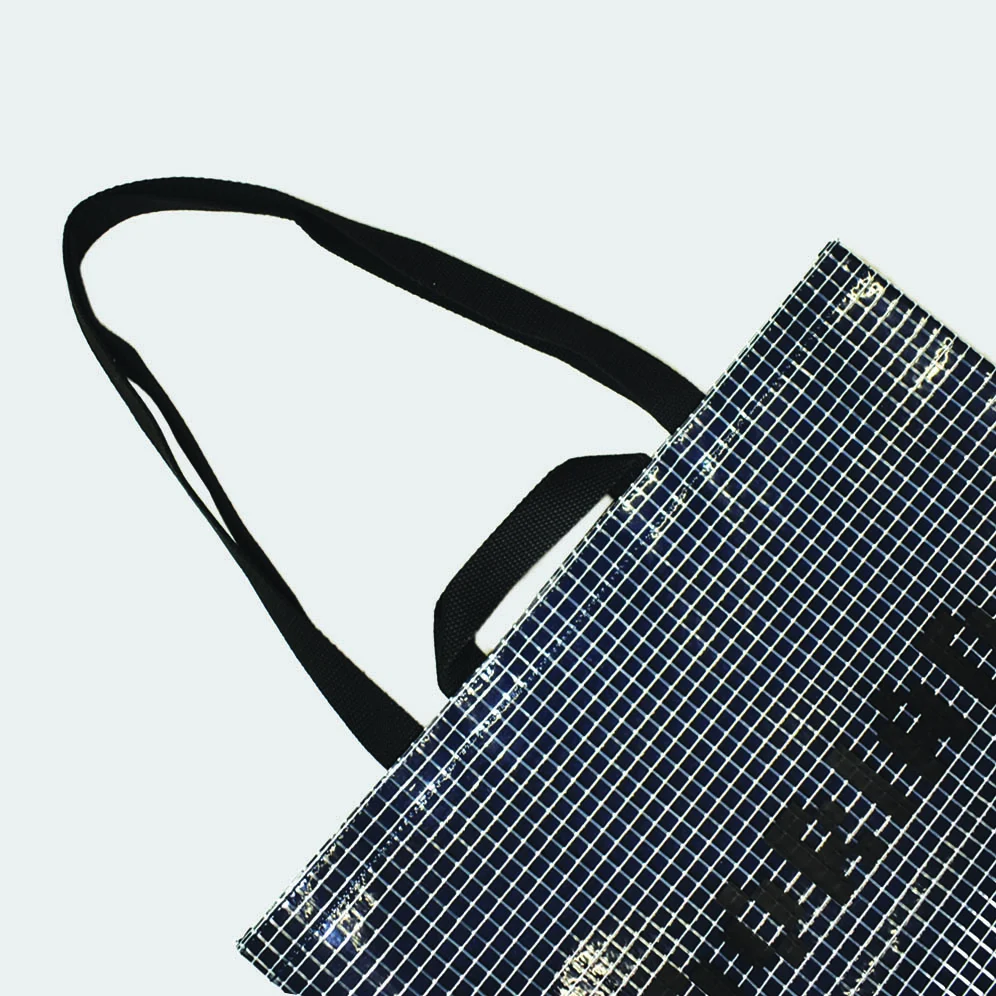
The first challenge lay in the engineering of the Innovative Transparent Tote. While transparent bags are often relegated to flimsy security-check accessories, this brief demanded a heavy-duty, professional-grade version. The Bag Workshop’s specialists selected high-gauge TPU (Thermoplastic Polyurethane) over standard PVC, citing TPU’s superior flexibility, environmental credentials, and resistance to the yellowing and cracking that often plagues clear plastics. To add a layer of sophisticated branding, the design featured an internal navy felt lining that remained visible through the transparent exterior. This was not merely an aesthetic choice; the felt provided a protective buffer for laptops and documents, while the contrast between the industrial clear shell and the soft, deep-blue interior created a striking visual depth. Branding was executed via high-adhesion screen printing and a precision-stitched woven label on the side panel, ensuring the logo remained vibrant even under heavy friction.
The second component of the project, the Portrait Canvas bag, focused on sleek verticality and environmental resilience. Portrait-oriented bags present unique structural challenges, as the center of gravity shifts and the vertical seams must bear more tension. This design utilized a weather-resistant substrate, treated to repel moisture and protect contents in diverse global climates. Like its transparent counterpart, it featured the signature dual-handle system. The Bag Workshop’s engineering team utilized cross-box stitching and internal webbing reinforcements at the strap attachment points, ensuring that whether the bag was carried by its short handles or slung over the shoulder, the silhouette remained crisp and the load distribution remained balanced.
The success of such a complex manufacturing run is inherently tied to "Structured Project Coordination." When working with creative agencies, the role of the manufacturer is to act as a bridge between a 2D concept and a 3D product. The Bag Workshop facilitated this through a rigorous prototyping phase, providing the agency with physical samples that allowed for tactile testing of strap lengths, material weights, and ink durability. This iterative process eliminated the risks associated with mass production, ensuring that every unit in the final run met the exacting standards of the end-client.
However, manufacturing is only half of the equation in a globalized economy. The Bag Workshop, as part of The Wurlin Group, leveraged a robust international logistics network to manage the distribution of these custom items. Navigating the complexities of international freight—including customs clearances, tariff classifications, and multi-hub delivery schedules—is often where bespoke projects falter. By managing the process end-to-end, Wurlin ensured that the bags arrived at their global destinations on time and in perfect condition, bypassing the common pitfalls of cross-border shipping. This logistical mastery allows brand managers to focus on campaign strategy while the heavy lifting of global supply chain management is handled by specialists.
The results of this collaboration were superlative. The agency’s creative vision was realized in a product that achieved high "daily utility" for the end-users, thereby maximizing brand exposure. The end-client received a bespoke merchandise solution that reflected their commitment to quality and innovation, far surpassing the impact of off-the-shelf alternatives.
Technical and Logistical FAQ for Custom Bag Engineering
How does a dual-handle system impact the structural integrity of a custom bag?
Integrating both short and long shoulder straps creates multiple stress points on the bag’s hem and side panels. To prevent tearing or distortion, we utilize "anchor reinforcement." This involves sewing the straps deep into the body of the bag or using hidden internal nylon webbing. For premium B2B products, we often employ heavy-duty bar-tack stitching or metal rivets at these junctions to ensure the bag can carry professional loads, such as 15-inch laptops and heavy portfolios, without compromising the seam’s lifespan.
What are the primary differences between PVC and TPU for transparent professional bags?
While both provide clarity, TPU (Thermoplastic Polyurethane) is the preferred choice for luxury and professional applications. TPU is more abrasion-resistant, has a softer hand-feel, and remains flexible in sub-zero temperatures where PVC might become brittle and crack. Furthermore, TPU is more eco-friendly as it is biodegradable over longer periods and does not contain the phthalates often found in standard PVC. For a global distribution project, TPU’s durability ensures the product survives the varied climates of international markets.
How is branding applied to non-traditional materials like clear plastic or treated canvas?
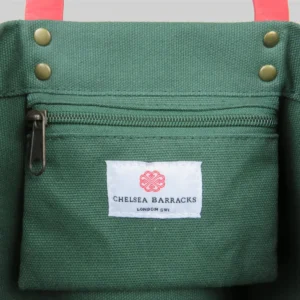
Branding on clear materials requires specialized UV-cured inks or high-bond flexible screen-printing inks that "bite" into the surface. Standard inks would simply flake off when the bag is flexed. For treated or weather-resistant canvas, we often recommend woven labels or embossed leather patches, as direct printing can sometimes be compromised by the material’s water-repellent coating. Placing a woven label on the outside seam, as seen in this case study, provides a subtle, high-end retail feel that standard center-front printing cannot replicate.
What role does "Global Supplier Reach" play in reducing costs for bespoke projects?
Having a global supplier network means we can source specific components from regions that specialize in them—for example, high-tech weather-resistant fabrics from specialized mills in Asia or precision hardware from European manufacturers—and then coordinate assembly in a facility that offers the best balance of craft and cost-efficiency. This flexibility allows us to meet highly specific briefs, like the one from the creative agency in this study, without being limited by the machinery or material stock of a single local factory.
Why is international logistics management critical for B2B merchandise campaigns?
A bespoke bag is only valuable if it arrives in the right hands at the right time. International shipping involves navigating Incoterms, complex customs documentation, and local taxes (VAT/GST). The Wurlin Group manages this entire "last-mile" process. By handling the freight forwarding and customs brokerage internally, we prevent the delays and unexpected "hidden costs" that often occur when clients attempt to manage global distribution through standard courier services.
How does the "Portrait" shape affect the manufacturing of weather-resistant totes?
Portrait-shaped bags are taller and narrower, which can lead to a "tunnel" effect where items at the bottom are hard to reach. To counter this, we often engineer a wider base gusset and use stiffer internal stabilizers so the bag stands upright when placed on the floor. For weather resistance, the vertical seams are the most vulnerable; we use "folded-over" seam construction or high-frequency welding to ensure that rain runs off the surface rather than seeping through the stitch lines.
What is the benefit of partnering with a group like Wurlin for multi-category branding?
The Bag Workshop is part of The Wurlin Group, which specializes not just in bags, but also in bespoke umbrellas, high-end packaging, and custom textiles. This allows brand managers to maintain "brand harmony" across different product categories. If a client needs a custom bag, a matching umbrella, and luxury gift packaging, we can ensure that the Pantone colors, material textures, and logo placements are identical across all items, providing a cohesive brand experience that off-the-shelf vendors cannot match.