
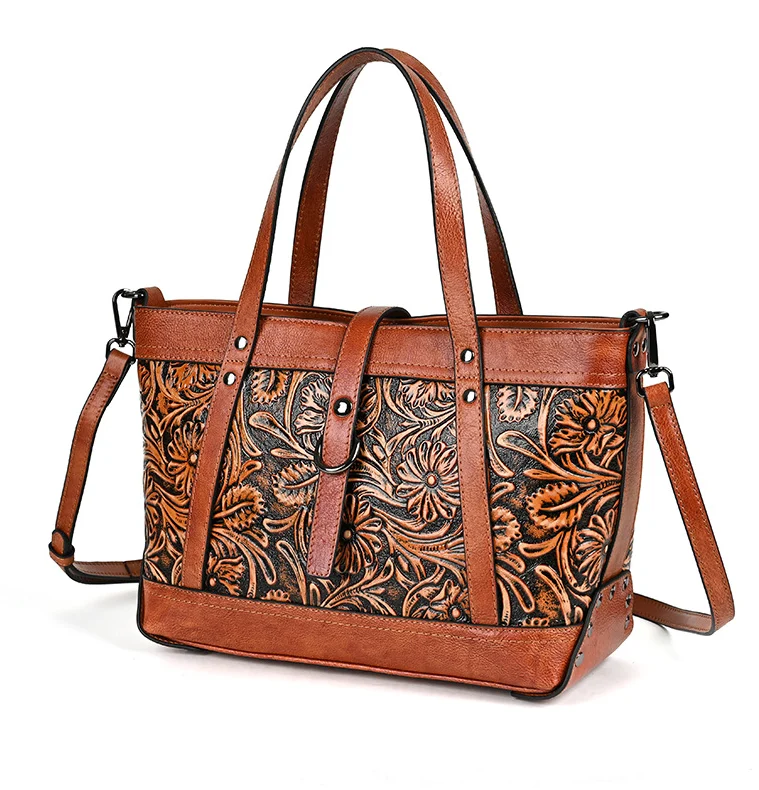
Across the global retail landscape, the concept of personal carry is undergoing a seismic transformation, caught between two radically opposing design philosophies. On one end of the spectrum lies the resurgent reverence for bespoke, heritage goods: the expansive, hand-carved vegetable-tanned leather tote that takes weeks of artisan labor to carve, burnish, and assemble. On the opposite end thrives the hyper-functional, featherweight minimalism of the ultra-budget everyday carry (EDC) sling—a compact, synthetic travel companion engineered purely to ferry a smartphone, passport, and key fob for less than the cost of a sit-down lunch.
Recent disruptions across e-commerce marketplaces highlight this curious juxtaposition. Catalog entries that once belonged exclusively to luxury bespoke leatherwork have increasingly crossed paths with high-velocity algorithmic favorites: compact crossbody travel packs designed for modern transit. While disparate in material and ethos, these two paradigms represent the polarized needs of today’s consumer. One offers an emotional, tactile anchor to timeless craftsmanship; the other provides an indispensable, frictionless response to a world governed by digital mobility.
The Sacred Art of the Vegetable-Tanned Heirloom
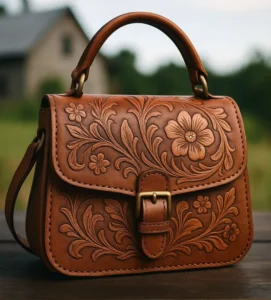
To understand the enduring allure of a hand-carved vegetable-tanned leather tote, one must examine the slow, methodical history of natural leather processing. Unlike modern chrome tanning, which relies on chromium salts and synthetic chemicals to pickle raw hides within hours, vegetable tanning is an organic craft spanning millennia. Utilizing condensed tannins harvested from the barks, leaves, and roots of chestnut, oak, and quebracho trees, tanners soak raw hides in sequential pits for upwards of sixty days.
The resulting material is unmistakable in character. Vegetable-tanned leather retains the natural grain, micro-textures, and individual markings of the cowhide. It possesses a distinct, earthy scent, a firm hand, and a structural density that responds uniquely to pressure and moisture. This rigidity makes it the premier canvas for hand-carving and tooling. Leather artisans, utilizing swivel knives, bevelers, and pear shaders, manually press intricate botanical and geometric reliefs into the damp surface of the grain.
Beyond its structural permanence, the primary appeal of vegetable-tanned leather lies in its living finish. As the years advance, sunlight, atmospheric oils, and human touch catalyze an oxidative process known as patination. Where mass-produced synthetic bags merely show wear and tear, an artisan tote darkens, softens, and gains character, documenting decades of daily journeys. It is a slow-fashion investment designed not for seasons, but for generations.
The Rise of the Ultra-Minimalist Travel Pack
Directly across the ideological aisle sits the modern phenomenon of the micro-sling. Driven by technological convergence and the death of physical ephemera, consumers are rapidly downsizing their everyday gear. Coins and paper bills have surrendered to contactless tap-to-pay apps; keys have been swapped for digital fobs or miniaturized sets; and bulky guidebooks, cameras, and notepads have collapsed entirely into the palm of a smartphone.
In response to this streamlined digital existence, the demand for compact, weather-resistant crossbody phone bags has exploded. Priced frequently within the budget-conscious tier of $10 to $20, these lightweight accessories—often constructed from tear-resistant nylon, coated polyester, or high-density ripstop—offer pure utility. Wearers swing them diagonally across the chest or slung low over the hip, granting instantaneous, theft-deterrent access to boarding passes, transport cards, wireless earphones, and passports.
For the contemporary commuter, city stroller, or international backpacker, these minimalist pouches solve an immediate ergonomics problem: pockets stuffed to their seams create discomfort and ruin the drape of casual apparel, while a full-sized backpack or shoulder bag introduces unnecessary heft. The small chest bag delivers total freedom of movement without visual pretension.
Algorithmic Turbulence and Marketplace Evolution
The blending of these two distinct carry archetypes within the same digital retail corridors sheds light on the algorithmic machinery powering contemporary e-commerce. Online marketplaces rely on complex search engine optimization (SEO) networks and behavioral tracking to match buyers with trending accessories. When shoppers toggle between researching heirloom investment items—like durable travel totes—and impulse-purchasing low-friction everyday utilities like mini slings, consumer profiles overlap.
Behind the scenes, third-party merchants and algorithmic aggregators constantly adjust their listings. A digital merchant may maintain a digital storefront category originally calibrated for leather carry-alls, only to pivot inventory toward viral, high-velocity travel chest bags to capitalize on seasonal surges in budget-friendly holiday travel. This dynamic marketplace fluidity produces fascinating contrasts where artisanal leather terminology and factory-fresh utility gear share the same storefront real estate.
Yet, far from confusing buyers, this intersection reflects a growing trend in consumer behavior: the hybrid wardrobe. The modern consumer rarely relies on a singular accessory profile. Instead, the boundary between luxury investment and everyday practicality has grown fluid.
Lifecycle Economics: Craftsmanship vs. Disposable Utility
The dramatic variance between a handcrafted leather tote and a compact budget sling prompts essential questions regarding environmental sustainability, production ethics, and cost-per-wear calculus.
From an ecological standpoint, vegetable-tanned leather represents a biodegradable, renewable by-product of the global cattle industry when responsibly managed, treated with organic matter, and stitched with cotton or linen thread. Its environmental cost is front-loaded in the agricultural stage, but mitigated across decades of continuous utility. A well-constructed tote may cost hundreds of dollars upfront, yet its true cost per use drops to pennies over a twenty-year operational lifespan.
Conversely, budget-oriented micro-slings are almost entirely petroleum-derived. Synthetic weaves require fossil fuels for extrusion and often shed microplastics during laundering, but their manufacturing requires significantly less water and agricultural acreage than livestock farming. When manufactured with durable hardware and reinforced stitching, a synthetic pack can easily survive rain, abrasion, and relentless travel abuse. However, at lower price thresholds, synthetic accessories are frequently discarded at the first sign of a jammed zipper or snapped buckle, amplifying global textile waste.
For conscious consumers, the challenge lies in demanding durability regardless of price point: insisting on robust YKK zippers and reinforced webbing in budget accessories, while demanding supply chain transparency and ethical tanning from high-end leather houses.
The Symbiotic Future of Carrying
Rather than existing in mutual opposition, the artisanal leather tote and the minimalist micro-sling are steadily converging into an integrated travel methodology. Savvy travelers and busy urban professionals have embraced a dual-bag strategy that synthesizes the best aspects of both items.
The hand-carved vegetable-tanned tote functions as the macro-vessel—an elegant, authoritative workhorse capable of carrying laptops, documents, a water bottle, knitwear, and daily purchases. It rests easily on the floor of a train or beneath an airplane seat, exuding quiet craftsmanship and professional poise. Tucked neatly inside is the lightweight mini sling. The moment the traveler reaches their destination, drops off their luggage, or ventures out for an evening walk, the micro-bag is deployed: slung across the chest with only a phone, room key, and credit card in tow.
Ultimately, whether bound in hand-carved full-grain hide or woven from high-tensile technical fabric, the tools humans use to transport their personal belongings remain deeply personal extensions of daily life. As global lifestyles fluctuate between the speed of digital mobility and the craving for tactile permanence, the luggage landscape proves that there is ample room for both the timeless poetry of leather and the razor-sharp efficiency of the modern sling.