
The contemporary accessory landscape is undergoing a profound structural shift, driven by a consumer base that demands both tactile distinctiveness and uncompromising functional performance. For years, the personal carry market remained neatly bifurcated: on one end lay the realm of artisanal fashion accessories, celebrated for their soft structures and bespoke craft, while on the other stood utilitarian athletic gear, engineered solely for durability, volume, and weather resistance. Today, that boundary has largely dissolved. Modern commuters, students, and lifestyle enthusiasts increasingly demand bags that bridge the gap between design-forward aesthetics and athletic-grade resilience. From the rising prominence of handmade woven neoprene shoulder silhouettes to the perennial market dominance of high-capacity sport carriers like the Nike Unisex Adult Gameday Brasilia X Backpack, the standard for daily carry has been fundamentally rewritten around versatility, material innovation, and realistic pricing.
At the heart of this market evolution is a transformation in consumer values. Accessories are no longer viewed merely as functional vessels for transporting personal belongings; they serve as mobile hubs for modern existence. The sudden juxtaposition of luxury-inspired textile manipulations—such as woven neoprene—with engineered high-density athletic packs underlines how diverse the concept of everyday utility has become. Consumers navigating urban commutes, fitness routines, hybrid work environments, and international travel require items that can adapt instantaneously across varied settings without sacrificing personal style or fiscal pragmatism.
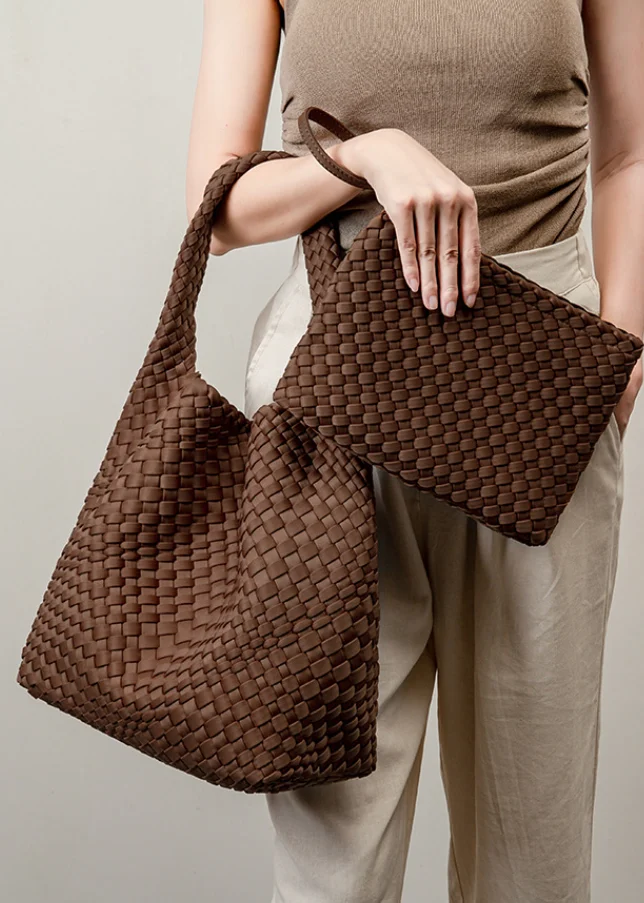
To understand the modern carry movement, one must examine the rise of woven neoprene. Historically confined to maritime equipment, aquatic sporting gear, and technical orthopedics, neoprene (polychloroprene) has emerged as one of fashion’s most dynamic synthetic textiles. In its conventional sheet form, neoprene provides exceptional shock absorption, thermal stability, and water resistance. However, when sliced into pliable ribbons and interlaced through artisanal hand-weaving techniques, the synthetic rubber undergoes an aesthetic metamorphosis.
A handmade woven neoprene shoulder bag represents a bridge between high-end industrial design and traditional basketry. The weaving process introduces multi-dimensional texture and breathability to a fabric that is notoriously dense. Because neoprene naturally resists creasing, cracking, and moisture damage, woven variations yield a structural integrity that soft cotton canvas or fragile faux leathers cannot match. The physical cushion inherent to the textile provides built-in protection for fragile electronics, such as tablets and smartphones, eliminating the need for bulky interior padding. Moreover, the tactile quality—soft, squishy, and lightweight—offers an ergonomic comfort that reduces strain on the shoulder, making it an ideal candidate for transitional lifestyle wear that flows seamlessly from casual corporate settings to evening outings.
Simultaneously, the demand for performance-driven technical packs continues to set sales records across global retail channels. The athletic backpack market, exemplified by benchmarks such as the Nike Brasilia X Gameday series, reflects an engineering philosophy anchored in spatial efficiency and ergonomic support. Available in universal 24-liter and expanded 30-liter volumes, these bags cater to a demographic that measures utility through capacity, compartment segmentation, and ballistic durability.
The structural demands placed on an athletic backpack are uncompromising. Constructed from tightly woven, high-denier polyester, a performance bag must resist abrasion, endure heavy tensile strain at stress points, and shield interior contents from sudden meteorological shifts. The 24-liter iteration serves as an optimized baseline for standard commuter needs, easily accommodating a 15-inch laptop, charging cables, documents, and gym attire. Conversely, the 30-liter configuration expands into multi-day travel or specialized athletic gear storage, offering isolated footwear compartments that separate soiled cleats or running shoes from clean apparel.
What unites artisanal woven neoprene designs and mass-market athletic backpacks is their shared prioritization of ergonomic load distribution. While a woven shoulder bag relies on wide, pliable straps to disperse weight across the trapezius muscle without pinching, a technical backpack leverages contoured, padded shoulder harnesses and breathable rear mesh panels. Both approaches acknowledge that carrying daily essentials in a mobile-first society causes physical fatigue unless structural engineering actively mitigates pressure points.
Pricing dynamics also play a central role in this market intersection. Recent retail tracking showcases that the $50 benchmark represents a critical psychological and economic threshold for everyday lifestyle and athletic bags. At this accessible price point, consumers expect commercial-grade durability paired with elevated utility. The accessibility of high-performance gear, like the $50 Nike Brasilia Gameday, has set a high standard for entry-level luxury and indie fashion brands. For artisanal creators—such as independent labels producing woven neoprene shoulder bags—this creates a compelling challenge: how to deliver specialized craftsmanship and premium synthetic materials while remaining competitive in a digital retail landscape dominated by global sports conglomerates.
The modern retail ecosystem has adapted to this consumer duality through digital marketplaces where bespoke craftsmanship and mass manufacturing coexist on the same screen. Shoppers routinely cross-reference technical specifications, volume metrics, and material properties before finalizing a purchase. A consumer might browse a curated boutique for a hand-woven shoulder bag to complement minimalist casual attire, only to simultaneously order an all-weather athletic backpack to handle harsh weather conditions or rigorous fitness schedules. Rather than competing directly for the exact same use case, these products have become complementary pillars in the modern consumer’s accessory rotation.
Sustainability and circular manufacturing present another evolving dimension for both categories. The production of synthetic textiles, particularly virgin neoprene and virgin polyester, has historically drawn environmental criticism due to petroleum reliance and energy-intensive manufacturing. In response, modern material developers are pioneering recycled alternatives. Woven neoprene bags are increasingly incorporating water-blown, eco-conscious rubber formulations or blending fibers with recycled nylon yarns. On the technical side, global athletic manufacturers are incorporating post-consumer recycled plastic bottles into the polyester yarns of their backpack shells, significantly reducing the carbon footprint of mass-market lines. As consumers grow more attuned to environmental lifecycle assessments, the durability of these materials becomes an environmental virtue: a well-crafted woven neoprene tote or a tear-resistant athletic backpack provides years of continuous service, directly countering the disposable habits of fast fashion.
Looking toward the future, the boundaries between technical gear and artisanal fashion will continue to blur. Designers are already experimenting with hybrid creations that incorporate woven neoprene panels into the structural frames of technical backpacks, marrying the soft-touch tactile allure of artisanal weaving with the rigorous modularity of outdoor packs. Magnetic quick-release buckles, waterproof seam sealants, and ergonomic internal cradles are making their way from athletic equipment into high-fashion shoulder silhouettes.
Ultimately, the contemporary carry market proves that utility and personal expression are no longer mutually exclusive. Whether defined by the intricate, cushion-soft weaves of an artisanal neoprene shoulder bag or the rugged, multi-pocketed efficiency of a 30-liter athletic backpack, modern consumers demand accessories that can withstand the friction of daily life without compromising on style. As material sciences advance and market accessibility remains anchored by value-conscious pricing, the evolution of daily carry continues to mirror the versatile, fast-paced rhythm of contemporary life.