
The contemporary consumer’s approach to everyday accessories has undergone a fundamental transformation over the past several seasons. Where structured briefcases, cavernous leather totes, and oversized handbags once defined daily commuting, a quieter and far more ergonomic revolution has taken center stage. Modern shoppers are turning their focus toward lightweight flexibility, hands-free utility, and hybrid materials that can navigate the demands of transit, fitness, travel, and social outings without missing a beat. This movement is anchored by two parallel yet complementary design phenomena: the rise of artisanal woven neoprene accessories and the surging dominance of ultra-functional, accessible crossbody sling packs.
For decades, the standard handbag paradigm prioritized rigid formality or high-maintenance natural skins. Today, however, consumer demands reflect a lifestyle that moves seamlessly between hybrid work environments, airport terminals, neighborhood coffee shops, and cycling trails. The modern commuter expects an accessory to be virtually weightless when empty, resistant to the elements, and intelligently compartmentalized to secure smartphones, keys, small tech essentials, and hydration without creating undue physical strain. This shift has elevated products ranging from upscale woven synthetic shoulder bags to democratized utility slings—such as the viral CLUCI multi-pocket crossbody backpack, which has captured attention across digital marketplaces for its combination of sleek vegan leather, unisex styling, and a budget-friendly sub-$25 price tag.
To understand this landscape, one must first look at the meteoric rise of neoprene within high-end and boutique accessories. Originally developed in industrial settings and popularized through water sports attire like wetsuits, polychloroprene and synthetic rubber blends were long regarded as purely utilitarian. However, visionary designers recognized that neoprene possesses unique physical properties virtually unmatched by traditional textiles: immense tensile strength, natural water repellency, shock-absorbing sponginess, and a pillow-soft hand feel that minimizes shoulder strain.
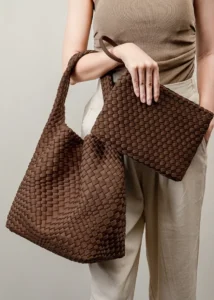
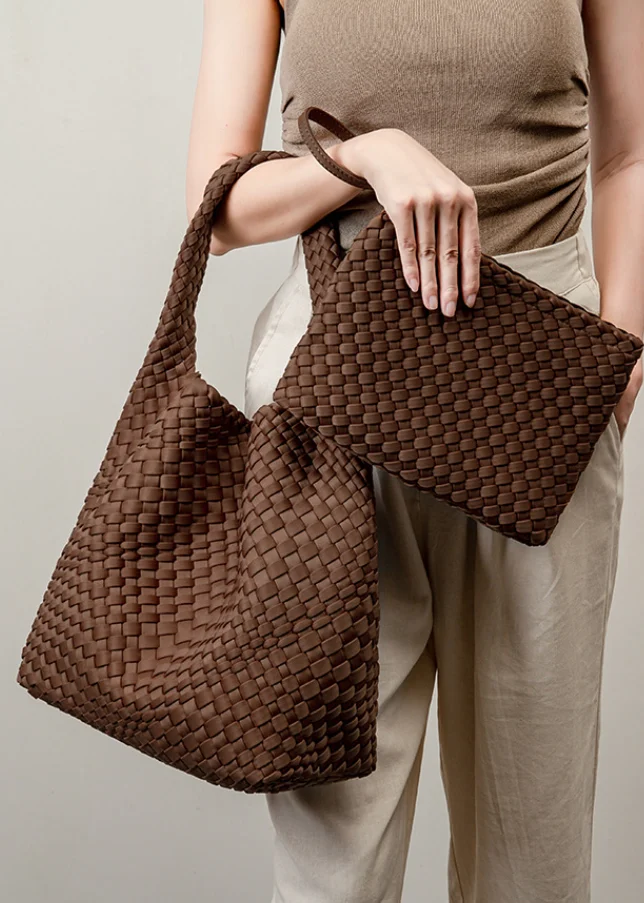
When neoprene strips are hand-woven, the material takes on a couture-level complexity that rivals high-end woven leathers like classic Italian intrecciato, yet it remains significantly more durable and weather-resistant. The resulting bags offer a distinctive visual texture, blending architectural geometry with tactile comfort. Unlike traditional leather, which can crack when exposed to moisture or scratch against daily abrasions, woven neoprene breathes, flexes, and bounces back into form. It accommodates an overstuffed laptop, gym clothes, or daily groceries while draping softly against the body. This combination of craft-driven appearance and low-maintenance resilience has made woven neoprene shoulder bags a fixture among urban professionals, suburban tastemakers, and frequent travelers who desire elevated aesthetics without the fragility of legacy luxury materials.
Concurrently, the fashion landscape has witnessed the explosive rise of the functional sling bag, a category that blurs the lines between traditional backpacks, messenger packs, and miniature crossbodies. Brands like CLUCI have capitalized on this exact consumer appetite, delivering products that cater to the modern ethos of streamlined, hands-free efficiency. Priced around $22.99, these accessible sling packs illustrate how smart design and democratic pricing can converge to create viral consumer hits. Crafted from supple faux leather, water-resistant synthetics, or reinforced canvas blends, the modern sling appeals to an extraordinarily broad demographic spanning both women and men.
What makes the cross-body sling backpack such an enduring silhouette is its intuitive anatomical design. Carried diagonally across the chest or over the back, the sling shifts the center of gravity closer to the body’s core. Unlike single-strap shoulder bags that force one side of the trapezius muscle to hike up unconsciously—leading to chronic postural misalignment—the diagonal sling distributes weight evenly across the torso. For bicycle commuters navigating congested city streets, parents running weekend errands, or travelers navigating bustling transit hubs, the sling provides unmatched security and immediate access. A quick slide of the pack from the back to the chest allows wearers to access zippered compartments without ever removing the bag from their shoulders.
Furthermore, the integration of smart organization has replaced the chaotic "black hole" interior of legacy totes. The internal architecture of these modern crossbodies typically features dedicated anti-theft rear pockets, RFID-blocking card slots, key leashes, and cushioned sleeves designed to prevent scratched phone screens. This intentional pocket distribution turns everyday carry into a streamlined routine, ensuring that personal items remain secure against accidental loss or pickpocketing in crowded environments.
The booming popularity of these bags also speaks directly to the evolving gift-giving economy. Finding a meaningful, universally useful gift for birthdays, anniversaries, or seasonal holidays has traditionally been fraught with sizing and taste hurdles. Apparel requires precise knowledge of fit, jewelry demands intimate familiarity with aesthetic preferences, and tech gadgets quickly become obsolete. By contrast, a versatile sling or a tactile woven shoulder bag presents a universal appeal. It solves a functional problem that every modern individual faces: how to carry personal essentials comfortably throughout the day. At entry price points near $20 to $30, utility slings make for high-value, practical birthday presents, while artisanal woven bags satisfy the desire for boutique indulgence.
Beyond individual utility, this trend underscores a broader cultural redefinition of luxury. Luxury is no longer defined solely by an exorbitant price tag, a heritage monogram, or restrictive maintenance requirements. Instead, today’s discerning consumers increasingly define luxury through the lens of convenience, comfort, and versatile design. A bag that allows an individual to hop on a commuter bike, grab a coffee, attend an informal meeting, and head out for an evening dinner—all while remaining physically comfortable and aesthetically polished—delivers far greater day-to-day value than a rigid, delicate designer tote relegated to special occasions.
The retail ecosystem has adapted swiftly to this behavioral shift. Digital marketplaces and direct-to-consumer portals have enabled niche manufacturers and accessible brands to display real-time availability, responsive pricing, and customer-driven iterations. User reviews often highlight how a single, well-designed cross-body pack has replaced multiple specialty bags, acting simultaneously as a travel purse, a cycling companion, and a gym accessory. As dynamic pricing structures and supply chain innovations bring these items to consumers within hours or days, accessibility has democratized functional fashion on an unprecedented scale.
Looking toward the future, the boundaries separating technical sportswear, high-street fashion, and artisanal craftsmanship will continue to dissolve. We can anticipate further cross-pollination between these disciplines: woven neoprene totes enhanced with technical magnetic closures and modular organization systems, as well as ultra-compact commuter slings incorporating recycled ocean plastics and antimicrobial lining fabrics.
Whether one is drawn to the intricate, tactile beauty of a hand-woven neoprene shoulder bag or the pragmatic, secure ergonomics of an everyday sling backpack, the underlying message of this accessory revolution is crystal clear. Consumers are firmly in control of their wardrobes, prioritizing physical well-being, movement, and adaptable utility without compromising on style. As modern lives become faster, more mobile, and more interconnected, the bags we carry must work just as dynamically as we do—resting light on the shoulder, moving fluidly with the stride, and keeping the hands entirely free to seize the day ahead.