
The global healthcare landscape is currently undergoing a fundamental shift in how pharmaceutical products are protected, tracked, and administered. At the heart of this transformation is the rise of "smart packaging"—a broad category of technologies that transition traditional, passive containers into dynamic, data-generating assets. By integrating digital functionality directly into the physical structure of a package, stakeholders across the life sciences value chain can ensure product integrity, combat the global counterfeit market, and foster unprecedented levels of patient engagement. Smart packaging is generally categorized into two domains: active packaging, which involves physical or chemical interventions to maintain product stability, and intelligent packaging, which utilizes electronic or printed sensors and communication protocols to relay information. As the industry moves toward total digital transparency, the selection of the right data carrier—whether Near Field Communication (NFC), Radio Frequency Identification (RFID), or Quick Response (QR) codes—has become a critical strategic decision for manufacturers and logistics providers alike.
The impetus for this digital migration is not merely a desire for innovation; it is a regulatory necessity. In the United States, the Drug Supply Chain Security Act (DSCSA) has established a rigorous framework for unit-level traceability, requiring that every individual bottle or blister pack be serialized. Central to this effort is the GS1 DataMatrix code. Unlike a standard linear barcode, the DataMatrix is a two-dimensional carrier capable of encoding vast amounts of data in a tiny footprint. Tracy Nasarenko, Vice President of Customer Success at GS1 US, emphasizes that this technology serves as the "core data carrier," housing the National Drug Code (NDC), unique serial numbers, batch/lot information, and expiration dates. This standardized approach ensures that every node in the supply chain—from the manufacturer to the pharmacist—can capture and verify data with total consistency, effectively closing the loop on illicit or diverted products.
While the DataMatrix handles the regulatory heavy lifting, other technologies are being deployed to solve more complex logistical and consumer-facing challenges. CCL Industries, through its specialized division CCL eAgile, has become a pioneer in this space by embedding connectivity directly into the labels, seals, and closures of pharmaceutical containers. This integration occurs without disrupting existing high-speed manufacturing workflows, allowing brands to layer security and data capabilities onto their products with minimal friction. The choice between NFC, RFID, and QR depends heavily on the intended use case, the environment of the supply chain, and the budget of the manufacturer.

Near Field Communication (NFC) represents the high-water mark for secure, patient-centric interaction. Operating at a very short range—typically less than four centimeters—NFC requires a deliberate "tap" from a smartphone or reader. This proximity requirement is its greatest security feature; unlike longer-range signals that can be intercepted or "skimmed" from a distance, NFC ensures that the user is physically present and interacting with the specific unit in hand. In the context of high-value biologics or sensitive specialty drugs, this allows for immediate authentication. A patient can tap their phone to a pack of medication to confirm its authenticity, access personalized dosage instructions, or watch a video demonstrating how to use a complex auto-injector. Because modern smartphones are natively equipped with NFC readers, there is no need for the patient to download a specific app, lowering the barrier to entry for digital health initiatives. Furthermore, NFC can be embedded into pressure-sensitive labels or laminated within the packaging structure, making it a resilient option for products that require a high degree of tamper-evidence.
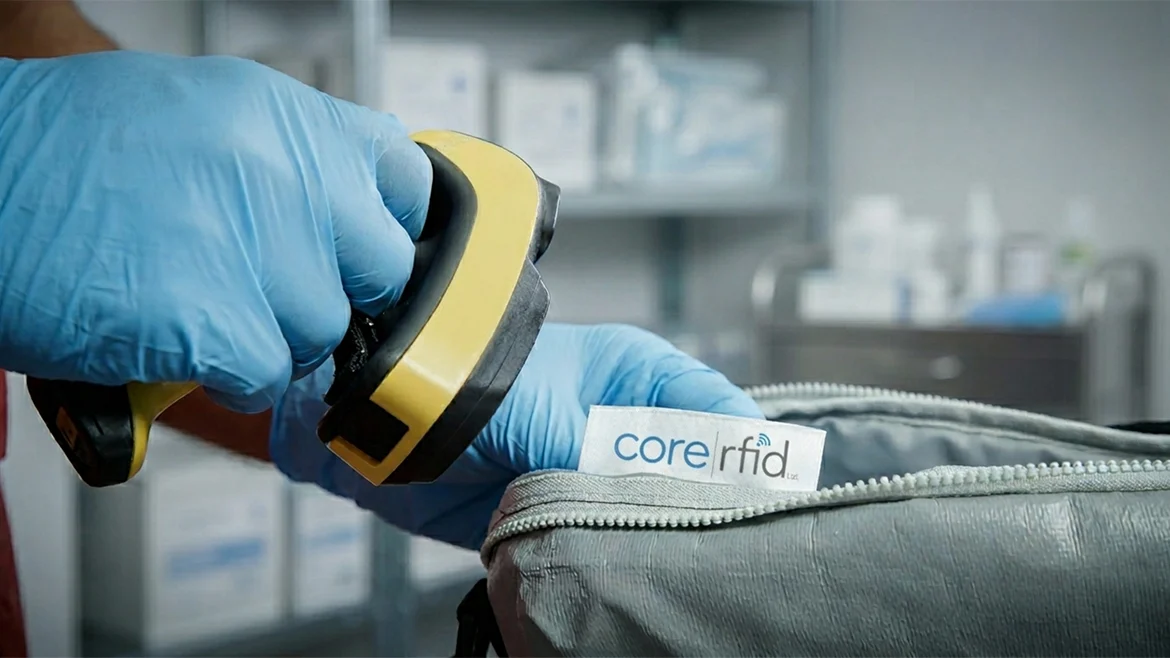
Conversely, when the objective is macro-level visibility and industrial-scale efficiency, Radio Frequency Identification (RFID) is the undisputed leader. RFID’s primary advantage lies in its "bulk reading" capability. Unlike barcodes or QR codes, which require a direct line of sight and must be scanned one by one, RFID readers can identify hundreds of individual items simultaneously from several meters away, even if they are buried inside a shipping crate or pallet. This makes RFID indispensable for automated inventory management and real-time tracking in large-scale distribution centers. However, the implementation of RFID is not without its hurdles. Josh Medow, CEO of Mercury, a life sciences shipping firm, points out that the infrastructure requirements for RFID are significant. Not every shipping point or local pharmacy is equipped with the necessary RFID printers and readers, creating "black holes" in the data stream if the technology is relied upon exclusively for the entire journey. Despite these challenges, the return on investment for RFID is found in the reduction of manual labor, the elimination of human error in counting, and the mitigation of "shrinkage" or loss during transit.
For many organizations, however, the simplest and most cost-effective entry point into smart packaging remains the QR code. QR codes are ubiquitous and can be printed using standard ink-on-paper methods, making them an attractive option for large-volume, lower-margin products. They serve as an excellent bridge for providing digital documentation, such as Electronic Instructions for Use (eIFU), which reduces the need for bulky paper inserts and supports sustainability goals. Yet, the limitations of QR codes are significant in a professional healthcare environment. Richard Harrison, Technical Sales Director at CoreRFID Limited, notes that QR codes are highly susceptible to physical damage. If a code is scuffed during transit, folded over a curve, or contaminated by a liquid spill, it often becomes unreadable. Furthermore, the requirement for a clear line of sight makes them inefficient for high-volume warehouse operations compared to the "hands-off" nature of RFID.
The most sophisticated healthcare brands are now moving away from a "one-size-fits-all" approach, instead adopting hybrid models that leverage the strengths of each technology. A common strategy involves using RFID for the tertiary packaging (pallets and cases) to streamline logistics, while utilizing NFC or GS1 DataMatrix on the primary packaging (the bottle or blister) for regulatory compliance and patient safety. This layered architecture ensures that the product is tracked efficiently through the "cold chain" and warehouse, while still providing a secure, interactive interface for the end-user.

However, the transition to a data-driven packaging model introduces new risks, primarily centered on data integrity. Gregg Gorniak, Vice President of Manufacturer Operations & Data Services at Cencora, warns that the most frequent failure in smart packaging implementation is a lack of rigorous data quality checks. It is not uncommon for the digital data file sent to a distributor to contain information that does not match the physical data encoded in the 2D barcode on the package. These discrepancies can lead to shipment rejections, regulatory fines, and dangerous delays in patient care. Therefore, the "smart" in smart packaging must extend beyond the hardware to include robust software ecosystems that validate data at every touchpoint of the product lifecycle.
Looking toward the future, the integration of these technologies will likely expand to include environmental sensing. Active packaging is already being designed with embedded sensors that can record temperature excursions, humidity levels, and light exposure, transmitting this data via NFC or RFID to a central cloud platform. For the $300 billion-plus market of temperature-sensitive pharmaceuticals, this level of granularity is transformative. It allows for a "dynamic shelf life" where the expiration date of a product can be adjusted based on its actual environmental history, rather than a conservative estimate.
In conclusion, the choice between NFC, RFID, and QR codes is not a competition between technologies, but a strategic alignment of tools to specific business and clinical objectives. NFC provides the security and engagement needed for the "last mile" of patient care; RFID provides the muscle for supply chain transparency and logistical speed; and QR codes/DataMatrix provide the essential, cost-effective foundation for global regulatory compliance. As the pharmaceutical industry continues to digitize, the package will no longer be seen as a mere wrapper, but as a critical, intelligent component of the therapeutic intervention itself. Organizations that master this digital-physical integration will not only satisfy regulatory mandates but will also gain a competitive edge through improved operational efficiency and enhanced patient outcomes.