
The global accessories market is currently witnessing an unprecedented ideological tug-of-war, where two starkly contrasting design philosophies battle for the shoulders and hands of modern commuters. On one side stands the enduring appeal of the artisanal movement, epitomized by meticulously hand-carved, vegetable-tanned leather totes that celebrate heritage, organic textures, and centuries-old artisan traditions. On the other lies the hyper-functional, mass-engineered universe of technical daypacks, where synthetic polymers, water-repellent treatments, and budget-conscious ergonomics dominate the retail algorithm. This divergence reveals a profound evolution in how consumers assess value, durability, and personal identity through the bags they carry every day.
For decades, the standard carryall was defined by simple utilitarian parameters: did it hold one’s belongings, and did it survive the daily commute? Today, however, consumer choice reflects deeper socioeconomic trends, lifestyle adjustments, and distinct approaches to consumption. The resurgence of vegetable-tanned leather represents a deliberate pushback against the fast-fashion cycle. Unlike chrome-tanned hides, which rely on heavy metal salts to rapidly pickle leather in a matter of hours, vegetable tanning is a patient, alchemical process that can take up to two months. Artisans immerse raw hides in natural organic baths infused with bark extracts from chestnut, mimosa, quebracho, and oak trees. The resulting material is firm, highly resilient, and distinctly aromatic, retaining the natural grain, grain variances, and living character of the hide.
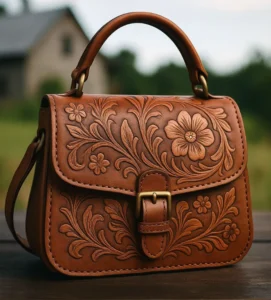
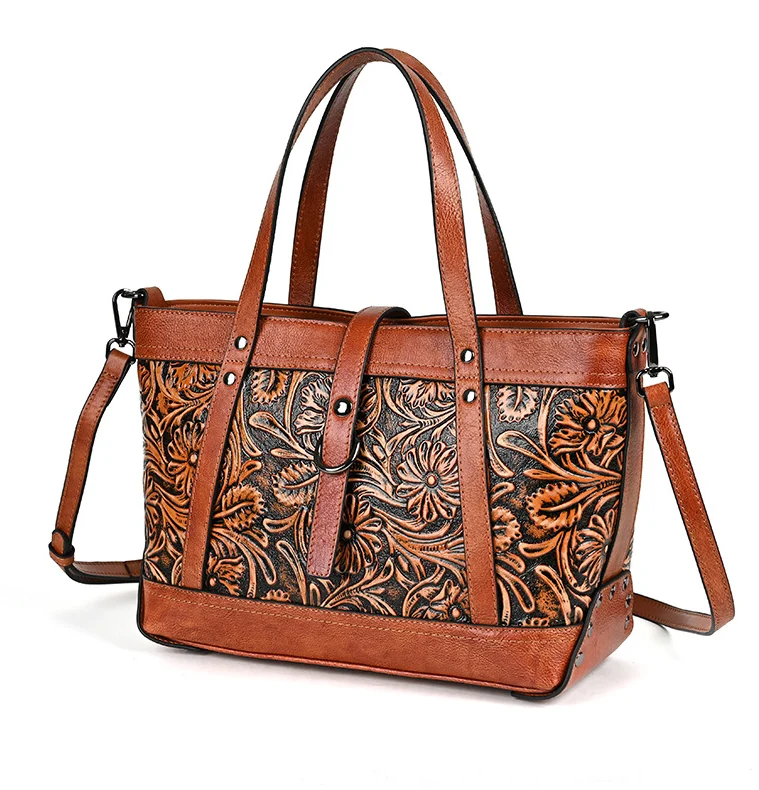
When craftsman-level techniques such as hand-carving or floral tooling are introduced, the leather tote transforms from an everyday accessory into wearable fine art. Master leathercrafters utilize swivel knives, bevelers, and pear shaders to imprint three-dimensional motifs into the moistened hide, a process requiring precise pressure and years of mechanical mastery. Because vegetable-tanned leather lacks synthetic plastic coatings, it possesses the unique capacity to absorb oils, sunlight, and atmospheric moisture over time. Rather than deteriorating, a hand-tooled vegetable-tanned tote develops a rich, amber patina that chronicles the owner’s individual journey. In the realm of slow fashion, such pieces are framed not as seasonal commodities, but as generational heirlooms built to outlast decades of wear.
Yet, alongside this deep appreciation for heritage craft, an entirely distinct force drives the everyday carry (EDC) marketplace: the unyielding demand for lightweight, high-performance athletic utility. The digital marketplace is saturated with engineered solutions designed to solve the chaotic logistics of modern life. Leading athletic brands have captured massive market share by catering to urban professionals, students, and fitness enthusiasts who require multidimensional compartments, weather-resistant exteriors, and all-day ergonomic support at highly accessible price points.
Bags engineered for the active lifestyle, such as modern technical backpacks built from high-denier polyester and treated with durable water repellent (DWR) finishes, deliver an alternative form of resilience. Where an artisanal leather tote offers raw density and aesthetic warmth, the synthetic pack offers mechanical efficiency. Padded shoulder straps lined with breathable air-mesh distribute heavy loads across the clavicle and thoracic spine, while dedicated tricot-lined laptop sleeves protect sensitive electronics from blunt impact. Multi-tier compartments, exterior water bottle pockets, and abrasion-resistant base panels address the tactile realities of navigating crowded transit systems, inclement weather, and cross-functional gym-to-office schedules.
The coexistence of these disparate archetypes reveals an interesting anomaly within modern consumer data and e-commerce indexing. Online retail aggregators frequently showcase hand-tooled leather masterpieces alongside tactical, sub-forty-dollar performance gear. This algorithmic juxtaposition highlights how fragmented consumer priorities have become. While an individual may appreciate the artisanal prestige of a four-hundred-dollar carved tote for creative office environments or weekend excursions, that same consumer may reach for an indestructible, black synthetic daypack when rain threatens or when cycling through an urban core.
Economics undeniably play a foundational role in this ongoing bifurcation. High-grade, vegetable-tanned leather requires premium raw inputs, ethical livestock farming, long production lead times, and specialized labor. Consequently, these products demand an upfront financial investment that reflects the hours poured into pattern drafting, saddle stitching, burnishing edges with natural beeswax, and intricate hand tooling. For many, this investment is justified through the lens of cost-per-wear: a bag that survives thirty years without structural failure ultimately offsets the recurring expense of replacing cheap synthetic items.
Conversely, the democratization of high-durability synthetic textiles has established a compelling value proposition at the entry-level tier. Advanced manufacturing enables global apparel and sporting giants to produce highly reliable, multi-pocket daypacks priced well under fifty dollars. These mass-market designs leverage economy of scale, injection-molded hardware, and automated bar-tack stitching to ensure structural integrity across millions of units. For students, budget-conscious commuters, and athletes, the accessibility of a rugged, machine-washable backpack outweighs the aesthetic romanticism of hand-stitched hides.
Furthermore, environmental considerations have introduced nuanced debates on both sides of the aisle. Proponents of vegetable-tanned leather argue that natural, biodegradable materials derived from agricultural byproducts offer a closed-loop alternative to the petroleum-based synthetic fabrics that flood landfills. Vegetable tanning minimizes hazardous effluent, and a well-maintained leather bag can decompose naturally at the end of its lifecycle without releasing microplastics into waterways.
On the flip side, the technical gear sector has responded by heavily investing in recycled post-consumer plastics, turning discarded water bottles into durable rPET yarn. Modern synthetic packs are frequently marketed with non-fluorinated water-repellent treatments, cutting down on harmful polyfluoroalkyl substances (PFAS) while providing the moisture protection necessary to shield sensitive tablets and laptops. For cruelty-free advocates and vegan consumers, synthetics remain the ethical carry standard, entirely bypassing animal agriculture while delivering reliable performance in harsh conditions.
This fundamental contrast in materials also mandates completely different user relationships. A hand-carved leather tote demands active engagement and maintenance from its keeper. It requires periodic conditioning with natural oils, careful drying if caught in an unexpected downpour, and acceptance of the inevitable scratches, scuffs, and water rings that mark its surface. Caring for heirloom leather is an intentional ritual—a tactile dialogue between the owner and the material. Synthetic gear, by comparison, requires almost zero mindfulness. It can be tossed onto subway floors, crammed into overhead bins, drenched in sudden thunderstorms, and wiped clean with a damp cloth, retaining its original color and form without demanding deliberate care.
As the lines between remote workspaces, athletic routines, and traditional office life continue to blur, bag designers are beginning to recognize that consumers rarely fit into a single stylistic box. The modern wardrobe is increasingly modular. The same individual who packs a minimalist, high-capacity athletic bag for travel or daily commuting may cherish a carved artisanal tote for gallery openings, leisurely weekend markets, or client meetings where personal aesthetic speaks volumes before a word is spoken.
Ultimately, the dichotomy between the hand-carved vegetable-tanned leather tote and the mass-engineered technical daypack is not a zero-sum contest, but a reflection of the multifaceted human experience. One choice honors the slow, grounded continuity of historic craftsmanship, rewarding patience with an irreplaceable patina and timeless character. The other honors dynamic adaptability, delivering reliable utility, smart ergonomics, and democratic affordability for a fast-paced world. As carry culture continues to mature, the question is no longer which philosophy will vanquish the other, but how these complementary approaches will continue to redefine how we carry our lives forward.