
The landscape of industrial packaging is currently undergoing a seismic shift, driven by a dual demand for heightened sustainability and the logistical agility of digital production. At the heart of this transformation is Engineered Printing Solutions (EPS), a company that has long been at the forefront of bespoke printing technology. At the upcoming PACK EXPO, EPS is set to unveil a global premiere that promises to redefine how manufacturers approach the decoration of fiber-based materials. The introduction of the XD-AQ high-viscosity water-based inkjet system marks a significant milestone in the evolution of aqueous printing, offering a solution that bridges the gap between the environmental benefits of water-based chemistry and the high-impact visual performance typically reserved for traditional analog methods or UV-cured digital systems.
For years, the packaging industry has struggled with a fundamental technical paradox. While fiber-based substrates—such as corrugated cardboard, cartonboard, and molded-fiber products—are the darlings of the sustainability movement due to their recyclability and biodegradable nature, they are notoriously difficult to print on using standard inkjet technology. These materials are inherently porous, acting like a sponge that sucks up traditional low-viscosity water-based inks. When the ink penetrates too deeply into the fibers, the resulting image often appears dull, washed out, and lacking in sharp detail. To combat this, many manufacturers turned to UV-curable inks, which sit on top of the substrate. However, UV inks come with their own set of challenges, including the need for expensive curing lamps and concerns regarding the migration of photoinitiators, particularly in food-sensitive packaging.
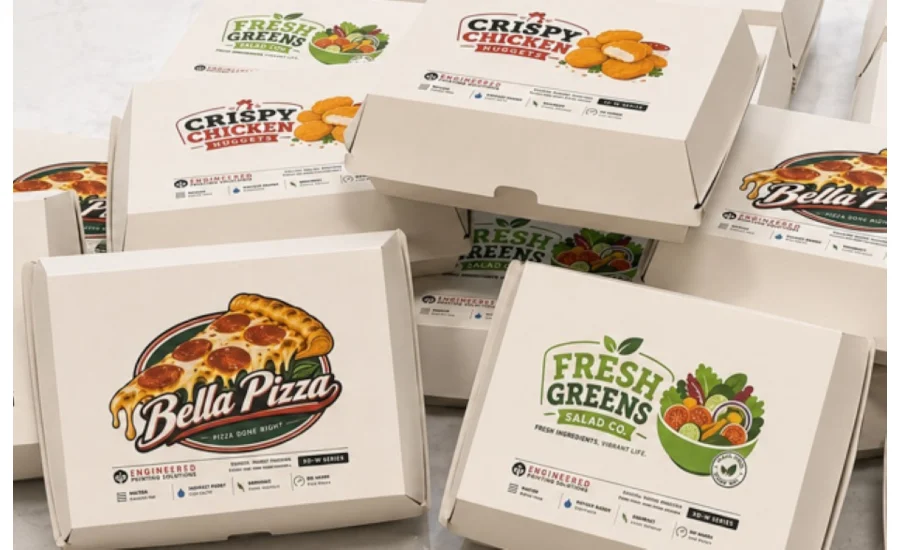
The XD-AQ system, which will be demonstrated live for the first time at PACK EXPO Booth W-31050, addresses these challenges head-on through a combination of advanced fluid dynamics and cutting-edge hardware. The system is built around the revolutionary Xaar Aquinox printheads, which are specifically engineered to handle "Ultra High Viscosity" fluids. By utilizing high-viscosity water-based inks, the XD-AQ ensures that the pigment particles remain concentrated at the surface of the fiber rather than being absorbed into the substrate’s core. This results in a level of color density and "pop" that was previously unattainable with aqueous inkjet systems. Packaging converters and distributors visiting the EPS booth will witness firsthand how this technology produces vibrant CMYK graphics, crisp text, and rich blacks on everything from rough molded-fiber trays to smooth cartonboard.
The technical architecture of the XD-AQ is optimized for high-speed, single-pass production. Capable of reaching print-station speeds of up to 164 feet per minute, the system is designed to keep pace with the demanding throughput of modern packaging lines. One of its most disruptive features is its ability to decorate packaging after it has undergone secondary processes. Unlike traditional workflows where flat sheets must be printed before they are die-cut, folded, or glued, the XD-AQ can print directly onto finished or semi-finished products. With 10 inches of vertical clearance and a 5.4-inch print swath, the machine can accommodate a diverse array of formats, including pre-formed bags, thick corrugated boards, and even cup blanks. This "post-conversion" printing capability allows manufacturers to move toward a "just-in-time" decoration model, which significantly reduces the need for large inventories of pre-printed stock.
The move toward digital on-demand printing is more than just a matter of convenience; it is a strategic response to the changing nature of consumer markets. Today’s brands are increasingly looking for ways to implement versioning, regionalized branding, and limited-edition packaging runs. Traditional analog printing, such as flexography or offset, requires the creation of expensive plates and lengthy "make-ready" times, making short runs economically unfeasible. The XD-AQ eliminates these barriers. Because it prints directly from digital files, changing from one design to the next is instantaneous. This flexibility empowers businesses to respond to market trends in real-time, reducing waste and ensuring that packaging is always relevant to the end consumer.
Beyond operational efficiency, the XD-AQ sets a new standard for environmental and safety compliance. The global regulatory environment is tightening, with a particular focus on the chemicals used in food-contact materials. The inks used in the XD-AQ system are completely PFAS-free, addressing growing concerns regarding "forever chemicals" in the supply chain. Furthermore, the ink formulations are designed to meet the rigorous standards of the Nestlé packaging-ink guidance, the Swiss Ordinance, and the EuPIA (European Printing Ink Association) Good Manufacturing Practice. By excluding photoinitiators and monomers—components essential for UV-curing but often problematic in food safety contexts—EPS provides a "clean" technology that is ideal for the food, beverage, and pharmaceutical sectors.
The absence of UV lamps in the XD-AQ system also provides a practical solution to a common technical failure in fiber printing. When UV ink is applied to an absorbent substrate, a portion of the ink inevitably sinks below the surface. Because UV light cannot penetrate the opaque fibers of the board, this subsurface ink remains uncured, leading to potential migration issues and an unpleasant chemical odor. The XD-AQ’s water-based approach eliminates this risk entirely. The ink dries naturally or with minimal thermal assistance, ensuring a stable and safe finished product that is free from the complexities of UV radiation.
Kenneth Stack, the Executive Chairman of Engineered Printing Solutions, emphasized the transformative potential of this technology during the announcement. According to Stack, the XD-AQ represents the culmination of a search for a system that provides the "simplicity" of water-based ink without sacrificing the performance metrics that professional converters require. He noted that for businesses looking to personalize their fiber-based packaging while simultaneously reducing their carbon footprint and inventory overhead, the XD-AQ is a "game-changer." It offers a path forward for companies that have been hesitant to adopt digital printing due to the perceived limitations of aqueous inks or the high costs of UV infrastructure.
The debut of the XD-AQ at PACK EXPO follows its initial announcement at the FuturePrint Packaging, Labels & DTS Summit in September, where it garnered significant interest from industry analysts. Now, with the live demonstration, the industry will see if the system can truly deliver on its promise of "analog print densities" in a digital format. The stakes are high; as the world moves away from single-use plastics, the demand for high-quality, decorated fiber packaging is skyrocketing. Whether it is a premium subscription box, a sustainable egg carton, or a branded shipping container, the visual appeal of the packaging is often the first point of contact between a brand and its customer.
In summary, the EPS XD-AQ is not merely a new printer; it is a holistic solution for the modern packaging era. By marrying the high-viscosity capabilities of Xaar’s printhead technology with a sustainable, compliant aqueous ink set, EPS has created a tool that addresses the most pressing needs of the industry: quality, speed, safety, and flexibility. As visitors gather at Booth W-31050, they will be looking at a future where the environmental benefits of paper and cardboard no longer come at the expense of shelf-side impact. The XD-AQ proves that in the world of industrial printing, the most "vibrant" future is a water-based one.