
New empirical data released by sustainability charity WRAP demonstrates that members of the UK Plastics Pact are consistently outperforming non-signatory businesses when it comes to incorporating recycled materials into their packaging lines. The comprehensive findings, which evaluate multi-year compliance and material usage data, highlight a measurable divide between companies participating in structured voluntary frameworks and those operating outside of them. This growing performance gap underscores the complex interplay between self-regulation, government taxation, and the broader corporate journey toward a circular economy for plastics.
At the heart of the latest comparative analysis is a striking disparity in recycled content adoption projected for the 2025/26 period. According to the figures, businesses operating within the Plastics Pact framework are on track to achieve an average recycled content rate of 62.9%. Conversely, companies that remain outside the Pact lag behind at 56%. This constitutes a statistically significant 6.9 percentage-point advantage for Pact participants, a divergence that HM Revenue and Customs (HMRC) has confirmed as meaningful rather than mere statistical variance. Furthermore, historical tax data reveals that Pact participants have maintained this distinct competitive edge consistently across all four financial years examined by regulators.
To contextualize these findings, it is essential to examine the regulatory landscape governing plastic packaging in the United Kingdom. In April 2022, the government introduced the Plastic Packaging Tax (PPT), a landmark fiscal measure designed to incentivize sustainable manufacturing. The tax applies a financial levy to finished plastic packaging components that contain less than 30% recycled plastic. While the 30% threshold serves as a mandatory regulatory floor for the entire market, the WRAP data indicates that the most progressive businesses were already steering their supply chains toward high-recycled-content models long before the tax came into legal effect.
The trajectory of recycled material integration over the past decade tells a compelling story of proactive industry transformation. Data supplied directly by WRAP maps out a steady, upward climb in recycled content adoption that predates the implementation of the Plastic Packaging Tax. In 2018, the baseline for recycled content across tracked packaging stood at a modest 9%. Driven by early corporate commitments and the foundational momentum of the Plastics Pact, this figure more than doubled to reach 22.6% by 2021—just prior to the introduction of the PPT. The upward trend continued post-tax, hitting 28.8% in 2024, with the final comprehensive reporting year expected to be published in the near future.
A granular look at specific polymer types reveals varying degrees of success and technical difficulty in recycling and reintegration. Between 2018 and 2024, average recycled content levels among Plastics Pact members surged across the board, though the magnitude of growth differed significantly depending on the material. Polyethylene Terephthalate (PET)—widely used for clear beverage bottles and recognized as one of the most mature and economically viable recycled polymers—saw an astronomical rise from 14.9% in 2018 to an impressive 49.9% by 2024.
Polyethylene (PE), heavily utilized in films and flexible packaging, experienced a more modest yet substantial increase, moving from 8.1% up to 20.2% over the same six-year span. Meanwhile, Polypropylene (PP), historically one of the most challenging polymers to collect, sort, and reprocess into food-grade or high-performance packaging, crept upward from a marginal 1.8% to 5.4%. While the gains in PP and PE highlight ongoing technical and infrastructure hurdles within the recycling supply chain, the massive leap in PET demonstrates what is achievable when collection systems and end-markets align.
The empirical success of the Plastics Pact has reignited debates among environmental economists and policymakers regarding the optimal balance between voluntary corporate initiatives and mandatory government intervention. Critics of voluntary agreements often argue that without the immediate threat of legal penalties or financial taxation, corporations lack the urgency required to enact sweeping operational changes. However, the WRAP data challenges this monolithic view by illustrating how voluntary pacts act as vital precursors to effective legislation.
A spokesperson for WRAP elaborated on the unique value proposition of self-governing sustainability frameworks, noting that voluntary agreements provide a vital sandbox for industry innovation. "Voluntary agreements can help businesses get started earlier, learn from each other, and keep improving beyond the point where a tax incentive stops," the spokesperson explained. By establishing ambitious targets ahead of regulatory mandates, early adopters can iron out logistical bottlenecks, test consumer reception, and foster collaborative relationships with recycling infrastructure providers before compliance becomes a legal necessity.
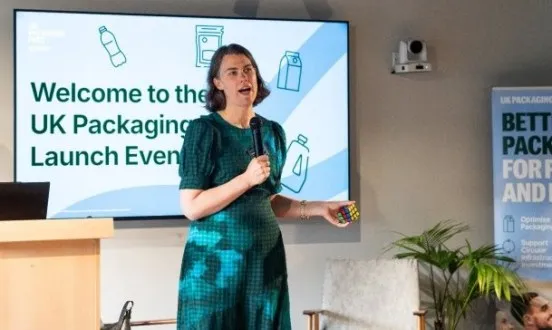
In essence, while the Plastic Packaging Tax establishes a universal baseline that forces laggards to meet a 30% recycled content minimum, voluntary frameworks like the Plastics Pact push frontrunners to explore the absolute limits of material circularity—driving averages well past the statutory floor and deep into the 60% bracket. Building upon these insights, the NGO emphasized that the demonstrable success of the Plastics Pact powerfully reinforces the argument that collaborative, voluntary agreements can supercharge policy and legislation. By proving that industries can move further and faster when working in unison, these initiatives lay the groundwork for more ambitious national and international environmental policies. This proven model of proactive collaboration is precisely why WRAP continues to champion and expand this vital work through subsequent iterations, such as the UK Packaging Pact, ensuring that the momentum toward a truly sustainable packaging ecosystem remains uninterrupted.