
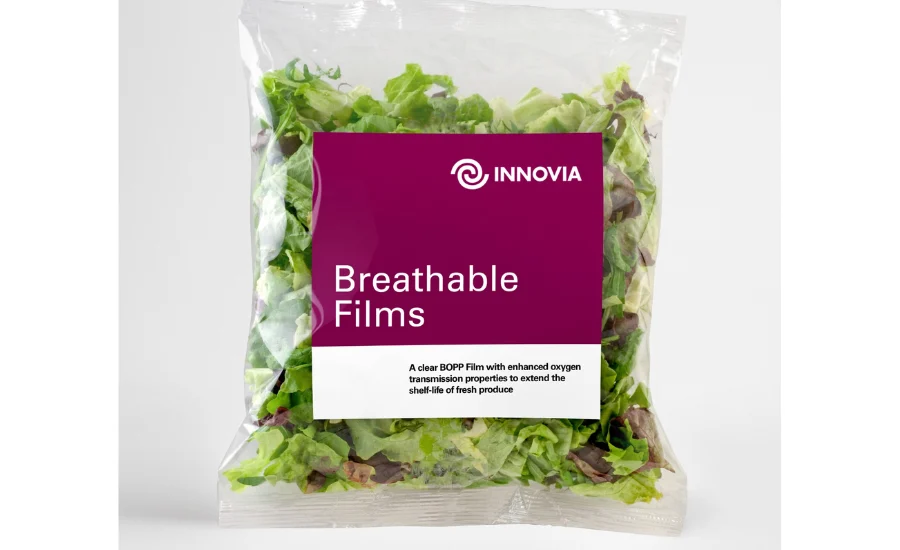
The global food supply chain is currently grappling with a dual crisis: the urgent need to reduce staggering levels of organic waste and the pressure to transition toward a truly circular economy for plastics. In the specialized sector of fresh produce, these challenges are particularly acute. Fruits and vegetables are "living" products that continue to respire after harvest, requiring packaging that acts less like a static barrier and more like a sophisticated biological interface. Addressing this complex intersection of material science and environmental stewardship, Innovia Films has officially unveiled P2G, a groundbreaking high gas transmission Biaxially Oriented Polypropylene (BOPP) film specifically engineered for flow wrap applications in the fresh produce and pre-prepared vegetable markets.
Innovia Films, a division of CCL Industries and a global leader in specialty BOPP solutions, developed P2G to bridge the gap between high-performance preservation and end-of-life recyclability. As retailers and brand owners face increasing scrutiny over their carbon footprints and plastic usage, the introduction of P2G offers a technically advanced path forward that does not sacrifice product integrity for the sake of "green" labeling.
The Science of Respiration and Shelf-Life Extension
At the heart of P2G’s innovation is its optimized gas transmission rate. Unlike standard barrier films designed to keep oxygen out, fresh produce packaging must allow for a controlled exchange of gases. Vegetables, particularly leafy greens and pre-cut cruciferous varieties, consume oxygen and release carbon dioxide and water vapor. If a packaging film is too occlusive, the internal atmosphere becomes anaerobic, leading to rapid fermentation, off-odors, and accelerated spoilage. Conversely, if the film is too permeable, the produce dehydrates and loses its nutritional value.
P2G has been engineered to master this delicate balance. By facilitating superior respiration control, the film helps maintain an optimal Modified Atmosphere Packaging (MAP) environment within the flow wrap. This precision engineering significantly extends the shelf life of the contents, ensuring that produce remains crisp, vibrant, and safe for consumption for longer periods. In an era where approximately one-third of all food produced globally is wasted—contributing significantly to methane emissions in landfills—extending the "freshness window" of a bag of spinach or a tray of pre-cut florets is one of the most impactful ways to reduce the environmental burden of the food industry.
Technical Superiority in the Cold Chain
Beyond its gas-permeability characteristics, P2G is built for the rigors of the modern industrial supply chain. Packaging films used for fresh produce must perform under demanding conditions, including high-speed automated packing lines and fluctuating temperatures within the cold chain.
P2G is designed for flow wrap applications, a high-efficiency method of packaging where a single film is formed into a tube, the product is inserted, and both ends are heat-sealed. To ensure maximum throughput for packers, P2G is heat-sealable on both sides. This double-sided sealability provides a wider "operating window" on machinery, allowing for secure, airtight seals even at high speeds. This reliability reduces downtime and minimizes "leakers"—packages that fail to seal properly—which would otherwise lead to premature spoilage.
Furthermore, the film retains its physical integrity at low temperatures. Many conventional films become brittle and prone to cracking when refrigerated, but P2G maintains high puncture and impact resistance in chilled environments. This ensures that the produce is protected from physical damage during transit, handling, and stocking. Additionally, the film is engineered to remain stable under varying climatic conditions, preventing the warping or shrinking that can occur when moving from humid packing sheds to refrigerated trucks.
From a consumer perspective, visual appeal is paramount. P2G boasts exceptional optical clarity and low-haze properties. This "invisible" protection allows the natural colors and textures of the vegetables to take center stage, providing the "see-through" quality that modern shoppers demand as a proxy for freshness and quality.
Pioneering the Shift to Mono-Material Circularity
Perhaps the most significant aspect of the P2G launch is its contribution to the circular economy. Historically, high-performance food packaging often relied on multi-layer laminates—combining different types of plastics or foils to achieve specific barrier properties. While effective for preservation, these multi-material structures are notoriously difficult, if not impossible, to recycle because the layers cannot be easily separated.
P2G solves this dilemma by being a mono-material polypropylene (PP) solution. Because it is composed entirely of one polymer family, it is fully compatible with existing PP recycling streams. When a consumer or retailer discards a P2G flow wrap, it can be processed back into high-quality plastic pellets for use in new products, rather than being destined for incineration or landfill.
This design-for-recyclability is not merely a corporate preference; it is a strategic alignment with the upcoming European Union Packaging and Packaging Waste Regulation (PPWR). The PPWR sets ambitious targets for the industry, mandating that all packaging in the EU market be recyclable by 2030. By adopting P2G today, brand owners and retailers are future-proofing their operations against tightening legislative requirements and demonstrating a proactive commitment to the EU’s Green Deal objectives.
Advanced Sustainability via Mass Balance
Innovia Films has taken the sustainability of P2G a step further by offering versions of the film that incorporate chemically recycled or bio-sourced polymers. Utilizing the ISCC (International Sustainability and Carbon Certification) PLUS mass balance approach, Innovia can substitute a portion of the fossil-based raw materials with circular feedstocks without altering the film’s physical properties or food-contact safety certifications.
Chemical recycling—also known as advanced recycling—breaks down plastic waste (which might otherwise be unrecyclable) into its basic molecular building blocks. These "new" monomers are then used to create virgin-quality polymers. This allows P2G to meet recycled content mandates—another key pillar of the PPWR—while ensuring that the film remains high-performing and safe for direct contact with food. This "drop-in" solution allows manufacturers to reduce their reliance on virgin fossil fuels without needing to retool their production lines.
Quantifying the Carbon Footprint Reduction
The environmental benefits of P2G extend far beyond the recycling bin. By lengthening the shelf life of fresh produce, the film indirectly but substantially reduces the carbon footprint of the entire agricultural sector. When food is wasted, all the energy, water, and land used to grow, harvest, and transport that food are also wasted.
Reducing "shrink" at the retail level means fewer replacement shipments are required, which translates to fewer kilometers driven by heavy-duty vehicles and a corresponding decrease in CO2 emissions. For retailers, this also means better margins and less labor spent on removing spoiled stock from shelves. For consumers, it means less money wasted on food that goes bad before it can be eaten.
Branding and Consumer Engagement
In addition to its functional and ecological benefits, P2G serves as a high-quality canvas for branding. The film is fully printable, allowing for vibrant graphics, nutritional information, and traceability codes. As consumers become more conscious of the environmental impact of their purchases, the ability to print "100% Recyclable" or "Extended Freshness" directly onto a high-clarity film becomes a powerful marketing tool.
Megan Hinkley, Senior Product Manager – Packaging at Innovia Films, emphasized the holistic nature of the product during the launch: “P2G represents the next generation of fresh produce packaging. It combines functionality, reliability, and sustainability to meet the evolving needs of retailers, packers, and consumers while supporting the industry’s transition to more circular packaging solutions.”
Conclusion: A New Standard for the Produce Aisle
The launch of P2G marks a pivotal moment in the evolution of flexible packaging. It demonstrates that the goals of food preservation and environmental protection are not mutually exclusive. By leveraging advanced BOPP technology to create a high-transmission, mono-material film, Innovia Films is providing the industry with the tools necessary to combat food waste while simultaneously building a more sustainable, circular infrastructure for plastics.
As the global community moves toward 2030, the adoption of materials like P2G will likely become the standard rather than the exception. Whether it is protecting delicate leafy greens or robust root vegetables, P2G delivers a sophisticated, science-based solution that respects both the product and the planet. For brand owners looking to navigate the complexities of the PPWR and for consumers seeking fresher produce with less environmental guilt, P2G offers a clear, resilient, and recyclable path forward.