
The landscape of American flexible packaging is undergoing a tectonic shift as one of the industry’s most venerable family-owned enterprises, Emerald Packaging, announces a landmark expansion that signals a new era of growth and logistical optimization. For over six decades, Emerald Packaging has stood as a pillar of the Northern California industrial sector, operating out of its headquarters in Union City. However, in a move that marks the first acquisition in the company’s 63-year history, Emerald has officially established a second manufacturing footprint in Southern California. By acquiring the flexible packaging assets of Pacific Flexible Solutions and integrating them into the Blower-Dempsay Corp. facility in Santa Ana, Emerald Packaging is not merely increasing its square footage; it is fundamentally redefining its ability to serve the multi-billion-dollar produce markets of the American Southwest and Northern Mexico.
This expansion is a calculated response to the evolving demands of the global supply chain, where proximity to the source and speed to market are no longer just advantages—they are necessities. For Emerald Packaging, which has built a reputation as the nation’s premier supplier of flexible packaging for the produce industry, the move to Santa Ana represents a strategic masterstroke. Historically, servicing customers in the southern regions required long-haul logistics from the San Francisco Bay Area. By planting a flag in Orange County, the company has effectively bridged the gap between its manufacturing core and the vital agricultural hubs of Arizona and the Mexicali crossing.
The logistics of the produce industry are notoriously unforgiving. Freshness is measured in hours, and any delay in the packaging pipeline can result in significant waste and financial loss for growers and retailers alike. Previously, shipping finished goods from Union City to the Mexican border was a journey that could exceed 24 hours depending on traffic and freight availability. With the new Santa Ana facility, that transit time has been slashed to approximately three hours. This proximity to the Mexicali crossing is a game-changer for Emerald’s clients in Northern Mexico, a region that has become an indispensable part of the North American food supply, particularly during the winter months when domestic production in other regions slows down.
Beyond the geographic benefits, the acquisition introduces a critical layer of operational resilience: redundancy. In an era where climate events, labor shortages, and global pandemics have exposed the fragility of single-site manufacturing, Emerald Packaging now offers its clients the security of dual-facility production. If a business interruption were to occur at the Union City headquarters, the Santa Ana site provides a mirrored capability to ensure that the flow of essential food packaging remains uninterrupted. This level of disaster recovery and business continuity is increasingly becoming a requirement for major retail contracts and large-scale agricultural partnerships.
The Santa Ana operation is far from a mere satellite warehouse; it is a high-tech manufacturing hub equipped with some of the most advanced machinery in the flexible packaging world. At the heart of the new facility is an eight-color, 52-inch-wide Windmoeller & Hoelscher (W&H) printing press. Known for its precision and high-speed output, this press allows Emerald to maintain the high aesthetic and functional standards that its customers expect. The facility also houses two Nordmeccanica laminators, which are essential for creating the multi-layer barrier films required to keep produce fresh. To round out the production line, the site includes two high-speed slitters and a thermal oxidizer, the latter ensuring that the facility meets stringent California environmental standards by controlling volatile organic compound (VOC) emissions.
Emerald Packaging is not stopping with the current asset list. The company has already signaled its intent to further invest in the Santa Ana site, with plans to install additional slitters equipped with laser and hot needle micro-perforation capabilities. These technologies are vital for the produce industry, as they allow for "active packaging" that controls the respiration rate of fresh vegetables and fruits, thereby extending shelf life and reducing food waste. A second printing press is also on the horizon, which will further bolster the site’s capacity and allow for more complex, short-run customizations that are becoming popular in the "farm-to-table" retail segment.
The human element of this expansion is equally significant. Emerald Packaging expects its total headcount to grow from 250 to more than 300 employees by the end of the year. This job creation reflects a broader trend of manufacturing reshoring and expansion within California, a state often criticized for its regulatory environment but one that remains the undisputed heart of American agriculture. Pallavi Joyappa, President of Emerald Packaging, emphasized that the Santa Ana location "checked every box" for the company. The ability to find a facility that matched Emerald’s existing technical capabilities while remaining close enough to the Union City headquarters for management synergy was a rare opportunity that the leadership team could not pass up.
The partnership with Blower-Dempsay Corp. adds another layer of cultural alignment to the deal. Brad Jordan, President of Blower-Dempsay, noted the rarity of finding another family-owned business that shares a similar philosophy regarding employee treatment and customer service. By operating within the Blower-Dempsay facility, Emerald Packaging benefits from an established industrial environment while bringing its specialized flexible packaging expertise to the Southern California market. This synergy between two legacy businesses suggests a collaborative approach to manufacturing that prioritizes long-term stability over short-term gains.
While the physical expansion dominates the headlines, Emerald Packaging is also making waves in the realm of material science and sustainability. As the industry moves away from virgin plastics, Emerald has positioned itself as a pioneer in circular economy solutions. Kevin Kelly, the company’s CEO, has become a prominent voice in the push for sustainable packaging. This was recently highlighted by the company’s success at the Flexible Packaging Association (FPA) Achievement Awards, where Emerald took home honors for Packaging Excellence and Technical Innovation.
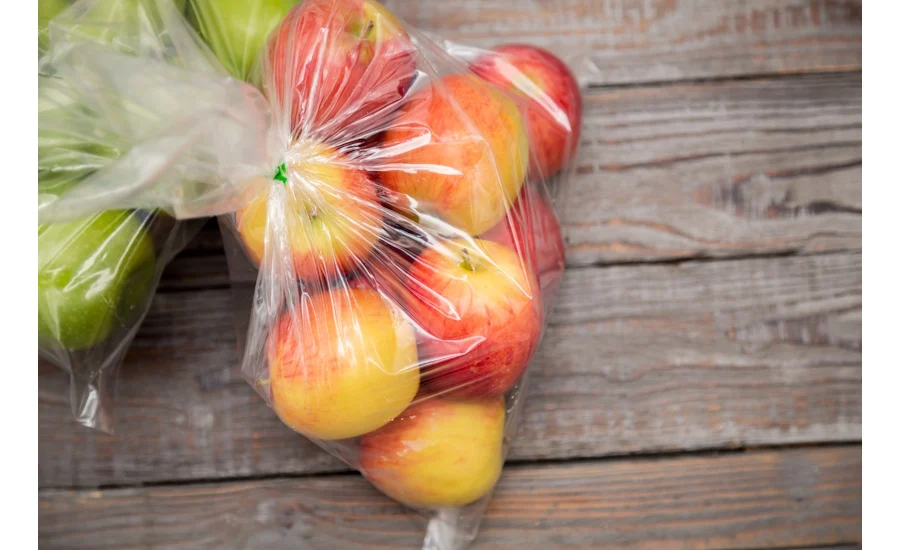
The award-winning product—a 30% Food Contact Post-Consumer Recycled (PCR) resin bag designed for 5-pound and 10-pound potato portions—represents a breakthrough in sustainable design. Achieving food-contact safety with high percentages of PCR resin is a significant technical hurdle, one that Emerald cleared through rigorous testing and engineering. This innovation is not just a trophy on a shelf; it is a viable commercial product that helps retailers meet their ESG (Environmental, Social, and Governance) goals while providing consumers with the convenience of flexible plastic that has a reduced environmental footprint.
The industry will have the opportunity to hear directly from Kevin Kelly at the upcoming Global Pouch Forum in Clearwater Beach, Florida. As a featured speaker for the "Innovation Spotlight," Kelly will delve into the complexities of integrating PCR resin into potato packaging. His presentation is expected to address the challenges of sourcing high-quality recycled material and the mechanical adjustments required to maintain bag integrity during the high-speed filling processes used by major potato growers.
Emerald Packaging’s expansion into Southern California is a multifaceted success story. It is a story of a 63-year-old family business finding its second wind through strategic acquisition. It is a story of logistical optimization that brings manufacturing closer to the fields of Arizona and Mexico. And it is a story of technological and environmental leadership, as the company scales its operations while simultaneously pushing the boundaries of what is possible with recycled materials. As the new Santa Ana facility ramps up to full capacity, Emerald Packaging is not just supplying bags; it is providing the infrastructure for a more resilient, efficient, and sustainable food supply chain for the 21st century. The move solidifies their status as a dominant force in the flexible packaging industry, proving that even after six decades, the company remains as agile and forward-thinking as the day it was founded.