
The global life sciences industry is currently navigating a complex intersection of rigorous clinical safety standards and an intensifying mandate for environmental sustainability. For decades, the pharmaceutical and biotechnological sectors have relied on high-performance multi-layer plastic laminates to ensure the integrity of life-saving products. However, these traditional materials often pose significant challenges regarding recyclability and chemical migration. Addressing this critical gap, SÜDPACK Medica, a leading global provider of high-tech film packaging for the medical and pharmaceutical industries, has announced the development of a groundbreaking mono-polyethylene (mono-PE) sterile barrier system. This innovation is specifically engineered to replace conventional polyethylene/polyamide (PE/PA/PE) laminates, offering a sustainable alternative that does not compromise on mechanical durability or product safety.
The shift toward mono-material solutions in the life science sector is driven by a combination of regulatory pressure and corporate responsibility. While the pharmaceutical industry has historically been granted certain exemptions from the strictest interpretations of the Packaging and Packaging Waste Regulation (PPWR) due to the paramount importance of patient safety, the tide is turning. Stakeholders across the value chain are increasingly prioritizing the circular economy and resource efficiency. SÜDPACK’s new mono-PE solution represents a proactive response to these evolving requirements, demonstrating that high-performance sterile barrier systems can indeed align with the principles of a circular economy.
The Engineering Challenge: Replacing Polyamide
To understand the significance of SÜDPACK’s innovation, one must first examine the role of the traditional PE/PA/PE structure. In these conventional coextruded films, polyethylene (PE) serves as the sealing layer, providing excellent hermetic properties and processability on packaging lines. However, PE on its own often lacks the structural integrity required for heavy-duty life science applications. This is where Polyamide (PA), or nylon, comes in. Polyamide provides the necessary mechanical strength, puncture resistance, and flex-crack resistance required to protect sensitive primary packaging, such as process bags used in biopharmaceutical manufacturing.
The problem with this multi-material approach is twofold. First, the combination of PE and PA is notoriously difficult to recycle, as the different melting points and chemical properties of the polymers make them incompatible in standard recycling streams. Second, the production of these laminates often requires adhesive agents or tie layers to bond the disparate materials together. These components, along with the polyamide itself, can introduce "migratables"—substances that may leach into the packaging environment and potentially interact with the sensitive biological contents of the primary container.
SÜDPACK Medica’s R&D team set out to replicate the mechanical performance of the PE/PA/PE benchmark using only polyethylene. This was achieved through a rigorous process of raw material screening and advanced coextrusion techniques. By optimizing the material selection and the structural layout of the film, SÜDPACK has produced a mono-PE film that matches the stability and strength of traditional laminates. This achievement effectively eliminates the need for polyamide and synthetic adhesives, creating a purer, more streamlined packaging solution.
Enhancing Safety in Bioprocessing and Cell Culture
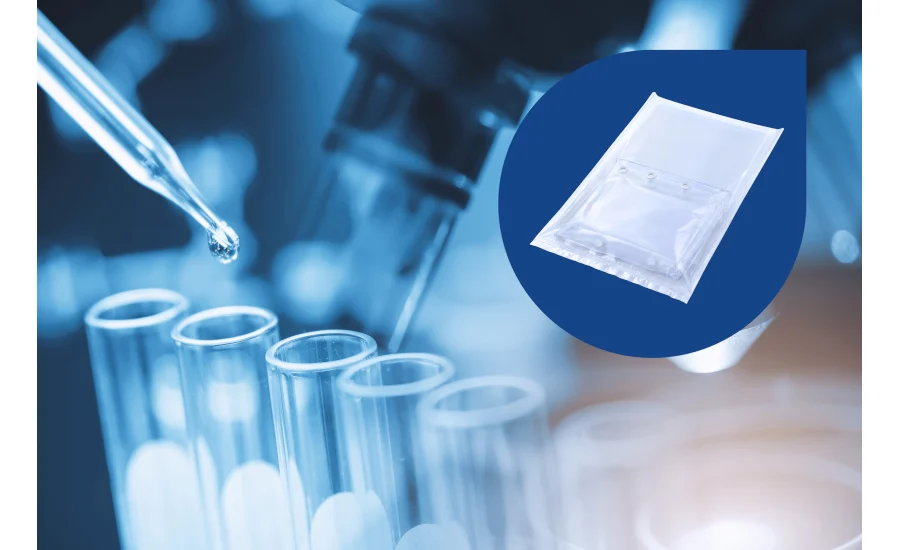
The primary application for this new mono-PE sterile barrier system is as outer packaging (secondary packaging) for process bags. In the world of bioprocessing and cell culture, these bags are used to store and transport media, buffers, and sensitive biological intermediates. Any failure in the outer packaging during transportation, storage, or handling can lead to the contamination or loss of extremely high-value products.
In these sensitive environments, the risk of migration is a paramount concern. Even infinitesimal amounts of migrating substances from the packaging material can interfere with delicate biotechnological processes, potentially affecting cell growth or product purity. SÜDPACK’s mono-PE solution is specifically optimized to meet stringent cytotoxicity criteria. By removing polyamide and adhesive agents, the company has successfully minimized the presence of potentially migratable substances. According to SÜDPACK, this is currently the only solution on the market for this specific application that is entirely free from the migratable components typically found in PE/PA/PE coextruded structures.
The film’s high transparency and optical quality also play a vital role in quality control. It allows laboratory technicians and logistics personnel to visually inspect the primary process bags for leaks, particulates, or other irregularities without compromising the sterile barrier.
Manufacturing Integrity and ISO Class 7 Standards
The production of sterile barrier systems for the life science industry requires more than just advanced material science; it demands a manufacturing environment that adheres to the highest standards of cleanliness and quality management. SÜDPACK Medica produces these tubular bags at its specialized facilities, including the recently expanded site in Coulmer, France.
To ensure the highest levels of purity and to prevent contamination during the manufacturing process, the bags are produced in ISO Class 7 cleanrooms. These controlled environments strictly regulate the concentration of airborne particles, temperature, and humidity. By integrating advanced coextrusion technology with cleanroom manufacturing, SÜDPACK ensures that the sterile barrier system is ready for the most demanding pharmaceutical applications, meeting the industry’s rigorous regulatory expectations for safety and hygiene.
Quantifying the Environmental Impact
Beyond its functional and safety advantages, the mono-PE structure offers a transformative leap in environmental performance. A central pillar of SÜDPACK’s development strategy was to ensure compatibility with existing recycling infrastructure. To validate this, the company utilized CHIRA software, a recognized tool for assessing the recyclability of packaging materials. The assessment concluded that the mono-PE sterile barrier system has a calculated recyclability rate of 100% within established polyethylene recycling streams. This allows hospitals, laboratories, and manufacturing facilities to treat the used packaging as a valuable resource rather than waste.
Furthermore, the environmental benefits extend to the product’s carbon footprint. SÜDPACK Medica conducted a screening Life Cycle Assessment (LCA) to compare the new mono-material film against the traditional PE/PA/PE structure. The results were striking: the mono-PE solution showed a reduction in CO2e emissions of more than 50%. This significant decrease is attributed to several factors, including the more efficient production process and the elimination of carbon-intensive polyamide and adhesive components. These findings provide life science companies with tangible data to support their Scope 3 emissions reduction targets and broader sustainability reporting.
Future-Proofing the Life Science Supply Chain
As the pharmaceutical industry continues to evolve, the demand for packaging that is both technically superior and environmentally responsible will only grow. The introduction of the mono-PE sterile barrier system is a clear indication that the trade-off between performance and sustainability is becoming a thing of the past.
For manufacturers of life science products, this new material concept offers several strategic advantages. It provides a reliable path for adapting existing packaging concepts to meet future regulatory requirements, such as those outlined in the EU’s PPWR, which will eventually mandate higher levels of recyclability across all sectors. Additionally, it mitigates the risks associated with chemical migration, providing an extra layer of security for sensitive biotechnological applications.
SÜDPACK Medica’s breakthrough is a testament to the power of targeted material science and process optimization. By focusing on the specific needs of the bioprocessing and cell culture sectors, the company has delivered a solution that protects not only the product but also the environment. The high puncture resistance, flex-crack resistance, and exceptional sealing properties of the film ensure that it can withstand the rigors of global logistics, while its mono-material composition ensures it can be reintegrated into the circular economy at the end of its life.
In conclusion, the development of the mono-PE sterile barrier system represents a significant milestone in the evolution of life science packaging. It proves that with the right combination of innovation and technical expertise, it is possible to achieve a 100% recyclable solution that matches the mechanical performance of traditional multi-layer films. As the industry moves toward a more sustainable future, SÜDPACK Medica’s new offering stands as a benchmark for excellence, providing a safer, cleaner, and more efficient way to protect the vital products that sustain human health.