
In the contemporary landscape of B2B marketing and brand management, the transition from generic promotional items to high-end, bespoke merchandise represents a significant shift in how brands communicate value. No longer satisfied with "off-the-shelf" solutions that offer little more than a printed logo on a stock product, industry leaders are seeking manufacturing partners capable of executing complex, architecturally sound designs. A recent collaboration between The Bag Workshop—a specialist division of The Wurlin Group—and a prominent creative agency serves as a definitive case study in how technical engineering, innovative material sourcing, and global logistical expertise can converge to produce a world-class retail-grade product.
The project was initiated by a top-tier creative agency tasked with developing a unique line of professional accessories for an elite end-client. The brief was deceptively simple yet technically demanding: "Create an unusual, reliable, and durable bag." To fulfill this, the agency required more than just a vendor; they needed a technical partner who could bridge the gap between conceptual 2D designs and a physical product that met the rigors of professional daily use. The centerpiece of this design was a dual-handle system—incorporating both short hand-straps and long shoulder-straps—engineered into two distinct silhouettes: a transparent tote with a structural lining and a weather-resistant portrait canvas bag.
The Engineering Challenge: Structural Integrity Meets Aesthetic Innovation
The primary hurdle in bespoke bag design often lies in the tension between aesthetics and load-bearing capacity. For this project, the dual-handle system was not merely a stylistic choice but a functional requirement. To ensure these bags could carry the weight of modern professional life—laptops, tablets, and heavy documents—The Bag Workshop employed advanced reinforcement techniques.
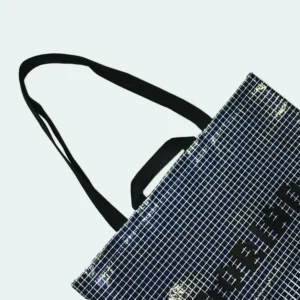
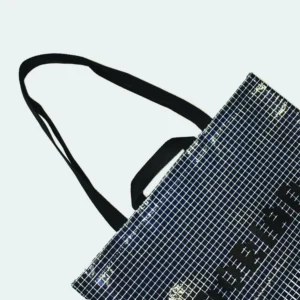
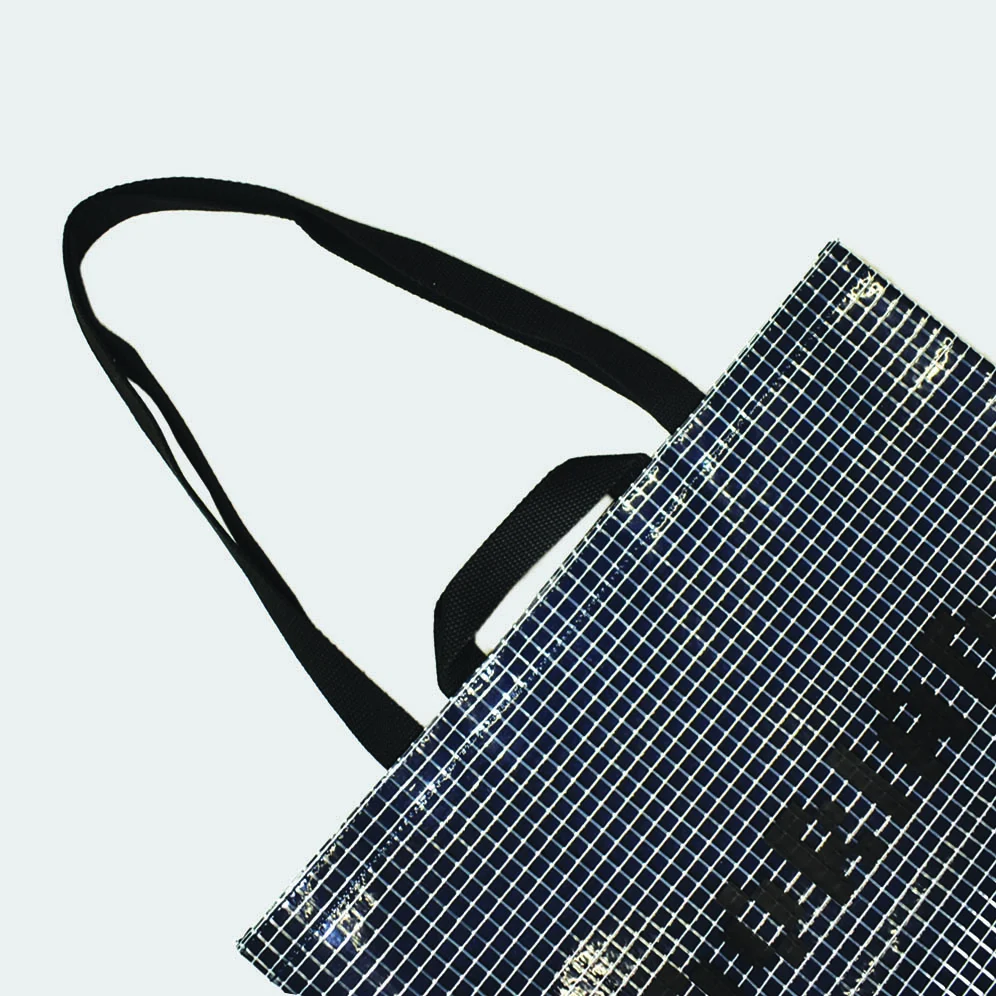
In the first design, a "Transparent Tote," the engineering team focused on the interaction between rigid and flexible materials. While many promotional clear bags use thin, low-grade plastic, this project demanded a high-gauge, industrial-strength transparent PVC/TPU. To elevate the design, a secondary layer of premium navy felt was integrated as a lining. This created a sophisticated visual depth where the rich texture of the felt was visible through the clear exterior panels, providing a "window" effect that felt more like high-fashion retail than a corporate giveaway.
The second design, a "Portrait Canvas Bag," prioritized verticality and urban resilience. Designed to accommodate the taller profile of professional gear, this bag utilized a weather-resistant canvas substrate. The challenge here was ensuring that the transition between the hand-carry straps and the shoulder straps remained seamless without causing the fabric to bunch or the seams to fail under tension. By utilizing cross-stitched reinforcement and internal webbing at key stress points, the manufacturing team ensured the bag maintained its sleek, upright silhouette regardless of the load.
Technical Manufacturing and Material Sourcing
As part of The Wurlin Group, The Bag Workshop leveraged an extensive global supplier network to source materials that are often inaccessible to standard promotional vendors. For the transparent tote, the choice of material was critical. While standard PVC is common, the team explored Thermoplastic Polyurethane (TPU) options, which offer superior environmental credentials, better flexibility in cold climates, and higher resistance to yellowing over time.
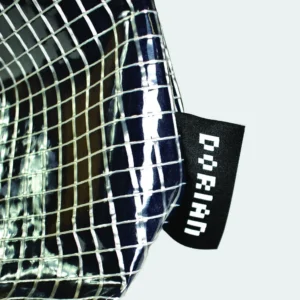
The branding elements were equally bespoke. Rather than simple screen printing, which can peel off non-porous surfaces, the project utilized specialized UV-cured inks and molecular-bonding print techniques to ensure the logos remained pristine. Additionally, custom woven labels were engineered into the side seams, providing a subtle yet definitive mark of quality that mirrors the branding strategies of luxury fashion houses.
The Wurlin Advantage: Global Logistics and Distribution
For global brands, the manufacturing of a product is only half the battle. The true complexity often lies in the distribution. Managing a global rollout involves navigating a labyrinth of international freight regulations, customs duties, and "last-mile" delivery challenges. The Wurlin Group provided a comprehensive logistical umbrella for this project, managing the movement of goods from the factory floor to international hubs.
By overseeing the entire supply chain, the team provided the creative agency with structured project coordination. This included:
- Prototyping and Iteration: Rapid sampling to ensure the dual-strap system met the agency’s ergonomic standards.
- Quality Assurance: On-site factory inspections to monitor stitch density, print alignment, and material consistency.
- Customs and Compliance: Navigating tariff classifications and ensuring all materials met the safety standards of the various regions where the bags would be distributed.
Strategic Results: Beyond the Bag
The outcome of this collaboration was a product line that transcended the category of "merchandise." The end-users received a tool that was as functional as it was visually striking, leading to higher brand affinity and a longer product lifecycle. For the creative agency, the partnership allowed them to promise—and deliver—a level of manufacturing sophistication that reinforced their reputation for excellence.
The Bag Workshop and The Wurlin Group continue to set the standard for bespoke luxury branded merchandise. By focusing on innovative manufacture and diligent project coordination, they allow brand managers and agencies to push the boundaries of what is possible in product design.
Comprehensive FAQ: Technical and Logistical Insights for B2B Buyers
Q1: Why is a dual-handle system (short and long straps) considered a significant engineering challenge in custom bag design?
Integrating two sets of handles requires a recalculation of the bag’s center of gravity and stress distribution. When carried by the short handles, the tension is concentrated at the top hem. When carried by the shoulder straps, the tension pulls from a different angle, often affecting the side panels. To prevent tearing or distortion, we use reinforced stitching patterns, such as the "box-X" stitch, and sometimes hidden internal stays that distribute the weight across the entire frame of the bag.
Q2: What are the benefits of using TPU over standard PVC for transparent professional bags?
TPU (Thermoplastic Polyurethane) is a premium alternative to PVC. It is more sustainable, biodegradable over long periods, and lacks the harsh chemical odor often associated with cheap plastics. From a functional standpoint, TPU is much more abrasion-resistant and remains flexible at sub-zero temperatures, whereas PVC can become brittle and crack. This makes TPU the preferred choice for global brands whose products may travel through varying climates.
Q3: How does The Wurlin Group ensure brand consistency across global manufacturing sites?
We utilize a rigorous Quality Management System (QMS). This begins with a "Golden Sample" approved by the client. All subsequent production runs are measured against this sample using Pantone matching for fabrics and threads, and digital templates for logo placement. Our on-the-ground QC teams perform in-line inspections during the sewing process, not just at the end, to catch and correct errors early.
Q4: Can these custom designs be adapted for specific security requirements, such as "Clear Bag Policies" at stadiums or corporate campuses?
Absolutely. The minimalist clear work bag design we engineered is specifically tailored for high-security environments. It allows for immediate visual inspection of contents while the premium navy felt accents and dual-strap system ensure the user still feels they are carrying a high-end fashion accessory rather than a utility pouch.
Q5: What logistical hurdles are involved in shipping bespoke merchandise to multiple international destinations?
The primary hurdles are "Rules of Origin" and varying tariff rates. Each country has specific documentation requirements (COOs, Commercial Invoices, Packing Lists). We manage these complexities, ensuring that the correct HS Codes (Harmonized System) are applied to minimize duties and prevent shipments from being held in customs, which is vital for time-sensitive marketing launches.
Q6: Why should a brand choose a bespoke solution over a high-quality off-the-shelf bag?
Off-the-shelf products are designed for the "average" user and the "average" brand. A bespoke solution allows you to engineer the product around your specific needs—perhaps a specific pocket for a proprietary device, or a strap length optimized for your target demographic. More importantly, bespoke items are unique; they cannot be bought elsewhere, which gives them a higher "social currency" and makes your brand’s physical touchpoint truly memorable.
Q7: What is the typical lead time for a project involving innovative manufacture and global distribution?
While it varies based on complexity, a typical project moves from concept to prototype in 2-3 weeks, with mass production taking 4-8 weeks. Global shipping adds another 2-6 weeks depending on whether sea or air freight is chosen. Because we provide structured project coordination, we provide a detailed timeline at the outset to ensure all stakeholders are aligned.