
The global horticultural industry is currently navigating a pivotal era defined by the dual pressures of environmental stewardship and heightened consumer expectations. At the forefront of this transformation is Golden Bay Fruit, a premier New Zealand-based grower and exporter that has recently made a significant strategic shift in how its premium apple varieties reach the consumer. By transitioning its Miranda apple variety to a sophisticated linerless lid packaging solution, the company is not merely updating its aesthetic; it is signaling a commitment to a plastic-free future and setting a new benchmark for sustainable retail presentation in the United Kingdom.
Golden Bay Fruit, situated in the fertile and sun-drenched landscapes of New Zealand’s South Island, has spent the last seven years perfecting the Miranda apple. This variety is a testament to the region’s unique microclimate, which produces fruit of exceptional crispness and clarity of flavor. For much of its early commercial life, the Miranda apple was a jewel of the Asian markets, where high-brix, aesthetically perfect fruit is highly prized. However, as global supply chains evolve and consumer preferences in the West shift toward specialty varieties, Golden Bay Fruit identified a major opportunity to introduce this distinctive apple to the British public. Today, the Miranda variety is supplied exclusively to Tesco, one of the UK’s largest and most influential retailers, marking a significant milestone in the variety’s global journey.
The transition to the UK market necessitated a rethink of the product’s shelf presence and environmental footprint. Historically, fresh produce has relied heavily on plastic flow-wraps and polyethylene bags—materials that are increasingly scrutinized by both regulators and eco-conscious shoppers. In the United Kingdom, where the "Plastic Tax" and retailer-led sustainability initiatives are driving rapid change, Golden Bay Fruit recognized that the Miranda apple needed a packaging format that reflected its premium quality without the ecological baggage of single-use plastics.
The catalyst for this change was the success of another Golden Bay Fruit variety: the Sassy apple. Working closely with their packing partner, Mansfields, the company had already experimented with linerless labeling technology for the Sassy brand. The results were undeniable. Not only did the Sassy apples see year-on-year sales growth, but the packaging also resonated deeply with consumers who were looking for "greener" options in the fruit aisle. Encouraged by this data-driven success, Golden Bay Fruit decided to mirror this approach for the Miranda variety, opting for a linerless lid solution that combines structural integrity with visual flair.
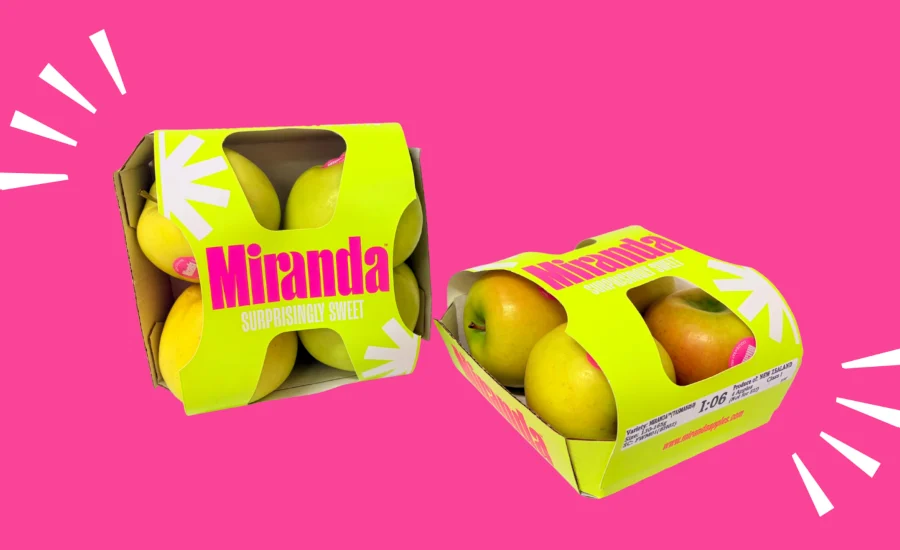
The engineering behind this new packaging is a collaborative masterpiece involving several key industry players. The design of the Miranda pack was spearheaded by Ravenwood, a leader in linerless labeling technology. The format utilizes a sturdy, recyclable cardboard tray that serves as the base, which is then secured by a bold, bright linerless label that acts as a lid. Unlike traditional labels that require a silicone-coated backing paper (which typically ends up in landfills), linerless labels are wound onto a roll like tape. This eliminates the "liner" waste entirely, significantly reducing the carbon footprint of the packaging process.
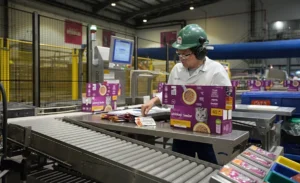
The labels themselves are manufactured by ProPrint Group, a UK-based printer approved by Ravenwood for linerless applications. To apply these labels at commercial speeds, the operation utilizes the Ravenwood Nobac 5000L linerless applicator. This specific machinery is a workhorse in the fresh produce sector, designed to handle the rigors of high-volume packing environments while maintaining surgical precision. One of the standout features of the Nobac 5000L is its ability to apply a "fruit lid" with custom die-cut holes. These apertures are not merely decorative; they serve a vital functional purpose by allowing the fruit to breathe, preventing moisture buildup, and ensuring that the consumer can clearly see the quality of the apples they are purchasing.
Graham Bonus, the Sales Director at ProPrint Group, highlights that this shift is part of a broader trend where strong brands are seeking "go-to" sustainable solutions. According to Bonus, the marriage of commercially viable production speeds with the aesthetic demands of the premium retail sector makes linerless technology an incredibly attractive proposition. For a retailer like Tesco, which has committed to a "Remove, Reduce, Reuse, Recycle" strategy, this packaging format fits perfectly into their corporate social responsibility goals while providing a product that stands out against a sea of plastic-wrapped competitors.
The aesthetic impact of the new Miranda packaging cannot be overstated. Patrick Meikle, the Chief Commercial Officer at Golden Bay Fruit, emphasizes that the visual contrast between the earthy cardboard tray and the vibrant, high-definition label creates a "premium look and feel." This is particularly important for the Miranda variety because it challenges consumer preconceptions. In the world of apples, there is a common psychological bias that associates green apples with tartness or sourness, much like the classic Granny Smith. However, the Miranda is a subversion of this trope—it is exceptionally sweet and offers a satisfying crunch that belies its emerald exterior.
"The visual impact of the cardboard tray combined with a bold, bright label also gives the pack a premium look and feel, which can make a real difference on the shelf," Meikle explained. He noted that the combination of a distinctive flavor profile and standout packaging has allowed Miranda to exceed initial sales expectations in the UK. By using the packaging to tell a story of sweetness and sustainability, Golden Bay Fruit is effectively educating the consumer at the point of purchase.
The operational rollout of this packaging has been a calculated success. Currently, Golden Bay Fruit and its partners are operating a single Ravenwood Nobac 5000L line for the Miranda variety. However, the company is closely monitoring the surge in demand. With sales figures already trending ahead of forecasts, there is an active discussion regarding the expansion of production capacity. This scalability is a crucial component of Golden Bay Fruit’s long-term strategy. The company also grows the Dazzle and Sassy varieties on the South Island, and the success of the linerless strategy with Miranda is reinforcing a unified brand identity across their entire UK portfolio.
From a broader perspective, the move by Golden Bay Fruit represents a significant shift in the New Zealand export model. As a nation that prides itself on the "Pure New Zealand" brand, the country’s exporters are under increasing pressure to ensure that their supply chains are as clean as their growing environments. Shipping fruit halfway around the world is an energy-intensive process; therefore, reducing packaging waste at the destination is a vital way to offset the environmental cost of logistics. By partnering with UK-based printers like ProPrint Group, Golden Bay Fruit also minimizes the carbon footprint associated with transporting packaging materials, sourcing the labels closer to the point of retail.
The transition to linerless lids also addresses the functional requirements of the modern supply chain. The Nobac 5000L ensures that the labels are applied with enough tension to secure the fruit during transit, reducing bruising and food waste—another critical pillar of sustainability. The die-cut holes facilitate rapid cooling in the cold chain, ensuring that the apples maintain their "just-picked" crunch from the moment they leave the South Island until they reach a Tesco shopper’s basket in London or Manchester.
As the fresh produce industry continues to grapple with the complexities of the circular economy, the Golden Bay Fruit and Miranda apple case study serves as a blueprint for success. It demonstrates that sustainability does not have to come at the expense of brand power or operational efficiency. On the contrary, by embracing innovative technologies like linerless labeling and die-cut cardboard formats, brands can actually enhance their market position, drive sales growth, and build deeper trust with a consumer base that is increasingly voting with its wallet for the planet.
Looking ahead, Golden Bay Fruit remains committed to its path of innovation. The "Miranda" success story is just one chapter in a larger narrative of transformation. As they continue to monitor supply and demand, the potential for further automation and even more advanced sustainable materials remains on the horizon. For now, the sweet, crunchy green apples from New Zealand are making a bold statement on UK shelves: the future of fruit is plastic-free, premium, and undeniably bright.