

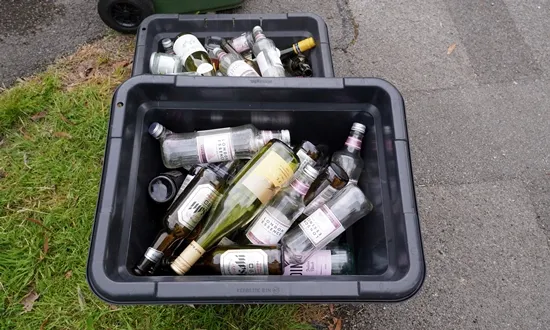
The United Kingdom stands at a critical juncture in its pursuit of environmental sustainability, facing a paradox where high public engagement in recycling coexists with substantial economic loss due to persistent contamination and confusion. Ahead of the nationwide implementation of the Simpler Recycling mandates across England, the waste and resources action programme (WRAP) is intensifying its public awareness campaign, cautioning that millions of households are effectively discarding valuable resources—dubbed "cash in the trash"—by mismanaging their recyclable materials.
Hannah Jarratt, WRAP’s leading figure in marketing and campaigns, articulated the scale of the problem, emphasizing that while the UK boasts a commendable recycling culture—with near-unanimous participation rates reported—the quality and completeness of this recycling effort remain seriously deficient. "We are witnessing a nation committed to the principle of recycling, yet the practical application is bleeding resources," Jarratt observed. Her data highlights a staggering leakage: the average household is estimated to discard approximately 2.5 items per collection that are fully capable of being recycled, translating to an annual loss soaring beyond 2.3 billion individual units nationally.
This "leakage" isn’t confined to obvious large items. The materials being unnecessarily sent to landfill or incineration span everyday domestic consumables, indicating a breakdown in sorting knowledge at the point of disposal. Commonly cited examples of these frequently binned yet recoverable items include aluminium foil, often discarded after use in food preparation; various plastic packaging from personal care items such as shampoo bottles; non-rigid items like toothpaste tubes; trigger spray mechanisms from cleaning products; aerosol containers; common rigid plastics like yoghurt pots; empty aftershave and perfume bottles; and even cardboard toilet roll tubes, which are highly desirable feedstock for paper mills.
The urgency behind WRAP’s increased advocacy is directly linked to the imminent rollout of Simpler Recycling legislation. Following its initial phased introduction targeting businesses with ten or more employees beginning in March of the previous year, the reforms are set to standardize household waste collection across all of England by the end of the current month. This landmark regulatory shift mandates four distinct, separate collection streams for residential properties: one dedicated to paper and card packaging; another for all organic food waste; a third for mixed dry recyclables (the contents of which will be harmonized); and the final stream reserved for residual, non-recyclable waste.
This legislative push represents what WRAP terms the "biggest paradigm shift in household recycling infrastructure and practice witnessed in more than two decades." Projections suggest that this standardization will dramatically improve material quality and capture rates, potentially contributing an uplift of five percentage points to municipal recycling rates across England. This improvement is crucial as the nation strives to meet the ambitious 65% recycling target set for 2035. For context, the 2023 figures showed the national rate hovering at 44.6%, illustrating the significant gap that must be closed.
The government has actively sought to clarify the regulations surrounding compliance, particularly in response to public anxiety fueled by media reports. In January, the Department for Environment, Food & Rural Affairs (Defra) moved to swiftly rebut widespread newspaper claims suggesting households faced punitive fines reaching as high as £400 for contamination or incorrect sorting. Defra confirmed that the list of "forbidden items" circulated by some sources—which often included hazardous materials like batteries or non-recyclable conveniences like wet wipes—was misleading. These items, while posing significant environmental risks if misplaced, were simply designated as "out-of-scope materials" for the standard household recycling streams, not subjects for immediate, severe penalties under the new system.
Defra clarified that while the principle of correct presentation is paramount, the actual enforcement mechanism for improper waste presentation carries a maximum penalty of £80. Crucially, this fine is not imposed instantaneously; it can only be levied following the issuance of formal written warnings to the offending household. Nevertheless, as disposal costs continue to escalate across the UK, a growing number of local authorities are proactively implementing stricter monitoring and enforcement strategies to combat contamination, which severely degrades the value of collected materials and increases processing expenses.
The overarching vision championed by government officials aligns perfectly with WRAP’s objectives. Circular Economy Minister Mary Creagh emphasized the transformative potential of the standardized system. "Simpler Recycling is not merely a logistical adjustment; it is an economic imperative," Creagh stated. "This framework will unlock the enormous intrinsic value currently trapped within the everyday items we carelessly discard, paving the way for a demonstrably cleaner, greener economy that serves the prosperity of all citizens." By reducing the ‘wish-cycling’ and contamination that plagues current collection systems, the new mandatory separation is designed to create cleaner bales of commodity material, thus increasing their market value and driving investment in domestic reprocessing infrastructure.
The campaign underscores that the transition to Simpler Recycling requires more than just new bins; it demands a renewed public commitment to understanding what goes where. WRAP’s materials stress that understanding the four distinct streams—paper/card, food waste, mixed dry recyclables, and residual waste—is the key to transforming the UK from a nation of recyclers in aspiration to a nation of highly efficient recyclers in practice, effectively capturing the billions of pounds worth of materials currently being consigned to waste. The success of this regulatory overhaul hinges directly on public adherence to the simplified, yet specific, collection guidelines being rolled out across the country.