
‘Rescue Me’: How WRAP and Sky Media are Using Empathy to Transform UK Recycling Habits. In an era defined by a mounting climate crisis and the urgent need for a circular economy, the simple act of putting a plastic bottle or a cardboard tube into the correct bin remains one of the most effective, yet underutilized, tools in the fight for environmental sustainability. Despite a widespread public desire to do the right thing, there is a persistent gap between intent and action. To bridge this divide, the Waste and Resources Action Programme (WRAP) has launched a pioneering television campaign, "Rescue Me," designed to inject personality, humor, and, most importantly, empathy into the recycling process.
Backed by the substantial creative and financial support of Sky Media’s prestigious Sky Zero Footprint Fund, this initiative represents a strategic shift in how sustainability is communicated. By moving away from dry, instructional messaging and toward a narrative-driven approach, WRAP aims to tackle the "confidence crisis" that currently plagues UK household recycling habits.
The Confidence Gap: Why Good Intentions Fail
The statistics surrounding domestic recycling are, at first glance, promising. According to the latest data from WRAP’s UK Recycling Tracker (Spring 2025), a staggering 89% of households claim to participate in recycling. However, this high level of engagement masks a deeper, systemic issue: consistency.
The research paints a sobering picture of missed opportunities. Approximately 79% of households admit to regularly disposing of at least one item in their general waste that could have been successfully recycled. On average, every household is losing two to three items per week to the landfill bin that should have been processed for circular reuse. The primary driver of this waste isn’t apathy; it is uncertainty. Only 9% of the population reports feeling "very confident" in their knowledge of what can and cannot be recycled. This ambiguity—a mix of confusing local council guidelines and a lack of clear labeling—leads to "wish-cycling" or, more frequently, the cautious decision to simply bin items to avoid contamination.
A Creative Intervention: The ‘Rescue Me’ Philosophy
To combat this, WRAP partnered with the creative agency Among Equals to develop the "Rescue Me" campaign. The core concept is rooted in behavioral science: humans are more likely to take action when they feel an emotional connection to the subject.
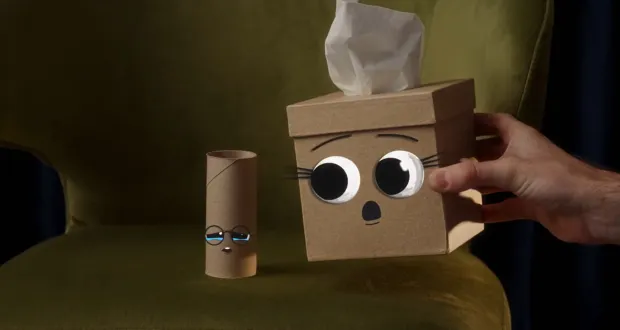
Instead of lecturing consumers on the technicalities of polymer codes or paper grades, the campaign anthropomorphizes common household recyclables. By giving items like toilet roll tubes, empty perfume bottles, and aerosol cans distinct voices, human traits, and emotional backstories, the campaign transforms them from "trash" into characters worthy of a second life.
The centerpiece of the campaign is a high-impact television advertisement that vividly portrays the "dreams" and aspirations of a discarded toilet roll. Through a blend of humor and poignant storytelling, the viewer is invited to see the item not as a piece of waste, but as a resource with a potential future. The campaign reframes the act of recycling as an act of "rescue," positioning the consumer as a hero who saves these items from an ignoble end in a landfill.
The Sky Zero Footprint Fund: Scaling Impact
The campaign’s reach is significantly bolstered by its status as a winner of the Sky Zero Footprint Fund’s Catalyst Category. Sky Media’s fund, which allocates £2 million in media value to projects driving environmental change, provided WRAP with £200,000 in advertising support.
This partnership is particularly vital for charities and non-profits that possess the evidence-based knowledge to effect change but often lack the marketing budget to scale that message to a national audience. By leveraging Sky’s data-led targeting capabilities, WRAP can ensure that the "Rescue Me" message reaches the households where it is needed most, rather than casting a wide, inefficient net. This surgical approach to media buying is designed to improve recycling accuracy and capture rates across diverse demographics.
A Broader Strategy for Circular Living
The "Rescue Me" television spots serve as a high-visibility catalyst for WRAP’s long-standing "Recycle Now" platform. The campaign is designed to create a sustained feedback loop that integrates with digital and social media outreach, eventually culminating in the annual "Recycle Week." This year, Recycle Week will run from September 14 to September 20, serving as a national focal point for the initiative.
During this week, the campaign will expand to include a wider array of household characters, effectively turning the nation’s attention toward the systemic changes required for a circular economy. This is supported by an extensive network of collaborators, including government bodies, local councils, major retailers, and manufacturers, all of whom are aligned in the mission to simplify the recycling experience for the average citizen.
The urgency of these efforts cannot be overstated. The environmental cost of producing new materials is immense. WRAP highlights a compelling metric: if every household in the UK recycled just one extra toilet roll tube per week, the cumulative energy savings would be sufficient to power over 26,000 homes for an entire year. Such figures demonstrate that minor, incremental shifts in behavior—when practiced at a national scale—have the power to alter the trajectory of our environmental impact.
Expert Perspectives on Behavior Change
David Wilson, Communications Director at WRAP, emphasizes that the campaign arrives at a pivotal moment. "We’ve just seen one of the largest reforms to recycling in England with the introduction of Simpler Recycling," Wilson noted. "This advert serves as a timely reminder that individuals have a powerful role to play in the sustainable management of our resources."
Wilson underscored that the broader organizational mission is to embed the principles of circular living into the fabric of everyday life, from corporate boardrooms to residential kitchens. "If everyone recycles just one more item correctly, it will create a tangible, positive impact," he added.
Meg Jordan, Creative Strategy Director at Among Equals, elaborated on the psychological shift the campaign attempts to foster. "Recycling has a confidence problem, not an awareness one," she explained. "People aren’t ignoring their bins; they are paralyzed by uncertainty. By using empathy rather than data-heavy information, we bypass the cognitive load that makes recycling feel like a chore. We gave these items a personality and a voice. It turns out, even a toilet roll has a story to tell if you listen."
Fiona Ball, Group Director of Bigger Picture and Sustainability at Sky, echoed this sentiment, highlighting the synergy between creative storytelling and data-driven media. "WRAP’s ‘Rescue Me’ campaign is a testament to the power of combining emotive creativity with precise media targeting," Ball said. "We are proud to support advertising that makes the transition to a low-carbon, circular economy feel accessible and engaging for everyone."
The Road Ahead
As the campaign continues to air, the focus will remain on tracking the correlation between this messaging and actual recycling performance. By improving the quality of materials being collected—reducing contamination and increasing the volume of recycled goods—WRAP hopes to provide a blueprint for future environmental communications.
The "Rescue Me" campaign is not merely a series of advertisements; it is an invitation to participate in a larger, necessary transition. By reframing the discarded as the valuable, and the act of binning as an act of rescue, WRAP is successfully transforming the mundane chore of recycling into an empowering, collective mission. Whether through the charm of a talking toilet roll or the weight of the environmental data behind it, the message is clear: the power to change the future of the planet is currently sitting in our bins, waiting to be rescued.