

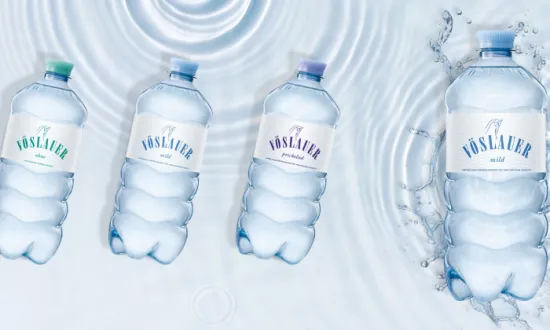
Amcor, a global leader in packaging solutions, has successfully partnered with the esteemed Austrian mineral water brand, Vöslauer, to introduce a meticulously designed, customized tethered cap. This new closure system is more than a mere functional component; it represents a significant upgrade in consumer usability, aligning seamlessly with stringent European environmental regulations, particularly the mandates set forth by the EU Single-Use Plastics Directive (SUPD). The integration of this advanced closure underscores a mutual commitment by both Vöslauer and Amcor to quality, sustainability, and user-centric design in the competitive beverage market.
The core innovation of the new tethered cap lies in its sophisticated mechanical design engineered for superior consumer interaction. When the consumer twists the cap to open the bottle, the tether mechanism allows the closure to swing open to a remarkably wide angle. This broad articulation is not accidental; it is precisely calibrated to ensure the cap remains entirely out of the way of the consumer’s face during drinking. This seemingly small detail drastically enhances the drinking experience, eliminating the minor yet persistent annoyance of a cap obstructing the flow or requiring the user to awkwardly maneuver the bottle. Furthermore, once opened, the cap is engineered to "click" securely into a fixed, open position. This definitive click provides auditory and tactile confirmation that the cap is safely stowed, ensuring a stable and comfortable consumption process, whether the consumer is hiking, driving, or simply relaxing.
Beyond the immediate usability enhancements, Amcor has prioritized convenience for the lifecycle of the bottle. Recognizing that consumers often reseal partially consumed beverages, the tethered cap design incorporates an intuitive and robust reclosing mechanism. The cap can be effortlessly manipulated back onto the bottle neck and secured tightly, preserving the freshness and carbonation (where applicable) of the mineral water. This ease of replacement for reclosing is a crucial factor in maintaining product integrity between sips, directly contributing to consumer satisfaction and reducing the potential for premature spoilage or spillage.
The strategic importance of this tethered design extends far beyond mere convenience; it is a direct response to legislative imperatives aimed at combating plastic pollution. The EU Single-Use Plastics Directive explicitly mandates that caps and lids must remain attached to beverage containers—specifically targeting single-use bottles up to three liters—after opening. This regulation is a cornerstone of Europe’s circular economy strategy, designed to prevent the widespread littering of small, easily detachable plastic components. By ensuring the closure remains physically tethered to the bottle throughout its use and disposal phases, Amcor and Vöslauer are actively mitigating the environmental impact associated with discarded caps.
The environmental benefits are multifaceted. Firstly, keeping the closure attached drastically reduces the likelihood of plastic litter entering natural environments, such as waterways and landscapes. Secondly, for bottles that successfully enter recycling streams, the presence of the cap attached to the bottle body facilitates more efficient sorting and processing at material recovery facilities (MRFs). In regions equipped with the necessary infrastructure, this integration supports higher collection and recycling rates for both the bottle material (typically PET or HDPE) and the cap material, thereby promoting a more circular material flow.
Yvonne Haider-Lenz, Head of Marketing at Vöslauer Mineralwasser, articulated the brand’s perspective on this crucial packaging evolution. She emphasized that Vöslauer’s reputation is built on unwavering quality, a standard that must permeate every aspect of their offering, from the purity of the mineral water sourced from the Alps to the final packaging that reaches the customer. "We appreciate that our customers have high standards and our commitment to quality is as evident in our packaging as it is in our mineral and flavoured waters," Haider-Lenz stated. She further highlighted the enduring professional relationship with Amcor: "We value our longstanding collaboration with Amcor and the company’s ability to support our ongoing sustainability commitments." This statement underscores the strategic partnership, where Amcor acts as a vital enabler for Vöslauer’s ambitious environmental targets.
From Amcor’s standpoint, the development of this customized closure reinforces its position as an innovator in rigid packaging solutions, particularly closures, which are often underestimated in their impact on the overall product value proposition. Sarah de la Mare, Product Line Director for Closures at Amcor Rigids Packaging Solutions International, provided insight into the broader role of closures in the packaging ecosystem. "Closures play a critical role in drinks packaging, protecting the products and ensuring safe and easy access," de la Mare explained. She further elaborated on the subtle yet profound influence these components have on brand perception: "and in this way can help to influence brand perceptions." A faulty, hard-to-use, or easily lost cap can negatively affect a consumer’s view of an otherwise premium product. Conversely, a thoughtfully engineered closure, like the new tethered design, enhances the perceived value, reliability, and modernity of the brand.
The design process for such a customized solution is inherently complex, requiring Amcor’s packaging engineers to balance several demanding requirements simultaneously: regulatory compliance (tethering), mechanical durability (withstanding high-speed bottling lines and consumer torque), ergonomic functionality (wide opening angle and secure reclosure), and material efficiency. The final product delivered to Vöslauer is the result of iterative prototyping and rigorous testing to ensure flawless performance across millions of units.
This collaborative success between Vöslauer and Amcor serves as a compelling case study for the wider beverage industry navigating the transition to more sustainable and user-friendly packaging formats mandated by evolving international legislation. It demonstrates that compliance does not necessitate compromise on premium consumer experience. Instead, through strategic partnership and advanced engineering, packaging mandates like the SUPD can become catalysts for innovation that ultimately elevate product quality and reinforce brand loyalty in an environmentally conscious marketplace. The new tethered cap is thus positioned not merely as a regulatory appendage but as a key feature contributing to the premium positioning of Vöslauer mineral water in Austria and beyond.