
Faerch Accelerates Circular Economy Leadership with Landmark 2025 Sustainability Achievements. As the global packaging industry faces mounting pressure to decouple economic growth from environmental degradation, Faerch has emerged as a pivotal architect of the circular economy. The company’s 2025 Sustainability Report, released this week, provides a comprehensive overview of a transformative fiscal year defined by aggressive decarbonization, radical material innovation, and the large-scale integration of post-consumer recycled content into the food-grade supply chain. By positioning itself not merely as a packaging manufacturer but as an integrated recycler and converter, Faerch is redefining the standard for how food-grade plastic packaging can remain in a perpetual loop, effectively turning waste into a resource.
Decarbonization at Scale: The Path to Net Zero
A cornerstone of Faerch’s 2025 performance is its decisive action on Scope 1 and Scope 2 greenhouse gas emissions. In an era where corporate environmental claims are scrutinized with increasing rigor, Faerch has moved beyond superficial pledges, focusing instead on structural changes to its manufacturing footprint. The most significant development in this area is the tripling of renewable energy utilization across its global operations. By shifting away from fossil-fuel-reliant energy grids and investing in on-site and procured renewable power, the company has substantially lowered the carbon intensity of its manufacturing processes.
This transition is not incidental; it is a strategic hedge against the volatility of global energy markets. For Faerch’s clients—many of whom are major multinational food retailers and producers—this shift is critical. As these organizations face their own ambitious Scope 3 emission reduction targets, they require suppliers who can provide low-carbon packaging solutions that do not compromise on food safety or structural integrity. By de-risking the supply chain through cleaner energy, Faerch ensures that its partners can maintain consistent, high-quality output while simultaneously lowering the carbon footprint of the finished product.
The Rise of CIRPET+: Closing the Loop
Perhaps the most notable triumph highlighted in the 2025 report is the aggressive scaling of the company’s proprietary material, CIRPET+. This innovation is a testament to the viability of true circularity in the rigid plastics sector. Unlike standard recycled plastics, which often suffer from "downcycling"—where material quality degrades until it can no longer be used for food-contact applications—CIRPET+ is designed to be recycled back into food-grade pots, tubs, and trays repeatedly.
Throughout 2025, Faerch significantly increased the volume of CIRPET+ circulating in the market. This achievement is underscored by the company’s unique position as an integrated recycler. By operating its own recycling facilities, Faerch exerts direct control over the quality of the raw material input. This vertical integration allows them to bypass the inconsistencies often found in the secondary raw material market. The result is a high-purity, food-safe recycled PET that rivals the performance of virgin plastic. By successfully scaling this technology, Faerch has proven that the "circularity gap"—the disconnect between product disposal and resource recovery—can be bridged through technical ingenuity and infrastructure investment.
Redefining Design for Recyclability
Material innovation is only half of the equation; the other half is design. In 2025, Faerch introduced a new suite of packaging designs specifically engineered to optimize the efficiency of automated sorting and recycling facilities. Many plastics fail the recycling test not because of their chemical composition, but because their design—such as the use of complex multi-layer structures, opaque pigments, or non-recyclable adhesives—makes them difficult for optical sorters to identify and reclaim.
Faerch’s new design philosophy focuses on "monomateriality." By simplifying the composition of its trays and implementing design features that facilitate clean separation during the recycling process, the company is ensuring that its products are "designed for the bin." This proactive approach addresses the systemic issues that lead to plastic pollution, ensuring that once a package reaches the end of its life, it is a high-value commodity rather than a waste burden. These innovations are critical for retailers, as they simplify the recyclability profile of the final product, allowing brands to make credible, independently verified sustainability claims that resonate with an increasingly eco-conscious consumer base.
Strategic Empowerment of the Value Chain
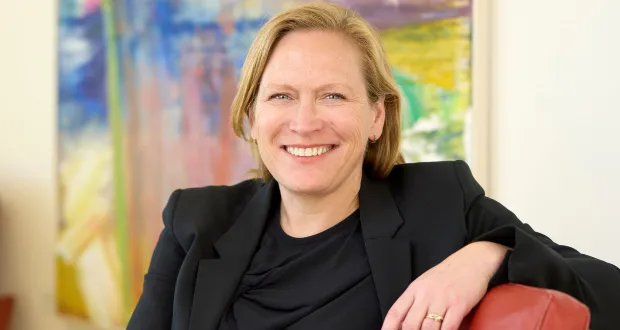
The sustainability landscape of 2025 is dominated by the need for transparency. Regulatory bodies, such as the European Commission, and consumer watchdog groups are demanding more than just vague promises of "eco-friendliness." They require data-backed evidence. Pernille Lind Olsen, Chief Executive of Faerch, emphasized this during the release of the report, noting that the company’s business model is explicitly designed to support its customers’ decarbonization journeys.
"We remain committed to offering our customers circular solutions," Olsen stated. "As an integrated recycler and converter, we are uniquely positioned to deliver low-carbon, high-quality solutions at scale. This protects customers from market volatility, supports their decarbonization journeys, and enables them to make credible, independently verified sustainability claims."
This philosophy of partnership is vital. Faerch is not merely selling a product; it is selling a solution to a complex systemic problem. By providing life-cycle assessment (LCA) data and third-party certifications, Faerch enables its customers to navigate the complexities of Extended Producer Responsibility (EPR) schemes and plastic taxes, which are becoming standard across various global markets. In essence, Faerch’s sustainability efforts act as an insurance policy for its customers, shielding them from the reputational and financial risks associated with non-sustainable packaging choices.
Looking Ahead: The Future of Food Packaging
As the company looks toward the remainder of the decade, the 2025 report serves as a benchmark for future acceleration. The focus is now shifting toward scaling these successful pilot programs into global standards. This includes expanding the reach of its recycling infrastructure to ensure that a greater proportion of the public can effectively participate in the circular economy, regardless of their local municipal recycling capabilities.
The transition to a circular economy is inherently complex, requiring a synthesis of material science, mechanical engineering, supply chain logistics, and public policy advocacy. Faerch’s 2025 report confirms that the company has mastered this synthesis. By demonstrating that sustainability and profitability are not mutually exclusive, but rather mutually reinforcing, Faerch has set a high bar for the rest of the packaging industry.
In conclusion, the 2025 Sustainability Report is more than a summary of achievements; it is a roadmap for the future of the food packaging industry. Through the massive scaling of CIRPET+, a tripling of renewable energy use, and a commitment to radical design transparency, Faerch is proving that the plastic packaging of the future need not be a liability, but an asset in the global effort to mitigate environmental impact. For stakeholders, customers, and investors, the message is clear: the transition to a circular, low-carbon future is well underway, and Faerch is leading the charge, one tray at a time. The full findings, technical methodologies, and data breakdowns can be accessed via the official 2025 Sustainability Report, which serves as a definitive resource for anyone interested in the tangible progress of industrial circularity.