

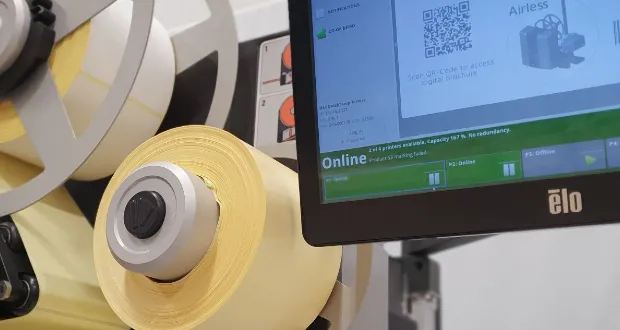
The landscape of automated manufacturing and logistics is undergoing a significant transformation, driven by heightened scrutiny over energy consumption, the optimization of physical space, and the need for resilient, self-sufficient production lines. Central to this evolution is the re-evaluation of ubiquitous utilities, particularly compressed air, which has long been the backbone of pneumatic machinery, including many high-speed label applicators. Industrial Labelling Systems (ILS), a leading provider of advanced labelling solutions across the UK and Ireland, has responded directly to these industry pressures by introducing the QuickTamp Airless system, a groundbreaking departure that eliminates the reliance on compressed air at the critical point of label application for carton handling.
For decades, pneumatically assisted applicators have been the gold standard in the demanding world of automated labelling. Their robust nature and reliable performance across diverse environmental conditions—from temperature fluctuations to vibration—made compressed air systems indispensable for tasks like tamping and product conveyance. However, this dependency comes with inherent complexities. Compressed air infrastructure necessitates extensive local pipework, integration with centralized air generation plants, and a continuous cycle of maintenance for compressors, dryers, filters, and regulators. As production facilities strive for ‘smarter’ operations, the energy intensity of compressed air generation—often cited as one of the least energy-efficient utility systems in a plant—and the physical footprint consumed by ancillary air preparation equipment are becoming significant liabilities. Furthermore, as sites expand or reconfigure production layouts, the availability and pressure consistency of the shared air supply can impose unforeseen limitations on new equipment placement or expansion projects.
Recognizing that a growing segment of modern facilities prioritizes utility independence and simplified installations, ILS, in partnership with the innovative platform developer Evolabel, has engineered a pragmatic solution. The QuickTamp Airless system represents a paradigm shift, offering manufacturers a viable, high-performance pathway to drastically reduce or entirely eliminate compressed air requirements specifically at the labelling station without necessitating a costly overhaul of the existing conveyor system or the fundamental line architecture.
Engineering Freedom: The Core of Airless Operation
The QuickTamp Airless technology is not a complete redesign of the successful QuickTamp applicator platform but rather a strategic evolution focusing on the actuation mechanism. Traditional pneumatic applicators rely on pressurized air to drive a tamp pad forward, pressing the label onto the package surface. This new iteration substitutes this mechanism with highly responsive, electrically driven components. This change is pivotal: by removing compressed air from the immediate application process, several operational advantages materialize simultaneously.
Firstly, the physical footprint dedicated to labelling is immediately reduced. There is no longer a requirement for dedicated air lines running directly to the applicator head, nor is there a need for local air preparation units (regulators, lubricators) immediately adjacent to the machine. This frees up valuable real estate on the production floor, allowing for denser packing of equipment or simpler integration into confined spaces often found in high-throughput logistics centres or e-commerce fulfilment warehouses.
Secondly, and perhaps more importantly in the current climate, it decouples the labelling process from the facility’s central compressed air grid. This insulation shields labelling operations from the unpredictable effects of system pressure drops caused by other high-demand pneumatic tools elsewhere on the site, ensuring consistent application quality regardless of plant-wide utility demands. It also mitigates risks associated with air quality issues, such as moisture ingress, which can degrade pneumatic components over time.
Maintaining Performance Under Variable Conditions
A primary concern when migrating from a proven pneumatic system to an electric alternative, especially in high-volume sectors like logistics and distribution, is the ability to maintain speed and precision. The QuickTamp Airless has been rigorously developed and tested to meet the exacting standards of modern production environments handling variable-height cartons—a common challenge where packages of differing dimensions must be labelled sequentially on the same line.
The electrical actuation system provides superior control over stroke speed, force application, and dwell time compared to its pneumatic predecessor. This precise electronic control ensures that whether the carton is tall, short, or slightly misaligned, the label is applied with the exact, consistent force required for optimal adhesion. This reliability is crucial for maintaining high first-pass quality rates and minimizing the need for manual rework, a significant contributor to operational overhead. The system is engineered to operate seamlessly at full production speed, ensuring that the pursuit of energy efficiency does not translate into throughput bottlenecks.
A Strategic Approach to Utility Management
ILS has long advocated for a more measured approach to utility consumption within their broader suite of print and apply solutions. Even before the introduction of the fully airless option, ILS’s commitment to minimizing air dependency was evident in their preference for electrically driven components over purely pneumatic designs wherever feasible in their standard machinery. The QuickTamp Airless takes this philosophy to its logical extreme by eliminating air entirely from the final, defining step of the labelling sequence.
This strategic move supports broader corporate sustainability goals and operational resilience. By reducing reliance on compressed air, businesses are effectively lowering their overall energy overhead associated with that utility. Moreover, maintenance requirements are simplified; technicians can focus on electrical and software diagnostics rather than troubleshooting complex air leaks or moisture traps associated with the applicator head itself. This reduction in ancillary equipment translates directly into lower preventative maintenance schedules and reduced spare parts inventory specifically tied to air supply components at the labelling station.
Flexible Integration: Retrofit or New Build
Industrial Labelling Systems understands that capital expenditure decisions must be made strategically. Therefore, the QuickTamp Airless technology is designed for maximum adaptability. It is available as a standard feature when specifying a brand-new Evolabel print and apply system supplied by ILS.
Crucially, for businesses looking to immediately modernize existing infrastructure without the prohibitive cost and downtime associated with replacing entire labelling lines, the QuickTamp Airless mechanism is offered as a straightforward retrofit upgrade. This upgrade path allows existing users of the standard QuickTamp platform to transition to the airless model, instantly benefiting from reduced utility consumption and enhanced operational independence, aligning current equipment investment with future facility planning objectives.
ILS acts as more than just a supplier; the company positions itself as a critical consultative partner for businesses across the UK and Ireland. Their process involves a deep dive into specific operational workflows, package characteristics, and future expansion trajectories to ensure that the specified labelling solution—whether a new build or a retrofit—not only meets today’s throughput demands but is also engineered for simplicity, energy efficiency, and adaptability in the years to come. The introduction of QuickTamp Airless underscores ILS’s commitment to delivering leading-edge technology that solves tangible, everyday industrial challenges related to utility infrastructure and operational efficiency.