
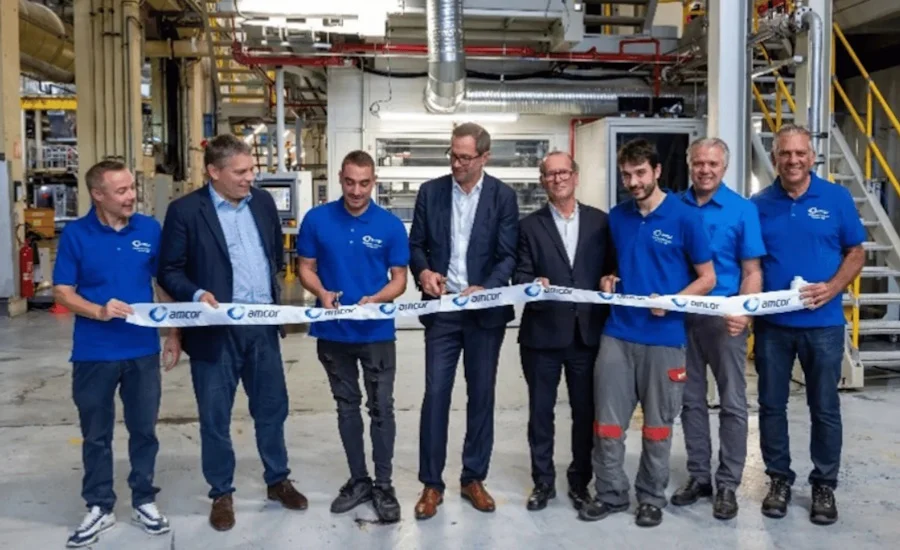
The global packaging landscape is undergoing a profound transformation, driven by the dual pressures of supply chain resilience and the unrelenting demand for specialized food preservation technologies. At the heart of this evolution, Amcor, a titan in the development and production of responsible packaging solutions, has recently signaled a major commitment to its European operations. The company’s latest strategic move involves a multi-million euro investment in its historic Froges production facility, located in the southeast of France. This capital injection has culminated in the commissioning of a state-of-the-art production line, now recognized as Amcor’s fastest cheese foil lacquering line globally. This development is not merely an upgrade in machinery; it represents a sophisticated fusion of century-old industrial heritage with the cutting-edge requirements of the modern global dairy market.
The Froges site is situated in a region with a deep-seated industrial pedigree. For over a hundred years, this facility has been a cornerstone of the Isère department’s manufacturing sector, evolving alongside the technological advancements of the 20th and 21st centuries. Today, the plant employs approximately 125 highly skilled professionals, many of whom represent generations of local families who have dedicated their careers to the art of aluminum conversion. By choosing to anchor its latest high-speed lacquering line here, Amcor is effectively bridging the gap between traditional manufacturing "know-how" and the digitized efficiency of Industry 4.0. The investment is designed to enhance operational excellence, significantly boosting the site’s output capacity while maintaining the rigorous quality standards required for sensitive dairy products.
To understand the significance of this investment, one must look at the specialized nature of the Froges facility. The site focuses on the intricate processes of varnishing and thin aluminum foil lacquering. In the world of dairy packaging, particularly for processed cheeses, the requirements are exceptionally demanding. Processed cheese portions, often sold in iconic triangular or rectangular formats, require packaging that provides an absolute barrier against light, oxygen, and moisture to ensure shelf stability and flavor retention. The foil must be thin enough to be pliable for high-speed wrapping machines yet robust enough to maintain its integrity during transport and handling. The new lacquering line at Froges is specifically engineered to apply protective and functional coatings at unprecedented speeds, ensuring that the aluminum remains chemically inert when in contact with the cheese while also facilitating the "easy-open" features that modern consumers demand.
The strategic importance of the Froges site is further amplified when viewed through the lens of Amcor’s broader European manufacturing network. Froges does not operate in isolation; it is one of three critical nodes in a specialized production triangle dedicated to processed cheese foil. This network includes a sister site in Sarrebourg, France, and another in Teningen, Germany. By maintaining these three high-capacity locations, Amcor creates a "supply contingency" model that is increasingly vital in a volatile global economy. If production at one site is interrupted by logistical challenges or maintenance, the others can pivot to fill the gap, ensuring that dairy giants across the continent—and the world—never face a shortage of essential packaging materials. This geographical and operational synergy provides a level of flexibility that is a major competitive advantage for Amcor in the EMEA (Europe, Middle East, and Africa) region.
Jim Davril, the Plant General Manager at Froges, recently emphasized that the inauguration of this new line is a landmark moment for the local community. While the financial figures associated with the investment are substantial, Davril noted that the true value lies in the human capital. The expertise required to manage high-speed lacquering—balancing temperature, viscosity, and tension on a microscopic level—is a skill set developed over decades. Amcor’s decision to reinvest in Froges is a vote of confidence in the local workforce. Furthermore, the company has integrated this technological expansion with a commitment to talent development. The site is actively fostering the next generation of industrial specialists through comprehensive training programs and apprenticeship opportunities, ensuring that the "Froges legacy" continues to thrive in an era of rapid automation.
The broader market context for this investment is equally compelling. The global cheese market is projected to continue its steady growth, fueled by rising protein consumption in emerging economies and the continued popularity of convenient, portion-controlled snacks in mature markets. Processed cheese, in particular, remains a staple due to its long shelf life and versatility. However, as consumer awareness regarding food waste and sustainability grows, the role of packaging becomes even more scrutinized. Aluminum foil is a unique material in this regard; it is infinitely recyclable, and its superior barrier properties play a critical role in preventing food spoilage—a major contributor to global carbon footprints. By investing in the efficiency of its foil production, Amcor is aligning itself with global sustainability goals, aiming to produce more with less energy and fewer resources.
The "lacquering" process itself is a highly technical field that blends chemistry with mechanical engineering. The coatings applied at the Froges site serve multiple purposes: they protect the metal from the lactic acid in the cheese, provide a surface for high-quality brand printing, and ensure the foil can be heat-sealed to maintain a sterile environment. The new line’s speed allows for a higher throughput of these specialized materials, meeting the surge in demand from major dairy cooperatives and multinational food brands. As these brands seek to optimize their own supply chains, they increasingly look for partners like Amcor who can provide localized production and rapid response times.
Moreover, the investment in France is a reflection of a broader trend in "near-shoring" or "friend-shoring," where companies prioritize manufacturing in regions with stable legal frameworks and established industrial infrastructure. France, with its robust dairy industry and history of aluminum innovation (dating back to the early days of the Pechiney era), provides an ideal ecosystem for Amcor’s specialized foil operations. The Isère valley, where Froges is located, has long been a hub for hydroelectric power and metal processing, and Amcor’s continued presence ensures that this region remains at the forefront of the global packaging industry.
Looking ahead, the expansion at Froges is likely to be a catalyst for further innovation within Amcor’s portfolio. The company has made bold public commitments to make all its packaging recyclable or reusable by 2025. The high-speed capabilities at Froges will undoubtedly be utilized to test and scale new, more sustainable lacquers and thinner-gauge foils that maintain protective qualities while reducing the overall material footprint. The integration of advanced sensors and data analytics on the new line also points toward a future of "smart manufacturing," where real-time adjustments can be made to minimize waste and maximize energy efficiency.
In summary, Amcor’s multi-million euro investment in the Froges site is a multifaceted success story. It is a story of economic revitalization for a historic French industrial site, a strategic reinforcement of a vital European supply chain, and a technological leap forward in the science of food preservation. By combining the "fastest cheese foil lacquering line" with a century of manufacturing wisdom, Amcor has secured its position as a leader in the dairy packaging sector. The move ensures that the company is well-equipped to handle the complexities of the modern market—balancing the need for high-speed production, specialized expertise, and a commitment to the local communities that make such industrial achievements possible. As the new line at Froges reaches full operational capacity, it stands as a testament to the enduring power of specialized manufacturing and the strategic foresight of one of the world’s most influential packaging organizations.