
In the rapidly evolving landscape of global logistics and manufacturing, the demand for efficiency, traceability, and sustainability has never been more acute. As supply chains become increasingly complex, the role of secondary packaging—the outer boxes and cartons that protect goods during transit—has shifted from mere protection to a critical carrier of data. Addressing this shift, Domino Printing Sciences (Domino), a vanguard in the variable-data printing industry, has introduced the Cx150i. This compact, high-resolution, direct-to-box piezo inkjet (PIJ) printer is engineered specifically for porous substrates, offering a transformative alternative to traditional coding methods that often rely on costly labels or outdated, high-maintenance hardware.
The launch of the Cx150i marks a significant milestone for manufacturers in the food, beverage, and general manufacturing sectors. For decades, these industries have wrestled with the trade-offs between print quality, operational cost, and environmental responsibility. Traditional Print-and-Apply Labeling (PAL) systems, while effective, come with a heavy burden of consumables, including adhesive labels and silicone-coated backing liners that are notoriously difficult to recycle. By contrast, the Cx150i utilizes a piezo inkjet head to deliver high-contrast, high-resolution codes directly onto the corrugated surface of the box. This "direct-to-box" approach eliminates the middleman of the label entirely, streamlining the production line and significantly reducing the physical waste generated at the packaging stage.
At the heart of the Cx150i’s value proposition is its commitment to the modern "green" manufacturing mandate. The printer utilizes non-toxic, non-hazardous vegetable-oil-based inks. Unlike solvent-based inks that may emit volatile organic compounds (VOCs) or petroleum-based alternatives that complicate the recycling process, vegetable-oil inks are inherently more sustainable. When a corrugated box is printed with these bio-based inks, the entire package remains easily recyclable within standard paper streams. This helps manufacturers meet increasingly stringent global regulations regarding packaging waste and corporate social responsibility (CSR) goals. Furthermore, by removing the need for labels, companies can excise thousands of miles of plastic or paper backing liners from their waste streams annually, providing a measurable reduction in their carbon footprint.
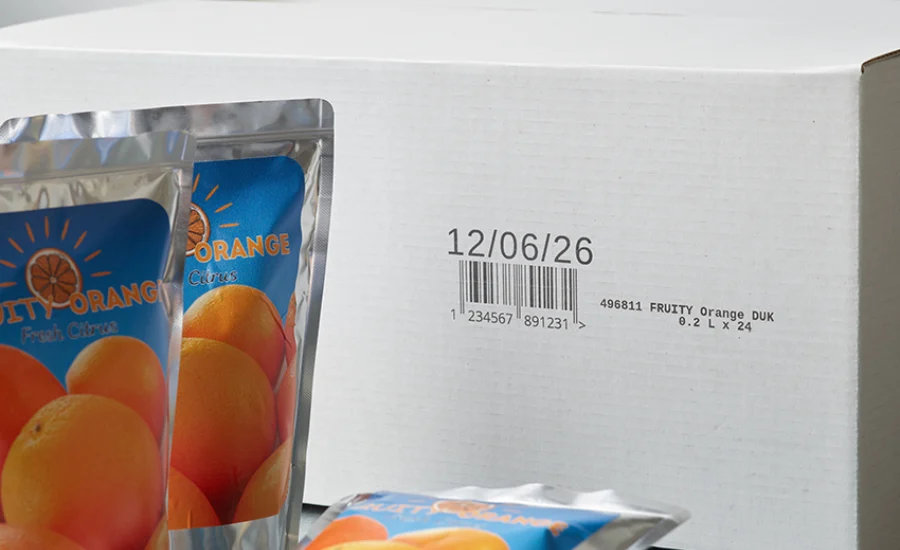
The technical prowess of the Cx150i is centered on its piezo inkjet technology. Unlike continuous inkjet (CIJ) systems which are often used for primary packaging (like bottles or cans), PIJ is uniquely suited for the large-character and high-resolution requirements of secondary packaging. The Cx150i is designed to produce crisp, dark text, complex graphics, and GS1-compliant barcodes that ensure seamless scanning throughout the retail and distribution chain. High-resolution coding is no longer a luxury but a necessity in an era where automated warehouses rely on machine vision to sort and route packages. A blurry or low-contrast barcode can lead to rejected shipments, costly fines from retailers, and significant logistical headaches. The Cx150i mitigates these risks by providing consistent, industrial-grade print quality that maintains its integrity even in harsh warehouse environments.
Operational simplicity and footprint were primary drivers in the design of the Cx150i. In many manufacturing facilities, space on the production line is at a premium. The Cx150i features a compact design that allows it to be integrated into existing lines with minimal disruption. Its user-friendly interface reduces the learning curve for operators, which is a critical factor in maintaining high Overall Equipment Effectiveness (OEE). When maintenance is required, the system is designed for maximum uptime; the lack of complex air-driven components (as it requires no factory air) means fewer parts to wear out and fewer points of failure. This mechanical simplicity translates directly into a lower Total Cost of Ownership (TCO). When compared to the ongoing costs of purchasing, storing, and loading labels, the long-term savings of a direct-to-box inkjet solution like the Cx150i are substantial.
Beyond the hardware, the Cx150i is a product of the Industry 4.0 era. It is fully equipped with advanced connectivity features that allow it to function as a smart node within a digital factory. Through Domino Automation, the printer integrates seamlessly with existing Manufacturing Execution Systems (MES) and Enterprise Resource Planning (ERP) platforms. This integration ensures that the data being printed—whether it be batch codes, expiration dates, or serialized tracking numbers—is accurate and synchronized with the central production database. This "single source of truth" prevents coding errors, which are one of the leading causes of product recalls worldwide.
Furthermore, the inclusion of Domino Cloud capability brings a new level of intelligence to box coding. Domino Cloud offers remote monitoring and diagnostic tools that provide real-time visibility into the printer’s performance. Plant managers can track ink usage, monitor heartbeat data, and receive alerts before a potential issue causes downtime. This proactive approach to maintenance ensures that the coding process is optimized and that the production line remains fluid. For quality assurance, the Cx150i can be paired with Domino’s R-Series vision solutions. These high-speed cameras "read" every code as it is printed, automatically flagging or rejecting any box that does not meet the pre-defined quality standards. This end-to-end setup—from data generation to printing and automated inspection—creates a closed-loop system that guarantees 100% code accuracy.
The economic argument for the Cx150i is particularly compelling for mid-to-high volume manufacturers. David Edwards, the Product Manager for Piezo Inkjet at Domino Printing Sciences, highlights that the system offers significant cost-of-ownership savings. These savings are realized not just through the elimination of label stock, but through the extreme efficiency of the ink delivery system. The Cx150i is engineered to use every drop of ink effectively, with minimal purging or waste. When combined with the reduction in labor required to manage label inventory and the decrease in downtime associated with label roll changes, the ROI for the Cx150i becomes clear very quickly.
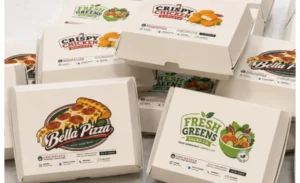
In the food and beverage sector, where margins are often thin and hygiene is paramount, the Cx150i offers a clean, reliable solution. The absence of adhesives and the use of food-safe vegetable oils align with the industry’s move toward cleaner production environments. In general manufacturing, where durability and clarity are the priorities, the printer’s ability to mark large characters and logos allows for "late-stage customization." This means companies can stock generic brown boxes and print brand-specific information or language-specific details on-demand, reducing the need to carry a large inventory of pre-printed boxes for different SKUs.
As the global market continues to pivot toward circular economy principles, the Cx150i stands as a testament to how industrial technology can adapt. It addresses the triple bottom line: it is economically advantageous by lowering TCO, socially responsible by improving traceability and safety, and environmentally sound by reducing waste and utilizing sustainable materials. Domino Printing Sciences has not just released a new printer; they have provided a roadmap for the future of secondary packaging.
The Cx150i is more than a tool for marking boxes; it is an essential component of a modern, data-driven production strategy. By bridging the gap between high-quality digital printing and the rugged demands of the factory floor, Domino has empowered manufacturers to take full control of their coding operations. As brands face increasing pressure from consumers and regulators to prove their sustainability credentials, the ability to print high-resolution, eco-friendly codes directly onto packaging will become a standard requirement. With the Cx150i, Domino is ensuring that businesses of all sizes can meet these challenges head-on, without sacrificing their budget or their operational efficiency. This solution proves that in the world of industrial coding, the most effective path forward is often the most direct one.