
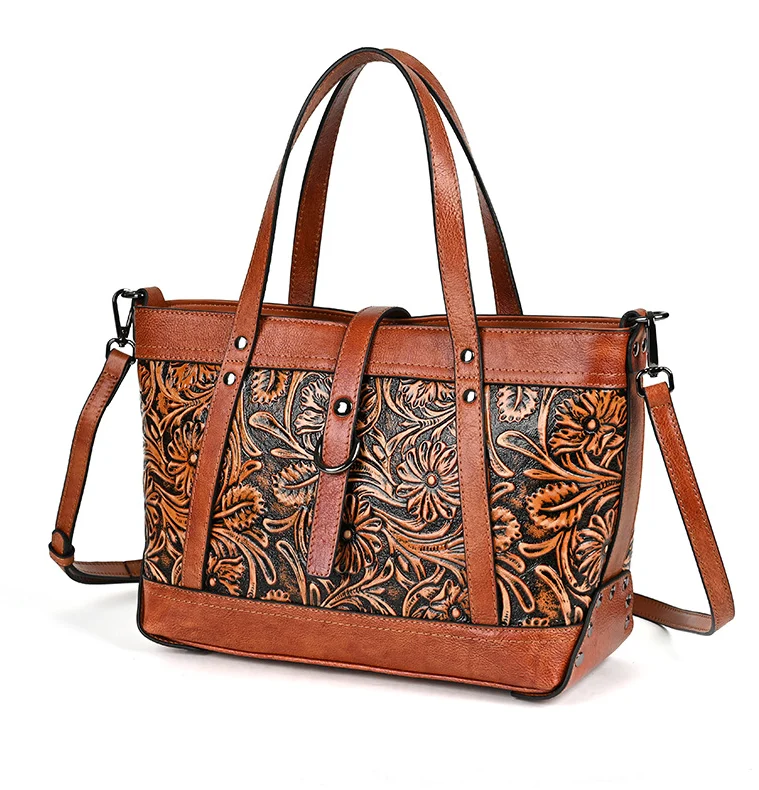
The global accessories market is currently witnessing a fascinating convergence of two seemingly opposite worlds: the timeless, labor-intensive artistry of hand-carved vegetable-tanned leather and the high-efficiency, tech-driven design of modern travel backpacks. As consumers increasingly demand products that reflect both their personal values and their practical needs, brands are being forced to innovate at both ends of the spectrum. On one side, the "Hand-Carved Vegetable-Tanned Leather Large Tote" represents a return to "slow fashion," where every stitch and carve tells a story of heritage. On the other, products like the BAGSMART 30L Travel Backpack for Women represent the pinnacle of modern utility, designed to navigate the rigors of air travel and urban commuting with surgical precision. This shift highlights a broader cultural movement where the "Everyday Carry" (EDC) philosophy is no longer just about survivalism, but about a seamless blend of aesthetics, durability, and organizational intelligence.
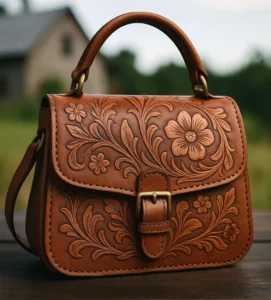
To understand the appeal of the hand-carved leather tote, one must first understand the complex chemistry and history of vegetable tanning. Unlike modern chrome tanning, which uses heavy chemicals to process hides in a matter of days, vegetable tanning is an organic process that can take weeks or even months. It utilizes natural tannins found in tree bark, leaves, and fruits. This process results in a leather that is not only environmentally friendlier but also possesses a unique structural integrity. Over time, this material does not wear out; instead, it develops a "patina"—a rich, darkened sheen that reflects the life of the user. When this material is further enhanced with hand-carving, it elevates the bag from a mere container to a piece of wearable art. The artisanal effort required to carve intricate patterns into thick vegetable-tanned hides ensures that no two totes are exactly alike, catering to a growing consumer segment that rejects mass-produced anonymity.
However, the romanticism of leather often meets the hard reality of 21st-century logistics. For the modern traveler, weight, compartmentalization, and weather resistance are often more critical than a hand-carved aesthetic. This is where the BAGSMART 30L Travel Backpack enters the conversation. Retailing at a highly competitive $32.99 as of mid-2026, this backpack exemplifies the democratization of high-quality travel gear. While a hand-carved leather tote might be the centerpiece of a professional wardrobe, the BAGSMART 30L is the workhorse of the digital nomad. Its design is a response to the specific pain points of modern life: the need to fit a 15.6-inch laptop securely, the requirement for a separate shoe compartment to keep gym gear away from clean clothes, and the necessity of water-resistant fabrics to protect expensive electronics from unpredictable weather.
The 30-liter capacity of the BAGSMART backpack is particularly significant. In the world of luggage, 30 liters is often considered the "Goldilocks" zone—large enough to serve as a primary carry-on for a weekend trip, yet compact enough to fit under an airplane seat or inside a gym locker. The inclusion of a dedicated shoe compartment reflects a growing trend in "transitional" gear, where a single bag must serve the user from the office to the gym and then to the airport. This multi-functionality is a direct contrast to the singular, iconic presence of a leather tote. While the tote offers a cavernous, open space for versatile storage, the backpack offers a structured environment where every item has a designated home.
The choice of "Chocolate" as a colorway for the BAGSMART 30L is also a strategic nod to the leather goods industry. By utilizing deep, earth-toned synthetics, manufacturers can evoke the warmth and professional appeal of traditional leather while maintaining the lightweight and water-resistant properties of polyester or nylon. This color choice bridges the gap for consumers who appreciate the look of a classic "CanvasBag.Co" leather aesthetic but require the technical performance of a modern travel bag. At $32.99, the value proposition is hard to ignore, especially when compared to the hundreds or even thousands of dollars required for a high-end, hand-carved vegetable-tanned leather piece.
Material science plays a pivotal role in this industry evolution. The leather tote relies on the natural fibers of the hide to provide strength, whereas the BAGSMART backpack utilizes advanced synthetic weaves. These synthetics are engineered to resist tearing and repel water, features that are essential for the "Carry on Backpack for Airplanes" category. For women travelers specifically, ergonomics have become a major focus. Modern backpacks like the BAGSMART model are designed with contoured shoulder straps and breathable back panels to distribute weight more evenly than a traditional single-strap tote might. This focus on physiological comfort is a key driver in the backpack’s popularity among frequent flyers and daily commuters.
The marketplace represented by platforms like CanvasBag.Co suggests a diversifying landscape. Consumers are no longer loyal to a single material or style. A professional might use a hand-carved leather tote for board meetings and daily office use, appreciating its status and the way it complements formal attire. However, that same individual will switch to a BAGSMART 30L for a cross-country flight or a trip to the fitness center. This "hybrid" lifestyle is fueling a boom in the bag industry, where the most successful brands are those that can either master a specific niche (like artisanal carving) or offer unparalleled value and organization (like BAGSMART).
Furthermore, the data indicates that price sensitivity remains a major factor in the high-volume market. The $32.99 price point for a feature-rich, 30L backpack is a testament to optimized global supply chains. In 2026, the ability to offer water resistance, specialized compartments, and laptop protection at such a price suggests that the "luxury" of organization has become accessible to the masses. Meanwhile, the hand-carved leather market remains a luxury of "time" and "craft," appealing to those who view their purchases as long-term investments rather than utilitarian tools. The distinction between a "product" and a "possession" is clearly drawn here.
Sustainability also enters the debate in complex ways. While vegetable-tanned leather is biodegradable and long-lasting, the environmental impact of cattle ranching is a concern for many. Conversely, while synthetic backpacks like the BAGSMART are often made from petroleum-based products, their durability and the inclusion of recycled materials in many modern variants aim to offset their carbon footprint. The "CanvasBag.Co" ethos often promotes the idea that a well-made bag, regardless of material, is a sustainable choice because it does not need to be replaced frequently. Whether it is the thick, resilient hide of a leather tote or the reinforced stitching of a travel backpack, the enemy of sustainability is the "disposable" bag.
In conclusion, the current state of the bag industry is defined by this duality. The "Hand-Carved Vegetable-Tanned Leather Large Tote" and the "BAGSMART 30L Travel Backpack" are two sides of the same coin—humanity’s ongoing quest to carry its world with them. One does so through the lens of art and tradition, ensuring that the act of carrying is an expression of identity. The other does so through the lens of engineering and efficiency, ensuring that the act of carrying never becomes a burden. As we move further into the decade, the lines between these categories may continue to blur, but the fundamental need for a reliable, stylish, and functional vessel remains unchanged. Whether you are looking for the prestige of hand-carved leather or the 30-liter versatility of a modern carry-on, the options available in 2026 reflect a peak in consumer choice and design innovation.