
The air within the Mineral Gallery at the National Museum of Natural History in Paris held a specific, evocative weight as the Lanvin Fall 2026 show commenced. It was the scent of freshly waxed floors—a clean, nostalgic aroma that suggested a return to order, to heritage, and to the meticulous care of a house that stands as the oldest operating couture brand in France. Founded by Jeanne Lanvin in 1889, the maison has navigated various identities over the decades, but under the creative stewardship of Peter Copping, it has found a voice that is both profoundly reverent of its past and sharply attuned to the desires of the modern woman. This season, Copping didn’t just present a collection; he curated a sensory journey into the heart of the 1920s, reimagining the "Années Folles" not as a costume drama, but as a blueprint for contemporary, high-octane sophistication.
The timing of this collection is particularly poignant, as Lanvin is currently celebrating the centennial anniversary of its menswear division. However, Copping made a strategic and wise decision to forgo the trend of coed runway presentations. By separating the women’s Fall 2026 collection from the men’s festivities, he allowed the feminine silhouette to breathe, centering the narrative on a "soigné" aesthetic that demanded undivided attention. The guest list reflected this focus on timeless poise, with the legendary Bianca Jagger—herself a patron saint of 1920s-infused 1970s glamour—and the ethereal Ruth Negga seated on minimalist metal benches. Surrounded by the museum’s crystalline geological treasures, the audience was primed for a collection that sought to find the "mineral" essence of chic: something hard, beautiful, and enduring.
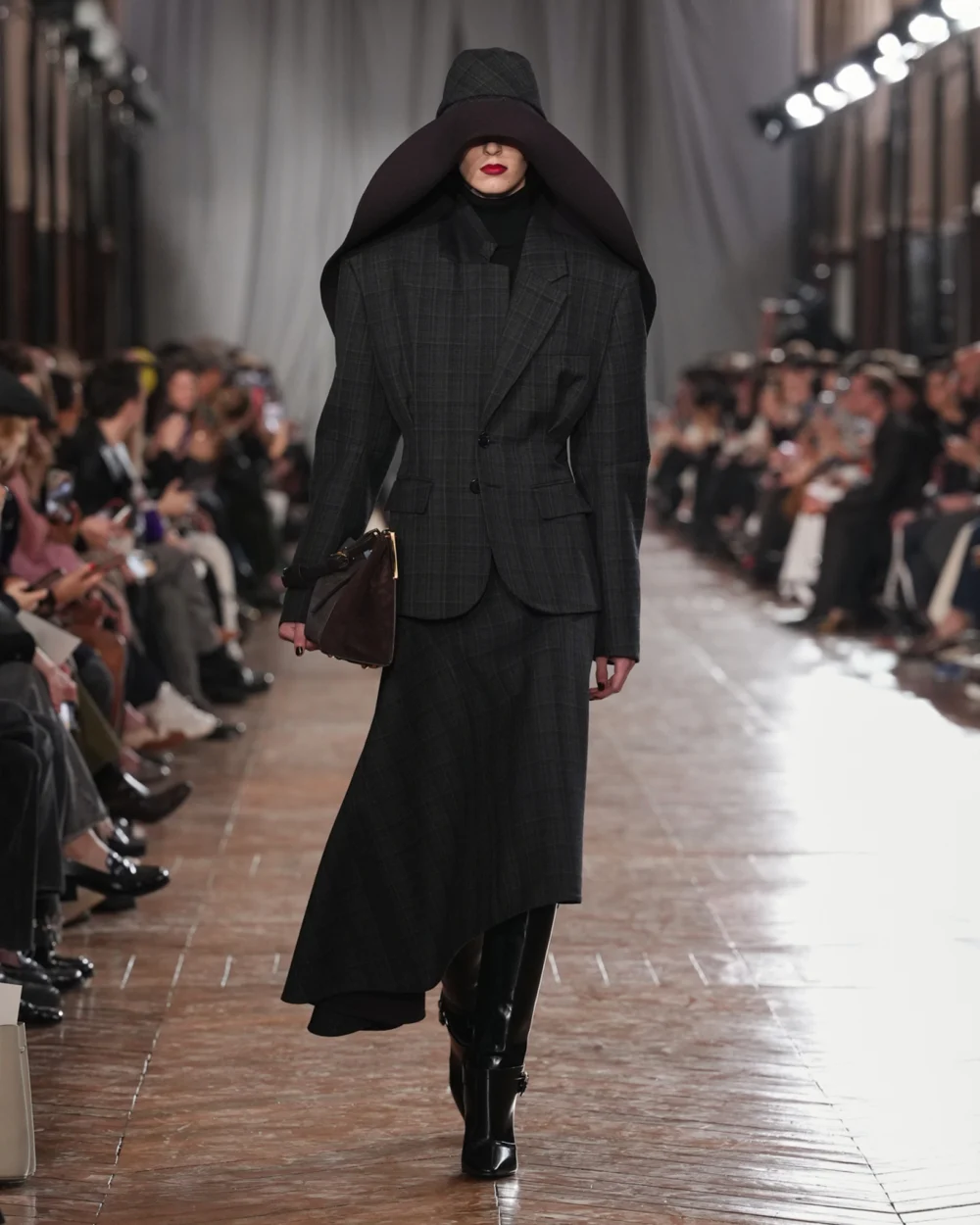
The 1920s have long been fashion’s favorite wellspring, a decade defined by the liberation of the female form and the rise of Art Deco’s geometric precision. Copping’s inspiration was fueled by the massive success of the Art Deco blockbuster exhibition at the Musée des Arts Décoratifs, but he avoided the cliches of the flapper. Instead, he leaned into the decade’s more mysterious, architectural undercurrents. The show opened with a series of tailored looks that paid homage to Lanvin’s masculine heritage while subverting it. Mannish tailoring was reconfigured with cinched waists, creating an hourglass shape that felt authoritative rather than restrictive. These were clothes for a woman who navigates the world with the confidence of a protagonist in a noir film—a "femme fatale" whose power lies in her discernment.
The outerwear was, perhaps, the most technically impressive segment of the show. While many designers for Fall 2026 have leaned into oversized, amorphous shapes, Copping’s coats were marvels of dressmaker construction. He utilized godets—triangular inserts of fabric—at the hems to provide an unexpected "swing and swagger." This technique allowed the heavy fabrics to move with a rhythmic fluidity, flaring out as the models walked past the display cases of quartz and amethyst. These coats were paired with fierce riding boots, grounding the ethereal qualities of the collection in a sense of rugged, equestrian pragmatism.
The most talked-about element of the collection was undoubtedly the headwear. Copping drew from an eclectic and brilliant range of references to create hats that were both jarring and magnetic. Some pieces, dramatic and face-obscuring, were described as having "Darth Vader vibes," yet their origin was far more grounded in social realism. Copping cited a famous Irving Penn photograph of a coal delivery man as a primary influence, alongside the distinctive hat worn by Alfred P. Doolittle—Eliza’s father—in the stage production of My Fair Lady. By taking the utilitarian headgear of the working class and rendering it in high-fashion materials, Copping achieved a surrealist tension. These hats cast deep shadows over the models’ faces, adding a layer of anonymity and "mysterious energy" that felt entirely fresh in an era of over-exposure.
As the show progressed into eveningwear, the focus shifted from structured tailoring to the fluid, bias-cut silhouettes that defined the 1920s. Most of the skirts and dresses were cut on a slant, a difficult technical feat that ensures the fabric drapes perfectly against the body’s natural curves. Copping emphasized these lines with "scarf-points"—dangling sections of fabric that trailed from the hips or shoulders. He heightened the visual interest by using contrasting fabrics, pairing the matte texture of heavy wool with the shimmer of delicate embroideries or the sheen of glossy floral jersey. The result was a series of garments that didn’t just sit on the body but seemed to dance around it.
One of the standout looks involved a slender, languid dress in draped velvet, a fabric that Jeanne Lanvin herself famously mastered. The velvet was so rich it seemed to absorb the gallery’s light, save for the areas where tuxedo-inspired details—satin lapels and silk piping—provided a sharp, masculine counterpoint. This interplay between the masculine and feminine has always been a Lanvin hallmark, but Copping handled it with a light touch, ensuring the clothes whispered "follow me" rather than shouting for attention. The embroidery was equally subtle, appearing as if it were a mineral growth on the fabric, echoing the geological specimens in the surrounding cases.
The decision to leave the Mineral Gallery unadorned was a stroke of genius. In a fashion landscape often dominated by digital screens, loud soundtracks, and theatrical gimmicks, the silence of the museum—broken only by the rhythmic click of heels on wood—created an atmosphere of intense focus. It forced the viewer to look closer at the grain of the leather, the precision of the godets, and the way a bias-cut hem catches the air. Copping’s Fall 2026 collection was a reminder that true luxury doesn’t need a stage; it is its own environment.
By the time the final model exited, the message was clear: Peter Copping has successfully distilled the essence of Lanvin into a potent, modern elixir. He has moved beyond the mere revival of 1920s tropes to create a wardrobe that feels essential for the 2020s. This is "ultimate chic" because it respects the intelligence of the wearer. It acknowledges that a woman can be both a "femme fatale" and a professional, both a dreamer and a pragmatist. The collection was a celebration of the "grown-up" wardrobe—a return to clothes that are soigné, sophisticated, and built to last.
As Lanvin enters its next century of menswear and continues to redefine its feminine identity, this Fall 2026 collection stands as a landmark. It proved that the house’s history is not a weight to be carried, but a foundation to be built upon. Through Copping’s lens, the 1920s were not a period to be mourned or mimicked, but a spirit to be channeled. The "swing and swagger" of the godet-trimmed coats, the "mysterious energy" of the coal-man hats, and the "languid elegance" of the velvet dresses all pointed toward a singular vision of beauty. In the quiet, waxed-scented halls of the National Museum of Natural History, Lanvin didn’t just show clothes; it reaffirmed its status as the pinnacle of French refinement, proving that even after 100 years, the house still knows exactly how to make the world stop and stare.