

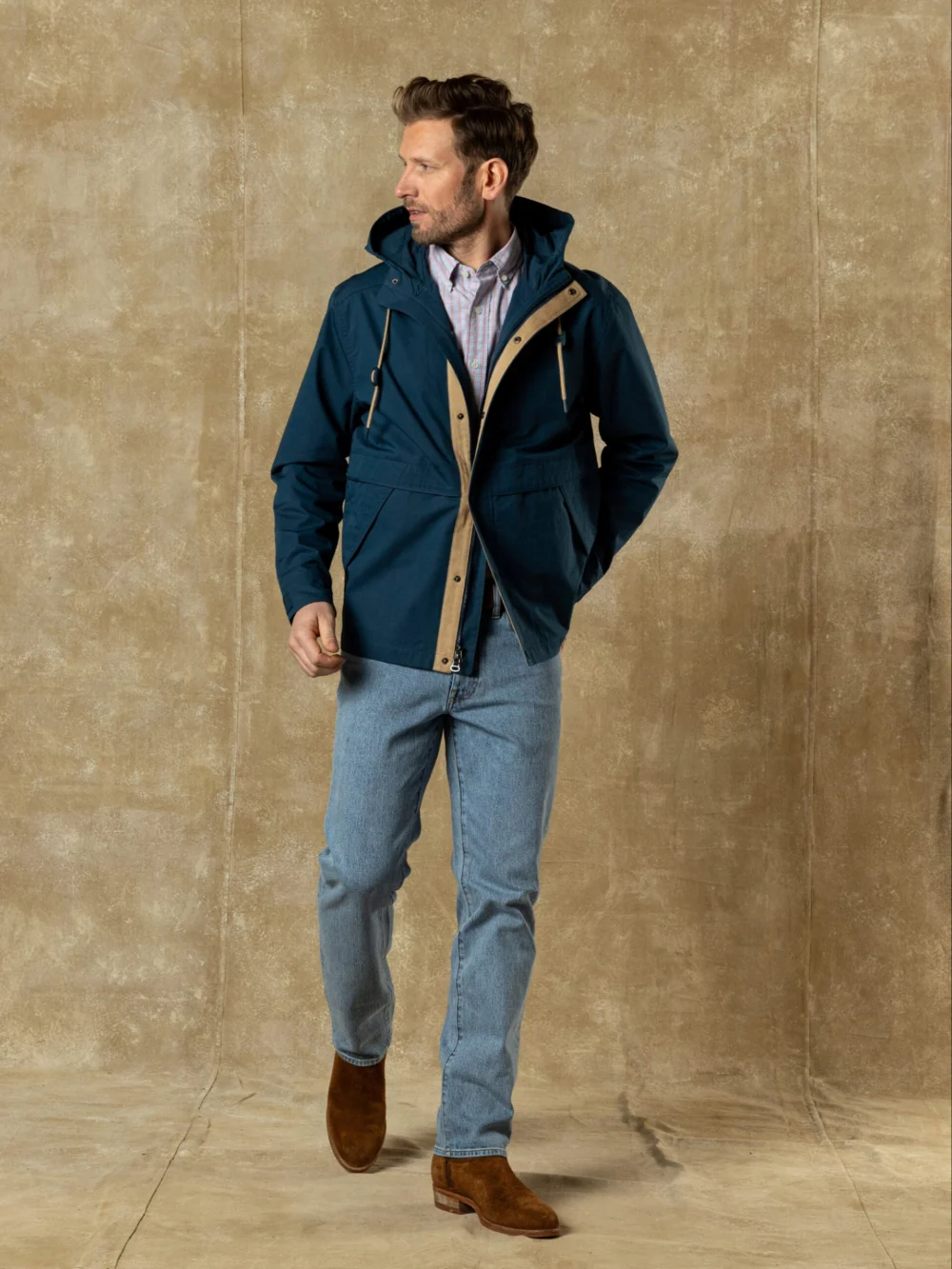
The landscape of American heritage fashion is currently witnessing a profound renaissance, characterized by a return to archival authenticity and a renewed focus on craftsmanship. At the heart of this movement is Duck Head, an Atlanta-based label that has long been synonymous with the quintessential Southern wardrobe. While the brand achieved legendary status through its ubiquitous gold-tone chinos and the iconic mallard logo, its latest strategic pivot represents a homecoming of sorts. On a recent Sunday, the company officially unveiled the Duck Head Denim Co., a dedicated division that marks the brand’s high-stakes reentry into the denim market—a category that has been inextricably linked to its identity since the mid-19th century.
This relaunch is not merely a seasonal expansion but a calculated effort by Oxford Industries, Duck Head’s parent company, to transition the label from a niche purveyor of cotton trousers into a comprehensive lifestyle powerhouse. Since acquiring the brand in 2016 and initiating a full-scale revival in 2017, Oxford Industries—which also manages heavyweights like Tommy Bahama and Lilly Pulitzer—has carefully curated Duck Head’s trajectory. The introduction of denim serves as the cornerstone of a broader evolution that includes forays into technical golf apparel, soft tailoring, and elevated sportswear, all designed to appeal to a modern consumer who values both historical narrative and contemporary performance.
The origins of Duck Head are rooted in the grit and ingenuity of post-Civil War America. Founded in Nashville in 1865 by brothers George and Joe O’Bryan, the company began as a surplus solution. The brothers realized that the heavy-duty canvas used for Army tents—known as "duck" fabric—was remarkably durable and well-suited for the rigors of manual labor. They repurposed this material to create rugged work pants and overalls, inadvertently birthing a brand that would eventually define the "Southern Ivy" aesthetic. Over the decades, the brand transitioned from the job site to the college campus, becoming a staple of the 1980s and 90s preppy boom. However, the denim category, which was once a foundational element of the O’Bryan brothers’ catalog, had largely been dormant in recent years as the brand focused on its signature chinos.
The new Duck Head Denim Co. seeks to bridge this historical gap by blending old-world aesthetics with modern textile technology. To achieve this, the brand looked across the Pacific to the Hiroshima Prefecture of Japan, partnering with the world-renowned Kaihara Mill. Established in 1893, Kaihara is legendary within the garment industry for its mastery of indigo dyeing and its ability to produce denim that possesses the structural integrity of vintage fabrics while maintaining a level of comfort that modern wearers demand. The denim selected for this collection is a premium blend that offers the tactile satisfaction of a "dry" or "raw" jean but incorporates a sophisticated stretch component for recovery and ease of movement. This choice reflects a growing trend in the luxury denim sector: the desire for an authentic, high-character fabric that does not require the grueling "break-in" period associated with traditional selvedge denim.
The debut collection focuses on two meticulously engineered silhouettes: the Classic Straight and the Slim Straight. These fits are designed to cater to a broad demographic, from the traditionalist who prefers a more relaxed, timeless leg to the younger professional seeking a more tailored, streamlined profile. Despite the modern construction, the jeans are saturated with archival DNA. Design enthusiasts will notice vintage-inspired hardware that echoes the brand’s 19th-century origins, as well as heritage-printed pocket bags that serve as a hidden nod to the company’s storied past. The jeans are launched in two essential washes—a vibrant light wash reminiscent of sun-faded vintage pairs and a deep, sophisticated dark rinse suitable for evening wear or "casual Friday" office environments. Both models are positioned at a competitive $178 price point, signaling the brand’s intent to compete in the "attainable luxury" space.
However, the relaunch is about more than just five-pocket pants. Duck Head is using the denim debut as a platform to showcase a curated range of lifestyle pieces that complement the rugged aesthetic of the new jeans. A standout item in the collection is the Draper Harrington jacket. Priced at $278, this outerwear piece is constructed from a versatile blend of polyester, cotton, and nylon, offering weather resistance without sacrificing style. The interior is finished with a cotton chambray plaid lining, a detail that reinforces the brand’s commitment to "quiet luxury" and internal craftsmanship. To round out the offering, the brand has introduced short-sleeve graphic T-shirts for $44, featuring motifs that celebrate the brand’s outdoor heritage, and a classic cotton twill baseball cap for $34, featuring the signature mallard embroidery.
The timing of this expansion is strategic. Under the stewardship of Oxford Industries, Duck Head has been methodically rebuilding its reputation as a reliable source for the "New South" wardrobe. This demographic is characterized by a preference for clothing that feels rooted in a specific place and history but performs according to 21st-century standards. By expanding into denim, Duck Head is capturing a larger share of the "weekend wardrobe," moving beyond the golf course and the fraternity house into the daily lives of men who prioritize durability and classic style. The brand’s move into golf apparel and soft tailoring further supports this "full-service" approach, ensuring that a customer can theoretically dress in Duck Head from the boardroom to the back nine.
The revitalization of Duck Head Denim Co. also reflects a larger shift within the apparel industry toward "slow fashion" and brand storytelling. In an era dominated by fast-fashion giants, heritage brands like Duck Head possess a unique currency: a legitimate history. The story of the O’Bryan brothers and their tent-canvas pants provides a level of authenticity that cannot be manufactured in a marketing meeting. By leveraging the prestige of the Kaihara Mill and focusing on quality over quantity, Duck Head is betting that the modern consumer is willing to pay a premium for a product that has a soul.
Financially, the move into denim and lifestyle categories is a vital component of Oxford Industries’ growth strategy. While the parent company has seen massive success with its "lifestyle" brands—most notably Tommy Bahama, which has become a billion-dollar entity—Duck Head represents a different kind of opportunity. It is a brand with high "latent equity," meaning it has high name recognition and positive nostalgia among a certain age group, particularly in the Southeast. The challenge for Oxford has been to modernize that nostalgia. The new denim line, with its Japanese fabric and refined fits, is the clearest evidence yet that the brand is successfully navigating this transition.
As Duck Head continues to roll out its expanded vision, the industry will be watching closely to see how the brand balances its Southern roots with its global ambitions. The use of Japanese denim is a sophisticated touch that elevates the brand’s perception among denim purists, while the inclusion of the mallard logo keeps it grounded in the heritage that made it famous. Whether it is through the sturdy weave of a Kaihara fabric or the classic lines of a Harrington jacket, Duck Head is proving that it is no longer just a "chinos brand." It is a company that understands its past but is firmly focused on the future of the American man’s closet.
With the launch of the Duck Head Denim Co., the brand has come full circle. From 1865 Nashville to a modern Atlanta headquarters, the journey of the mallard has been one of resilience and adaptation. By returning to the category that started it all—denim—Duck Head is not just selling a pair of jeans; it is inviting a new generation of consumers to participate in a 159-year-old legacy of American style. As the brand moves forward with its golf collections and tailored offerings, the foundation remains the same: high-quality, durable clothing designed for a life well-lived. For those who grew up wearing the mallard on their back pocket, this relaunch is a welcome return to form. For everyone else, it is a compelling introduction to one of America’s great original labels.