
The landscape of global packaging is undergoing a seismic shift, driven by a consumer preference for flexible formats and a regulatory environment that demands unprecedented levels of traceability. As stand-up pouches (SUPs) and gusseted bags become the standard for everything from artisanal coffee to life-saving pharmaceuticals, manufacturers face a persistent logistical hurdle: how to apply essential data to the bottom of a flexible container without disrupting the high-speed flow of the production line. Traditional methods often involve cumbersome mechanical "flippers" or manual labeling, both of which introduce the risk of product damage, ink smearing, or significant throughput bottlenecks. Recognizing this critical gap in the mid-to-end-of-line packaging process, Deitz Co., a long-standing leader in packaging machinery innovation, has engineered the Pharmafill BCV1 Bottomless Conveyor. This specialized system is designed to automate bottom-side printing with surgical precision, ensuring that lot codes, expiration dates, and QR codes are applied seamlessly while the product remains in motion.
To understand the necessity of the BCV1, one must first look at the rise of the flexible packaging market. Valued at hundreds of billions of dollars globally, flexible packaging is favored for its reduced carbon footprint, lower shipping costs, and shelf-appeal. However, the very nature of these pouches—their flexibility and often unstable bases when empty or partially filled—makes them a nightmare for standard coding equipment. Most inkjet printers require a flat, stable surface and a consistent distance from the print head to ensure legibility. On a standard flat-top conveyor, the bottom of the pouch is inaccessible. If a manufacturer attempts to print on the side or top, they often sacrifice valuable real estate meant for branding and consumer engagement. The Pharmafill BCV1 solves this by rethinking the physics of conveyance, moving away from a surface-supported model to a side-supported, "bottomless" architecture.
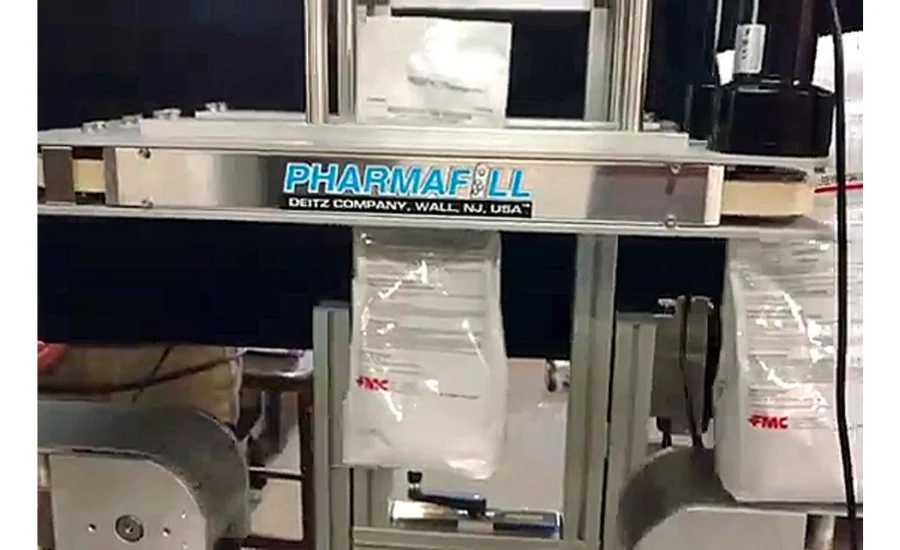
The mechanical brilliance of the BCV1 lies in its dual-hugger belt system. As pouches transition from a standard upstream conveyor, they are met by two parallel, high-friction belts. These belts gently but firmly grip the sides of the pouch, lifting it slightly or maintaining its elevation as it moves across an open gap in the machinery. Because there is no belt or plate beneath the pouch during this transit, the entire underside of the container is exposed. This "bottomless" window provides the perfect stage for an integrated printing system—whether it be a continuous inkjet (CIJ), thermal inkjet (TIJ), or laser marking device—to fire upward and apply data directly to the base of the pouch.
One of the most significant advantages of the BCV1 is its ability to maintain the orientation of the product. In many traditional setups, if a pouch needs to be printed on the bottom, it must be knocked over, printed, and then uprighted again. This process is fraught with peril; pouches can jam, the contents can shift in a way that affects the seal, or the ink can smear if the pouch is handled before the drying process is complete. The BCV1 eliminates these variables. By suspending the pouch, the system ensures that the base remains perfectly flat and accessible, and because the pouch is released directly onto a downstream conveyor in its original upright position, the risk of tipping or "shingling" (where pouches overlap like roof shingles) is virtually eliminated.
The versatility of the Pharmafill BCV1 makes it an essential asset across a diverse array of industrial sectors. In the pharmaceutical and medical device industries, the stakes for traceability could not be higher. With the implementation of the Drug Supply Chain Security Act (DSCSA) and similar global mandates, every unit of sale must bear a unique identifier, often in the form of a 2D DataMatrix code. The BCV1 allows pharmaceutical packagers to place these high-density codes on the bottom of the pouch, preserving the front and back panels for critical dosage instructions and branding. The precision of the BCV1’s hugger belts ensures that the pouch does not vibrate or shift during transit, which is vital for the high-resolution printing required for scannable 2D codes.
In the food and beverage sector, the BCV1 is rapidly becoming a favorite for manufacturers of "dry goods" such as protein powders, dried fruits, nuts, and specialty teas. For these products, the stand-up pouch is the gold standard for shelf presence. By moving expiration dates and lot numbers to the bottom of the bag, brands can maintain a "clean label" aesthetic on the primary display panels. This is particularly important for premium brands where the visual integrity of the packaging is a key component of the consumer experience. Furthermore, the BCV1 is designed to handle the weight and bulk of larger bags, such as those used for pet treats or lawn and garden chemicals, proving that its delicate "hugger" grip does not come at the expense of industrial-strength durability.
Efficiency is the heartbeat of any manufacturing facility, and the BCV1 is engineered to maximize it. The system is designed for "washdown" compatibility and easy integration into existing lines. It does not require a proprietary printing system; rather, it is agnostic, allowing plant managers to pair it with their preferred coding technology. Whether a facility utilizes the high-speed capabilities of laser marking for permanent, chemical-free coding or the cost-effectiveness of thermal inkjet, the BCV1 provides the stable platform necessary for those technologies to perform at their peak. Because the printing happens "on the fly," there is no need to stop the line or divert the flow into a secondary marking station, representing a significant reduction in total cycle time.
Deitz Co. has also addressed the "human element" of packaging machinery. The BCV1 is designed with user-friendly adjustments, allowing operators to quickly change the width between the hugger belts to accommodate different pouch sizes. This minimizes downtime during product changeovers—a critical factor in today’s manufacturing environment where smaller, more frequent production runs are becoming the norm. The machine’s footprint is also intentionally compact, allowing it to be dropped into existing lines where floor space may be at a premium.
Beyond the hardware, Deitz Co. offers a level of consultative support that is rare in the industry. At their headquarters in Wall, New Jersey, the company maintains a dedicated testing and training line. Manufacturers are encouraged to send samples of their specific pouches and their preferred printers to the facility. Deitz engineers then conduct rigorous testing to verify the grip strength, print clarity, and throughput speeds before the machine ever reaches the customer’s floor. This "proof of concept" phase mitigates the risk for the manufacturer, ensuring that the BCV1 will integrate flawlessly with their specific product chemistry and packaging material.
The environmental impact of the BCV1 should also be noted. By enabling direct-to-pouch printing, the system helps companies move away from pressure-sensitive labels. Eliminating labels not only reduces material costs but also removes the waste associated with label backings and the energy required to manufacture and ship them. In an era where corporate social responsibility and "zero-waste" initiatives are at the forefront of corporate strategy, the BCV1 provides a tangible way to reduce the environmental footprint of the packaging process.
As we look toward the future of smart packaging, the role of the BCV1 will only grow in importance. The industry is moving toward "The Internet of Packaging," where every pouch becomes a data point in a global supply chain. This requires more data than ever before—QR codes that lead to sourcing information, recycling instructions, or promotional content. The bottom of the pouch is the most logical place for this "invisible" data to reside. The Pharmafill BCV1 Bottomless Conveyor isn’t just a piece of transport equipment; it is a foundational tool for the modern, data-driven factory. By solving the fundamental challenge of bottom-side access, Deitz Co. has provided manufacturers with the freedom to innovate their packaging designs without compromising on the speed, accuracy, or traceability that the modern market demands. In the competitive world of contract packaging and global manufacturing, the BCV1 stands as a testament to the idea that sometimes, the best way to move forward is to look at things from the bottom up.