
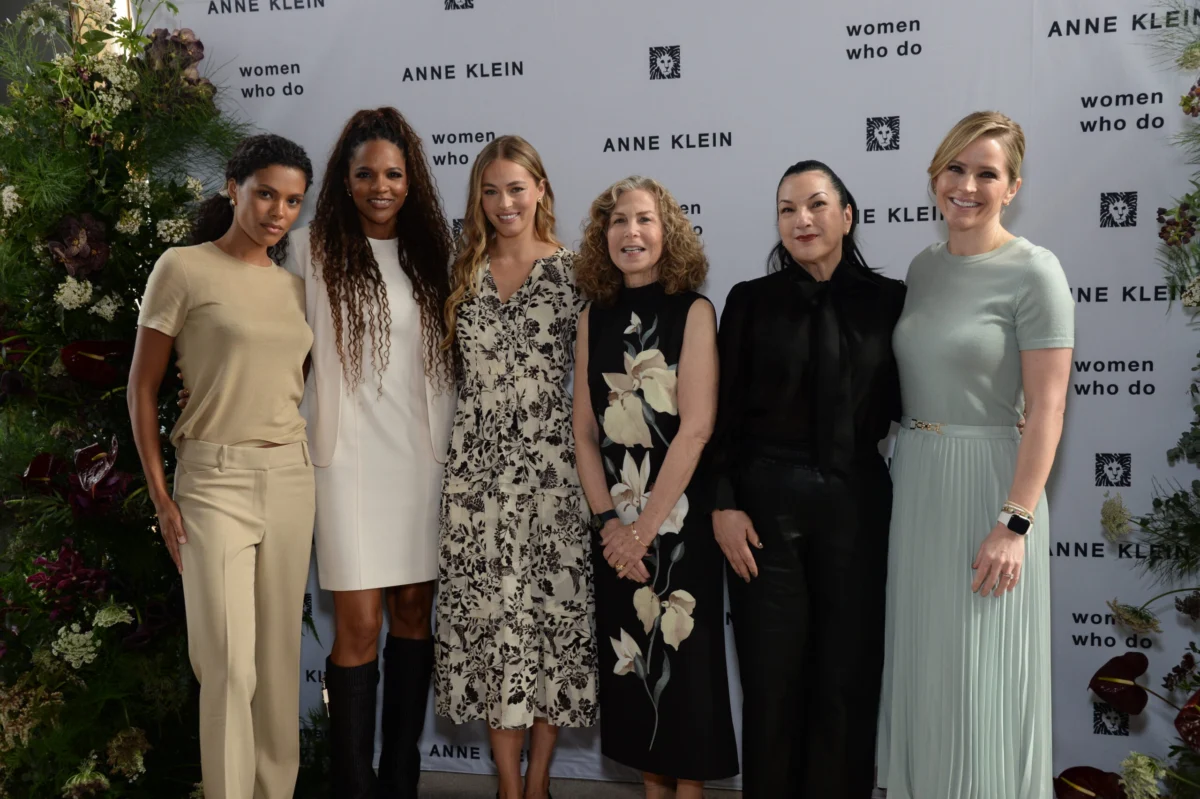
High above the bustling arteries of Manhattan, within the gilded, Art Deco confines of the Rainbow Room at Rockefeller Center, a convergence of past, present, and future took place this Wednesday. The occasion was the "Women Who Do" awards luncheon, an annual tentpole event for the Anne Klein brand that has evolved from a simple promotional vehicle into a significant cultural touchstone. Hosted by Sara Haines, the charismatic co-host of ABC’s “The View,” the ceremony served as both a celebration of contemporary female achievement and a reverent nod to the radical legacy of the woman who founded the house in 1968. By honoring a diverse cohort of leaders ranging from surgical oncologists to digital community builders, the event underscored a pivotal shift in the fashion industry: the transition from selling a look to championing a lifestyle defined by purpose, resilience, and collective action.
The atmosphere in the 65th-floor venue was one of sophisticated solidarity. As sunlight poured through the floor-to-ceiling windows, illuminating a room filled with industry titans and cultural icons, the gravity of the Anne Klein name was palpable. This year’s honorees—Atoya Burleson, Martina Halloran, Dr. Karen Kostroff, Caroline Kelley Rosen, and Tina Kunakey—represented a cross-section of industries that, on the surface, might seem disparate. However, as the afternoon unfolded, a common thread emerged: the "Anne Klein Woman" is not defined by her wardrobe, but by her impact on the world around her.
The legacy of Anne Klein herself loomed large over the proceedings. Born Hannah Golofski in Brooklyn, Klein was a visionary who fundamentally altered the trajectory of American fashion. Before her arrival, women’s clothing was often restrictive or derivative of European haute couture. Klein pioneered the concept of "separates," allowing women to mix and match blazers, trousers, and skirts to suit their professional and personal lives. This was more than a stylistic choice; it was a feminist statement that prioritized the autonomy and functionality of the modern woman.
Jameel Spencer, the Chief Marketing Officer of WHP Global—the brand management firm that acquired Anne Klein in 2019—addressed this heritage during his opening remarks. He reminded the audience that Anne Klein was a "maverick" whose influence extended far beyond the sketchpad. She was instrumental in launching the careers of industry legends, including Donna Karan, who began as her assistant, and trailblazing models like Pat Cleveland and Alva Chinn. Chinn, who famously walked for Anne Klein during the historic 1973 Battle of Versailles—a fashion show that pitted American designers against French masters and effectively put American sportswear on the global map—was present at the luncheon, bridging the gap between the brand’s revolutionary roots and its current trajectory.
Spencer’s speech highlighted a core tenet of the modern brand strategy: "We want to take beautiful pictures, but we also want to touch people’s souls." This sentiment was echoed by Lynn Flynn, Executive Vice President at WHP Global, who noted that the brand’s founding vision—supporting women as they navigate careers, families, and communities—remains the North Star for every decision made today.
The awards themselves were a testament to this holistic view of womanhood. Atoya Burleson, the founder of the "InsideLines" podcast and app, was honored for her work in building a supportive digital ecosystem. Originally conceived as a platform for the wives and families of professional athletes, "InsideLines" has grown into a broader community where women from all walks of life can find mentorship and connection. In her acceptance speech, Burleson emphasized the power of "pulling up" for one another, a sentiment that resonated deeply in a room full of high-achievers.
Representing the intersection of business and sustainability was Martina Halloran, the CEO of the renowned skincare brand Dr. Hauschka. With a career spanning nearly a decade at the helm of the holistic beauty giant, Halloran spoke passionately about the concept of "purpose over profit." Dr. Hauschka, owned by the WALA Foundation, operates under a unique business model where profits are reinvested into the company or donated to charitable causes rather than distributed to private shareholders. Halloran challenged the attendees to move beyond mere concern for the planet and toward "collective action," noting that in a brand history spanning over a century, the commitment to people and the environment has remained the ultimate metric of success.
The event took a poignant and practical turn with the honoring of Dr. Karen Kostroff, the Chief of Breast Surgery at Northwell Health. A titan in the field of surgical oncology, Dr. Kostroff spoke about the necessity of staying at the forefront of medical technology, but she used her platform for a more immediate call to action. "I will never miss an opportunity when I am speaking to a group of women like all of you to remind you that if you are past due for your annual mammogram, please schedule that appointment," she urged. Her presence at a fashion luncheon served as a stark reminder that the "Women Who Do" initiative is rooted in the reality of women’s lives, including their health and survival.
The final honors were bestowed upon the faces of Anne Klein’s Spring campaign: philanthropist Caroline Kelley Rosen and international model Tina Kunakey. Aleesha Worthington, Vice President of Marketing at WHP Global, introduced the duo, noting that they embody the "confidence, individuality, and modern femininity" that the brand seeks to project. Rosen, who has used her platform to advocate for various charitable causes, spoke about the intrinsic link between fashion and wellness. For her, the two are not separate silos but are both tools for self-expression and self-care. Kunakey, a French fashion icon known for her work with the world’s most prestigious couture houses, admitted to a rare moment of shyness. "Coming from a brand that represents women this way, it means a lot," she said, marking her first-ever award with a sense of genuine humility.
The presence of Joan Smalls, a contemporary supermodel and former face of the brand, further solidified the event’s status as a multi-generational gathering of fashion’s elite. The interplay between veterans like Alva Chinn and modern icons like Smalls and Kunakey illustrated the enduring relevance of the Anne Klein aesthetic—a look that is timeless because it is built on the foundation of the wearer’s strength rather than fleeting trends.
Under the stewardship of WHP Global, Anne Klein has seen a resurgence that leverages its historical significance to meet the demands of a socially conscious consumer base. By focusing on the "Women Who Do," the brand has successfully navigated the treacherous waters of the retail landscape, where many of its contemporaries have faltered. The luncheon at the Rainbow Room was not just a celebration of five extraordinary women; it was a reaffirmation of a brand philosophy that treats fashion as a support system for ambition.
As the event concluded, the guests departed with a renewed sense of the brand’s mission. In an era where the fashion industry is often criticized for superficiality, Anne Klein’s commitment to honoring medical pioneers, community builders, and ethical business leaders provides a blueprint for how a legacy house can remain vital. The "Lion" logo, a symbol of Anne Klein’s own Leo zodiac sign and her fierce independence, continues to represent a tribe of women who are not just dressed for success, but are actively defining what success looks like in the 21st century. The Women Who Do awards prove that while the silhouettes may change with the seasons, the spirit of the maverick remains the brand’s most enduring garment.