
For more than a century, the "bag-in-box" format has reigned supreme as the gold standard for the cereal industry. Since the early 1900s, when pre-packaged breakfast cereals first began to populate American pantry shelves, this specific configuration—a thin plastic liner protected by a rigid paperboard outer carton—has offered a trifecta of benefits: high-speed production efficiency, excellent vertical display opportunities for branding, and essential physical protection during the rigors of the global supply chain. Yet, despite its longevity and logistical success, the format has long harbored a glaring functional flaw that has frustrated generations of consumers. Once the inner liner is breached, the primary barrier against the environment is effectively compromised. Without a reliable mechanism to re-establish an airtight seal, cereal begins an immediate descent toward staleness, leading to millions of tons of avoidable food waste and a degraded consumer experience.
Recognizing this persistent gap in the market, Sealstrip Corporation has introduced Roll&Seal, a sophisticated pressure-sensitive reseal system designed specifically to bridge the divide between industrial efficiency and consumer convenience. This innovation arrives at a critical juncture in the packaging industry, where brands are increasingly scrutinized not just for the sustainability of their materials, but for the functional longevity of their products. By integrating a resealable feature directly onto the flexible liner, Roll&Seal provides a pragmatic solution to the issues of spillage, moisture ingress, and the loss of organoleptic quality that have plagued the cereal category for decades.
The Consumer Friction Point: A Study in Staling and Spillage
The typical consumer interaction with a cereal box is a cycle of repetitive access. Unlike products designed for single-use consumption, a large family-sized box of cereal may be opened and closed twenty times or more before it is depleted. Traditionally, consumers have been forced to rely on makeshift closure methods: folding the top of the bag over itself, tucking it loosely back into the cardboard flaps, or resorting to external hardware like "chip clips," rubber bands, or bulky secondary storage containers.
None of these methods are ideal. Loosely folded bags allow for the rapid migration of moisture and oxygen, which are the primary catalysts for staling. In many regions, humidity is the enemy of the "crunch" that defines the cereal experience. Furthermore, the lack of a secure closure often leads to the "cereal avalanche" phenomenon, where the liner slips during pouring or storage, resulting in spills that create household messes and waste product. Sealstrip’s Roll&Seal addresses these frustrations by embedding the solution directly into the package’s DNA.
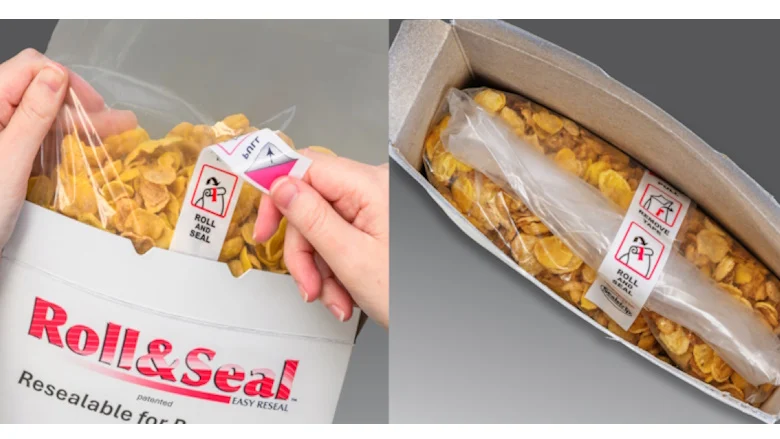
The system utilizes a pressure-sensitive tape applied near the top of the inner liner. The user experience is designed for intuitive simplicity: after the initial opening and pouring, the consumer simply removes a small portion of the reseal tape, rolls the top of the bag down to expel excess air, and reapplies the tape across the roll. This creates a tight, secure closure that remains inside the carton. By keeping the reseal integrated with the original bag, the system eliminates the need for consumers to transfer cereal into expensive plastic bins, thereby preserving the brand’s presence on the breakfast table until the very last bowl is poured.
Engineering the Retrofit: Seamless Integration for Manufacturers
One of the most significant barriers to innovation in the cereal industry is the sheer scale and speed of existing production lines. Cereal manufacturers operate on razor-thin margins and utilize high-speed Vertical Form Fill Seal (VFFS) or specialized horizontal bagging machinery. Any modification that requires a total overhaul of these lines is often deemed cost-prohibitive.
Sealstrip engineered Roll&Seal with these industrial realities in mind. The system is characterized as an "easy retrofit," a term that underscores its ability to be integrated into existing infrastructure without disrupting the core forming, filling, or sealing operations. The hardware—a PLC-controlled applicator and a tape unwind unit—is installed in the film unwind area of the packaging line. This strategic placement allows the reseal feature to be applied to the film before it ever reaches the forming tube.
Because the applicator functions independently of the primary sealing jaws, it does not slow down the production cycle. In an industry where "line speed is king," the ability to add value-added features without sacrificing throughput is a game-changer. Furthermore, the system is designed for high-capacity endurance. A single roll of Roll&Seal tape is capable of equipping more than 21,000 cereal packages. This high yield significantly reduces the frequency of changeovers, ensuring that operational downtime is kept to an absolute minimum—a vital metric for high-volume consumer packaged goods (CPG) companies.

Precision and Sustainability through Intermittent Application
In the modern manufacturing landscape, sustainability is no longer an optional "extra"; it is a core requirement driven by both regulatory pressure and consumer demand. The Roll&Seal system contributes to sustainability goals through a philosophy of "material minimalism." Unlike some resealable technologies that require a continuous strip of material or heavy plastic zippers that can interfere with recycling streams, Roll&Seal employs an intermittent application method.
The applicator places a short, functional length of tape exactly where it is needed, rather than running a continuous bead across the entire web of film. This precision serves multiple purposes. First, it ensures that the tape is positioned away from the primary heat-seal areas of the bag, preventing any interference with the hermetic integrity of the initial factory seal. Second, it drastically reduces the amount of additional material added to the package. By using only what is necessary to achieve a functional reseal, Sealstrip helps manufacturers control costs while simultaneously reducing the overall plastic footprint of the package.
Moreover, the tape itself can be printed with registered usage directions. This ensures that the consumer always knows exactly how to utilize the feature, and it guarantees that the branding and instructional elements are perfectly aligned with the bag’s geometry. This repeatable, registered placement supports a premium brand image, signaling to the consumer that the manufacturer has invested in their post-purchase experience.
Economic Implications and Food Waste Reduction
The economic argument for Roll&Seal extends beyond the factory floor and into the household budget. Global food waste is an escalating crisis, with significant portions of household waste attributed to food spoilage. When cereal goes stale because of an inadequate closure, it is often discarded long before its actual expiration date. By providing a reliable way to maintain freshness, Roll&Seal effectively extends the "shelf life" of the product within the home.
For brands, this translates to increased customer loyalty. A consumer who enjoys a fresh, crunchy bowl of cereal on Tuesday is far more likely to repurchase that same brand than a consumer who had to throw away a half-full bag of soggy flakes on Wednesday. In a crowded marketplace where private labels often compete with national brands on price, functional superiority—such as an integrated reseal—becomes a powerful tool for brand differentiation and value perception.
Market Evaluation and the Future of Flexible Packaging
As Sealstrip moves through the launch and trial phases of Roll&Seal, the cereal industry is watching closely. Early evaluations and market tests have shown a high level of interest from major stakeholders who are looking for "drop-in" solutions to improve the bag-in-box format. The beauty of this system lies in its ability to modernize a classic packaging structure without requiring the industry to abandon the efficiencies of the cardboard box, which remains a favorite for retailers due to its stackability and "billboard" shelf presence.
The Roll&Seal system represents a broader shift in packaging philosophy: moving away from complex, multi-component closures and toward simple, integrated, and high-performance features. As the industry continues to grapple with the challenges of the circular economy and the need for reduced material usage, solutions that enhance the utility of existing formats will likely lead the way.
In conclusion, the Roll&Seal system is more than just a piece of tape; it is a sophisticated engineering response to a century of consumer dissatisfaction. By combining ease of use for the consumer with ease of integration for the manufacturer, Sealstrip has successfully addressed the "last mile" of the cereal packaging journey. As this technology gains traction, the days of stale cereal and messy pantry spills may finally be coming to an end, ushering in a new era of freshness and efficiency for one of the world’s most beloved breakfast staples. For brands ready to evolve, the path forward is as simple as roll, seal, and repeat.