

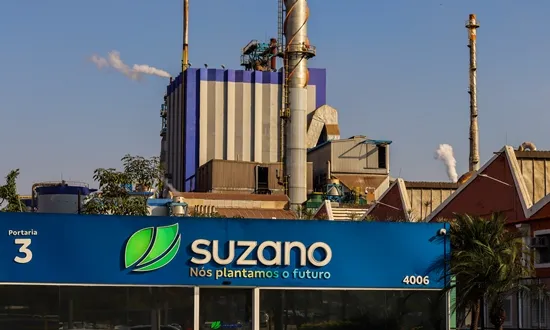
Suzano’s 2025 Sustainability Report highlights a strategic shift toward large-scale poverty eradication and economic inclusion, marking a pivotal moment in the global pulp and paper industry’s approach to corporate social responsibility (CSR). As one of the world’s most dominant players in the production of paper for packaging, sustainable consumer goods like cups and straws, and commercial printing materials, the Brazilian giant is leveraging its massive market footprint to drive tangible social change. By integrating socioeconomic development directly into its core business model, Suzano is proving that industrial leadership and community prosperity are not mutually exclusive, but rather mutually reinforcing.
The Financial Architecture of Social Impact
In 2025, Suzano’s commitment to social upliftment manifested through a robust financial strategy that went well beyond simple corporate philanthropy. The company directly invested R$20 million (£2.96 million) into targeted poverty reduction programs. However, the true efficacy of its strategy lies in its ability to act as a catalyst for broader investment. By leveraging its reputation and logistical reach, Suzano successfully mobilized an additional R$60 million (£8.89 million) in funding from strategic partners, NGOs, and local government entities.
This combined investment of R$80 million underscores a shift from short-term charitable aid to long-term structural investment. The goal is to build sustainable economic ecosystems in the 136 municipalities where the company maintains a physical presence. By providing the seed capital and the operational infrastructure, Suzano is facilitating a pipeline of resources that empowers local populations to break the cycle of poverty through self-sustaining economic activities rather than reliance on perpetual external support.
Tracking Progress: A Path to 2030
The company’s data-driven approach to social impact is both ambitious and transparent. Between 2020 and 2025, Suzano’s internal tracking revealed that its initiatives successfully helped over 140,000 individuals transcend the poverty line. This achievement represents a critical milestone, as the company has officially reached 70% of its overarching goal to lift 200,000 people out of poverty by the year 2030.
The momentum is accelerating. In 2025 alone, over 44,000 people were elevated above the poverty threshold. This surge in success is attributed to a refined strategy that emphasizes "income generation" over "handouts." By focusing on job creation, entrepreneurship, and professional upskilling, Suzano is equipping communities with the tools necessary to navigate the modern economy.
Targeting Vulnerability: Gender, Race, and Youth
Suzano’s strategy is explicitly intersectional, acknowledging that poverty in Brazil is deeply linked to historical disparities. The company has centered its interventions on groups that have traditionally faced systemic exclusion: women, Black populations, and the youth.
The demographics of the 2025 impact report illustrate the success of this targeted approach. Approximately 70% of the beneficiaries of Suzano’s projects belonged to the Preto (Black) and Pardo (Mixed-race) communities, directly addressing the racial income gap prevalent in many of the regions where the company operates.
Furthermore, gender equity has become a cornerstone of the firm’s social strategy. In 2025, 63% of all beneficiaries were women. This focus is not accidental; research consistently shows that economic investment in women yields the highest returns for community health and education. More than 11,500 women received direct support for productive, income-generating activities. Perhaps most impressively, women accounted for 93% of the participants in the company’s entrepreneurship promotion initiatives. By providing micro-mentorship, access to credit, and business training, Suzano is helping women transform small-scale ideas into stable, family-supporting enterprises.
For the younger generation, the company is bridging the gap between education and employment. In 2025, more than 10,000 young people under the age of 24 were successfully integrated into the job market or enrolled in rigorous vocational training programs. By focusing on "employability," Suzano is effectively curbing youth unemployment—a major driver of poverty—and creating a pipeline of skilled labor that benefits both the community and the local industrial sector.
A New Paradigm for Corporate Responsibility
Giordano Automare, the executive sustainability manager at Suzano, describes this social investment strategy as a fundamental driver of business value. In the modern corporate landscape, a company’s "social license to operate" is as important as its physical assets. By fostering economic growth in its regions of operation, Suzano is ensuring the long-term stability and resilience of its supply chain.
"In 2025, we reached 136 municipalities across Brazil with structured initiatives focused on income generation, skills development, and economic inclusion," Automare stated. "We are expanding opportunities for populations facing greater vulnerability, which in turn strengthens the entire social fabric of these regions."
This approach reflects a broader trend among global multinational corporations: the transition from "Doing Good" as a marketing tactic to "Doing Good" as an operational necessity. For Suzano, this means that poverty reduction is not a peripheral activity managed by a CSR department, but a core component of its business intelligence.
The Challenges Ahead
While the figures for 2025 are impressive, the road to 2030 presents new challenges. As the company moves toward its 200,000-person target, it will need to ensure that its initiatives remain scalable and effective in increasingly diverse socioeconomic environments. The company faces the task of ensuring that the gains made are permanent, preventing "poverty recidivism" by providing ongoing support, networking opportunities, and access to broader markets for the entrepreneurs and workers it has helped train.
Furthermore, the integration of technology and digital literacy into these training programs will be critical. As the global economy digitizes, those left behind by the digital divide remain at the highest risk of poverty. Suzano’s future social investments are expected to incorporate more intensive digital skills training, ensuring that participants are not only "employed" but "future-proofed."
Conclusion: A Legacy in the Making
Suzano’s 2025 Sustainability Report is more than a collection of statistics; it is a blueprint for how a global industrial leader can harmonize economic success with social equity. By focusing on the specific needs of Black, female, and young populations, the company is tackling the root causes of inequality rather than just the symptoms.
As the company continues to expand its reach in the paper and packaging sectors, its commitment to social impact serves as a benchmark for the industry. By the time 2030 arrives, Suzano is not only on track to hit its numerical targets but is also creating a legacy of empowerment. The company has demonstrated that the scale of its business—which serves millions of consumers globally through its paper and packaging products—can be matched by the scale of its positive social footprint in its home country of Brazil.
Ultimately, the transformation of 140,000 lives is a testament to the fact that when a corporation aligns its financial resources with a clear, equitable, and data-driven vision, it can move the needle on one of the most pressing challenges of our time: the eradication of poverty through meaningful economic inclusion.