

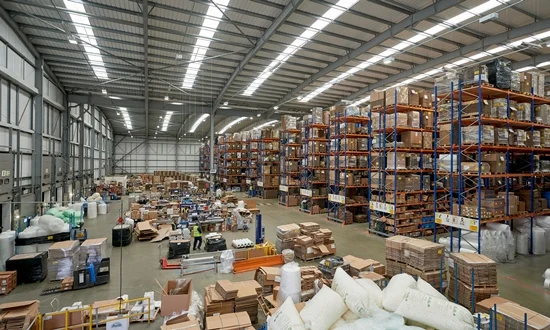
Packaging for the Future: Rajapack’s Strategic Roadmap for Sustainable E-commerce in 2026. As World Earth Day 2026 arrives, the global conversation regarding environmental stewardship has shifted from broad, aspirational goals to granular, operational mandates. For the retail and logistics sectors, packaging is no longer just a vessel for transit; it is a critical metric of environmental, social, and governance (ESG) performance. Rajapack, a leader in the packaging distribution sector, is using this year’s Earth Day platform to urge businesses to move beyond superficial sustainability efforts, advocating instead for a structural shift toward "right-sized" packaging and the widespread adoption of reusable logistics models.
The Consumer Mandate: A Demand for Circularity
The urgency behind Rajapack’s call to action is supported by compelling data regarding shifting consumer sentiment. Recent collaborative research conducted by environmental non-profit City to Sea and the compliance specialist Ecosurety has revealed a transformative trend in the UK market: 77% of consumers now explicitly expect retailers to provide reusable or returnable packaging options as a permanent alternative to the traditional "take-make-waste" model of single-use shipping materials.
This figure represents a significant tipping point. Consumers are no longer merely interested in the recyclability of a box; they are demanding a circular ecosystem where the packaging itself has a prolonged life cycle. For retailers, this is not merely a matter of brand reputation—it is a competitive necessity. Brands that fail to integrate circular solutions risk alienating a generation of shoppers who view single-use plastic waste as a direct reflection of a company’s moral and environmental values.
The "Right-Sizing" Revolution
At the heart of Rajapack’s technical recommendations is the concept of "right-sizing." Philip Price, Product Data Manager at Rajapack, emphasizes that the most effective way to reduce waste is to eliminate it at the source. "When a box fits a product correctly, you solve three problems in a single move," Price explains. "You minimize the need for void-fill—that ubiquitous bubble wrap or plastic air pillow—you lower the overall transport weight, and you drastically cut material waste."
The environmental impact of oversized packaging is two-fold. First, it requires more raw material, increasing the carbon footprint of production. Second, it creates inefficiencies in logistics; shipping "air" in an oversized box leads to less dense pallet loading, which requires more trucks on the road to transport the same volume of goods. By aligning box dimensions precisely with product dimensions, businesses can improve their logistics efficiency while simultaneously lowering their environmental impact.
Moving Beyond Plastic: A Practical Framework
To help businesses navigate the transition, Rajapack has outlined a comprehensive strategy for companies looking to overhaul their packaging operations. These suggestions are designed to be actionable, scalable, and impactful:
- The Great Substitution: A primary focus remains the transition from plastic-based mailers to high-performance, paper-based alternatives. Paper is often favored by consumers for its ease of kerbside recycling and its renewable origins, making it a "low-hanging fruit" for retailers looking to improve their sustainability credentials.
- Embracing Reusability: The industry must move toward reusable logistics, such as the Movopack system. These pouches, often manufactured from post-consumer recycled PET, are designed to endure multiple cycles of transit and return. By integrating these systems, retailers can transform packaging from a recurring cost into a reusable asset.
- Eliminating Polystyrene: Despite its prevalence, polystyrene remains a problematic material. It is frequently rejected by municipal recycling schemes and often ends up in landfill or as microplastic pollution. Rajapack advises an immediate pivot to recyclable cardboard-based protective structures, which provide high-impact protection without the end-of-life complications of synthetic foams.
- The Five-Step Audit: Brands are encouraged to conduct a thorough audit of their entire packaging supply chain using the 5R framework: Reduce, Reuse, Replace, Renew, and Recycle. Importantly, Price notes that companies do not need to implement all five strategies simultaneously. A phased approach allows for operational testing and ensures that changes are sustainable for the bottom line.
Regulatory Alignment and Financial Incentives
Beyond the ethical imperatives of Earth Day, there is a strong financial case for sustainable packaging. The UK Packaging Waste (PEPR) regulations, which incorporate modulated fees, are changing the economics of shipping. Under these rules, fees are calculated based on the weight and type of material used.
"Every swap you make delivers measurable benefits," Price notes. "When you right-size your cardboard, you aren’t just saving on raw materials; you are potentially lowering your modulated fees. Regulatory compliance is becoming intrinsically linked to material efficiency. The less packaging you use, and the more recyclable that material is, the lower your tax burden becomes."
This shift suggests that sustainability is no longer a "nice-to-have" add-on for the marketing department; it is a core financial metric for the finance and operations departments. By reducing the weight and complexity of packaging, companies can directly improve their margins while adhering to increasingly stringent government environmental mandates.
A Year-Round Commitment
While World Earth Day serves as a high-visibility catalyst for these discussions, Rajapack is keen to emphasize that the opportunity for change is not confined to a single day on the calendar. The transition to a more circular economy is a continuous process of optimization.
The pressure on retailers to innovate is only going to intensify. With global supply chain emissions under the microscope, and with the rise of AI-driven packaging design tools that can automatically calculate the most efficient box size for any given item, the barriers to entry for sustainable packaging have never been lower.
For many businesses, the first step is the most difficult: admitting that current packaging workflows are inefficient. Whether it is through swapping out plastic for paper, testing returnable pouches, or simply committing to a smaller box size, every incremental improvement adds up. As 2026 progresses, the companies that succeed will be those that view packaging not as a static component of their business, but as a dynamic tool that can be optimized for both the planet and the profit margin.
Ultimately, Rajapack’s message is one of optimism grounded in pragmatism. The technology, the materials, and the regulatory incentives are all moving in the same direction. By adopting these strategies, retailers can meet the rising expectations of their customers while ensuring that their operations are fit for the future of a sustainable global economy. The mandate is clear: start small, audit often, and recognize that in the world of modern logistics, less truly is more.