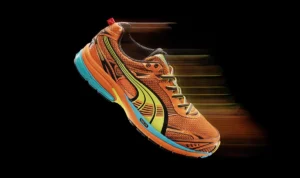


In a move designed to telegraph unwavering confidence to a skeptical Wall Street, the architects of the Swiss sportswear phenomenon On Holding AG have significantly increased their personal stakes in the company. David Allemann, Caspar Coppetti, and Olivier Bernhard—the three visionary founders who transformed a prototype involving pieces of garden hose into a global footwear juggernaut—collectively invested $6.6 million into Class A shares of the company last Thursday. This strategic "skin in the game" maneuver comes at a critical juncture for the brand as it navigates a complex macroeconomic landscape defined by shifting trade policies, a maturing North American market, and a resurgent competitive field led by industry titan Nike.
The transaction was meticulously structured, with each of the three founders acquiring 60,000 shares at a cost of approximately $2.2 million per person. By purchasing a total of 180,000 shares, the trio is utilizing their personal capital to reinforce the narrative that On’s growth trajectory remains steep, despite the short-term volatility that has recently characterized the athletic apparel sector. In the world of high-stakes finance, such insider buying is rarely seen as a mere portfolio adjustment; rather, it is viewed as a calculated signal to institutional investors that the leadership believes the current market valuation does not fully reflect the intrinsic value or the future potential of the enterprise.
This act of financial solidarity mirrors similar moves made by other industry heavyweights in recent weeks. For instance, Nike Inc.’s new CEO Elliott Hill, alongside lead director and Apple CEO Tim Cook, and veteran director John W. Rogers of Ariel Capital Management, recently purchased over 52,000 shares of Nike Class B stock, totaling roughly $2.3 million. These maneuvers highlight a broader trend among executive leadership teams in the footwear space: using personal wealth to stabilize investor sentiment during periods of transition or perceived vulnerability. For On Holding, the stakes are arguably higher, as the brand seeks to maintain its status as a "disruptor" while scaling into a mature, multi-category powerhouse.
The founders’ decision to buy back into their own vision arrives just as Wall Street analysts have begun to flag potential headwinds. Earlier this year, a wave of caution swept through the analyst community, with several firms raising alarms about the fiscal year 2026. While the consensus remains that On is a formidable long-term "growth story," the immediate path is cluttered with logistical and geopolitical hurdles. One of the primary concerns stems from the company’s supply chain architecture. Unlike many of its peers who remain heavily tethered to Chinese manufacturing, On has diversified its production, with a significant portion of its footwear originating in Vietnam.
While this diversification was once seen as a hedge against Sino-American trade tensions, it now presents a unique challenge. Needham analyst Tom Nikic has pointed out that while On is largely insulated from China-specific tariffs, it may face significant pressure from potential duty increases on Vietnamese imports. Nikic suggests that while the brand might feel a partial headwind in the latter half of 2024 and 2025, the full weight of these tariffs could hit the balance sheet by early 2026. This geographical shift in manufacturing risk has led some investors to wonder if the brand’s industry-leading margins can be sustained in a more protectionist global trade environment.
Furthermore, the geographic distribution of On’s revenue is becoming a point of contention. Jefferies analyst Randal J. Konik recently labeled the North American market a "yellow flag." Currently, the Americas account for a staggering 64 percent of On’s total sales. While the brand has enjoyed explosive growth in the United States, Konik argues that the market is showing signs of maturation. The "low-hanging fruit" of early adopters in coastal urban hubs has been harvested, and the brand must now compete for the broader middle-market consumer—a space where legacy brands like Nike, New Balance, and Brooks possess deep-rooted loyalty and massive marketing budgets.
The competitive landscape is further complicated by the "Swoosh factor." After a period of perceived stagnation, Nike is aggressively pivoting back to its performance running roots. Under the leadership of Elliott Hill, Nike is refocusing on the wholesale channel and technical innovation, directly challenging the "premium performance" niche that On has successfully occupied for the last decade. As Nike reclaims shelf space in specialty running stores, the "wholesale tailwinds" that previously propelled On’s rapid expansion may begin to decelerate.
Internal leadership shifts have also added a layer of uncertainty. Within the span of a single year, On Holding has seen significant changes at the top. Most notably, Martin Hoffmann, who served as a key executive, exited on May 1 for a planned sabbatical. This led to Allemann and Coppetti stepping back into the co-CEO roles to steer the ship during this transitional period. While the founders’ return to the helm provides a sense of continuity and "founder-led" passion, some institutional investors remain wary of the long-term succession plan and the stability of the C-suite.
Despite these "yellow flags," On’s recent financial performance remains remarkably robust, providing a stark contrast to the cautious outlooks of some analysts. On May 12, the company reported first-quarter results that exceeded even the most optimistic expectations. Net income surged by an eye-popping 82.2 percent, reaching 103.3 million Swiss francs. This was underpinned by a 14.5 percent increase in net sales, which climbed to 831.9 million Swiss francs. These figures suggest that, at least for now, the brand’s momentum is far from stalling.
David Allemann has been vocal in his dismissal of "slowdown" narratives. In recent statements, he emphasized that the company sees "meaningful runway in every channel," from direct-to-consumer (DTC) digital platforms to high-end boutique retail and global wholesale partnerships. The brand is also leaning heavily into technical innovation to maintain its premium pricing power. Caspar Coppetti recently highlighted the success of the brand’s "LightSpray" technology—a revolutionary upper-construction method that debuted with the Cloudmonster Hyper. By expanding production at their Busan factory in South Korea, On has reportedly increased its manufacturing capacity for these high-tech models thirty-fold since February.
Looking ahead, the company is betting on a new proprietary material called "Surreal." This "Superfoam" is engineered for the everyday runner, claiming to weigh half as much as the industry-standard EVA (ethylene-vinyl acetate) while delivering a 60 to 70 percent increase in energy return. The "Surreal" foam is scheduled to make its commercial debut with the Cloudsurfer 3 this October, with a wider rollout across the brand’s core running franchises planned for 2027. This focus on "energy return" and "weight reduction" is central to On’s strategy to move beyond being a "lifestyle" brand and solidify its reputation as a serious athletic laboratory.
Retail expansion also remains a pillar of the growth strategy. In April, On opened a flagship store on Boston’s prestigious Newbury Street, strategically placing itself in the heart of one of the world’s most iconic running cities. By establishing a physical presence in key global hubs—ranging from Paris to Tokyo—On is attempting to cultivate a community-centric brand identity that transcends digital advertising.
In a statement regarding the $6.6 million share purchase, the company noted that the founders are "laser-focused on building the world’s most premium global sportswear brand." They characterized the investment as a reflection of their "conviction in On’s journey ahead and their deep commitment to the company they founded and have led together for more than 16 years."
The market responded favorably to the news of the insider buying and the general resilience of the brand. Shares of On closed on Monday at $38.10, representing a nearly 2.3 percent increase. While the road to 2026 may be paved with tariff concerns and competitive pressures, the founders of On Holding have made it clear that they are not just watching from the sidelines—they are doubling down on the future of the "Cloud" empire. As the brand prepares to debut its next generation of foam technology and navigate the complexities of global trade, the $6.6 million investment serves as a definitive statement: the Swiss upstart has no intention of slowing its sprint toward the top of the sportswear podium.