
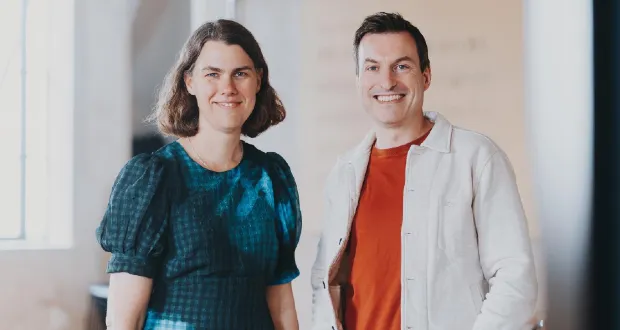
In a significant leadership expansion aimed at accelerating its global "Circular Living" mission, the Waste and Resources Action Programme (WRAP) has announced the appointment of Alex Robinson as its new Chief Programmes Officer. Robinson, who previously served as the CEO of the acclaimed environmental charity Hubbub, joins the organization at a pivotal juncture in its 25-year history. His mandate is to spearhead the design, delivery, and scaling of WRAP’s multifaceted international agenda, ranging from food systems transformation to the decarbonization of the fashion and packaging industries.
A Proven Architect of Behavioural Change
Robinson’s transition to WRAP is widely viewed as a strategic masterstroke, given his reputation for driving large-scale public engagement. During his tenure at the helm of Hubbub, Robinson was instrumental in transforming the charity into a powerhouse of environmental action. Under his leadership, the organization achieved the remarkable milestone of inspiring the equivalent of one public environmental action every nine seconds. This success did not go unnoticed, culminating in Hubbub being named "Charity of the Year" by Charity Times in 2023.
The expertise Robinson brings to WRAP is rooted in a unique professional trajectory. The first half of his career was defined by his work in the music industry, where he built international campaigns and complex partnerships. After successfully selling his music services business, he pivoted his focus toward climate change and environmental advocacy, applying the same commercial agility and creative campaigning strategies that had served him in the entertainment sector to the world of sustainability.
"Shifting behaviour at scale is one of the toughest and most important things we can do to tackle the climate and nature crises," Robinson remarked upon his appointment. "WRAP is one of the few organisations genuinely equipped to do it, through its work with governments, business, NGOs, and citizens. I’ve long admired Catherine [David] and the team’s work, and I’m excited to play my part in the next chapter."
Expanding the Circular Horizon
As Chief Programmes Officer, Robinson will oversee an expansive portfolio. His responsibilities encompass the core pillars of WRAP’s mission: resource management, circular economy practices, packaging optimization, and the transformation of global food systems, with a particular emphasis on the water-waste-emissions nexus.
He will work in close coordination with WRAP CEO Catherine David to evolve the organization’s collaborative action programmes. These include the sector-specific "Pacts"—such as the UK Food and Drink Pact, the UK Textiles Pact, and the recently launched UK Packaging Pact—which serve as frameworks for businesses to commit to concrete, measurable sustainability targets. Furthermore, Robinson will oversee the support systems provided to local authorities and devolved governments, helping them navigate the complexities of recycling, waste reduction, and the transition toward a circular economy.
Catherine David expressed strong enthusiasm for the appointment, highlighting the synergy she expects between Robinson’s background and WRAP’s long-term objectives. "I am delighted to welcome Alex to WRAP and excited to work with him to scale our impact globally in pursuit of our Circular Living mission," David stated. "Alex brings a wealth of valuable experience in leading inventive system change programmes for circularity, a sharp commercial focus, and a truly global outlook. I can think of no one better suited to accelerate the next phase of WRAP’s impact: for people, partners, and planet."
A Global Pivot in a Critical Decade
Robinson’s arrival coincides with a period of aggressive international expansion for WRAP. Celebrating its 25th anniversary, the organization has moved beyond its traditional UK-centric focus, recently inaugurating a new EU office and deepening its footprint in the Americas. These geographic expansions are designed to export WRAP’s proven models of collaborative action to regions where circular economy frameworks are currently being developed.
The organization is also sharpening its focus on the systemic transformation of food systems. With a recently announced global campaign, WRAP is positioning itself to tackle the environmental footprint of food production, distribution, and consumption on a planetary scale. This involves not only managing waste but also addressing the resource intensity of food production—specifically water usage and carbon emissions—that threaten to undermine global climate goals.
Integrating Business, Government, and Philanthropy
What distinguishes Robinson’s appointment is his track record of bridging the gap between disparate sectors. WRAP’s model relies heavily on the ability to convene competitors, policymakers, and civic leaders in the same room to agree on common standards. Robinson’s history of successful collaboration across business, government, philanthropy, and the voluntary sector aligns perfectly with this requirement.
In his new role, he will be tasked with ensuring that WRAP’s programmes remain both scientifically rigorous and commercially viable. As businesses face increasing pressure from regulators and investors to demonstrate supply chain circularity, WRAP’s role as a trusted partner has become more critical than ever. By leveraging Robinson’s experience in scaling campaigns that resonate with the public, WRAP aims to ensure that its corporate-facing initiatives—such as the Pacts—are bolstered by a strong mandate for change from consumers and citizens.
The Road Ahead
As Robinson settles into his role, the environmental landscape continues to evolve rapidly. The challenges of plastic pollution, textile waste, and the carbon impact of food systems are becoming increasingly urgent, with regulatory frameworks tightening across the UK, Europe, and beyond. WRAP’s strategy, now under the stewardship of Robinson’s operational expertise, appears set to move from a consultative role to a more assertive, implementation-focused model.
For Robinson, the task is twofold: maintain the momentum of WRAP’s established successes while pioneering new, scalable solutions that can be applied in diverse international contexts. His background in the music industry—a sector that thrives on rapid cultural shifts and global reach—may well provide the fresh perspective needed to turn the circular economy from a niche sustainability objective into a mainstream standard for global trade and consumption.
With his appointment, WRAP has signaled a clear intent to move into a phase of "acceleration." By blending Robinson’s consumer-facing communication skills with the organization’s deep technical expertise in waste and resource management, WRAP is positioning itself to lead the global discourse on sustainable consumption. As the climate and nature crises intensify, the success of Robinson’s initiatives will be measured not just by the number of programmes launched, but by the tangible, data-driven reductions in waste, water usage, and carbon emissions across the global economy.
Under this new leadership structure, WRAP looks poised to continue its quarter-century legacy of influence, moving from being a facilitator of sustainability to an engine of systematic change. Whether through the further refinement of the Packaging Pact or the expansion of international food system interventions, Robinson will be at the center of a concerted effort to reshape how the world produces, consumes, and discards resources.