
The global appetite for exotic "superfruits" has never been more robust, yet the logistical hurdles of transporting these delicate specimens from equatorial orchards to Western dinner tables remain a significant barrier to trade. In a landmark development for the agricultural export sector, StePacPPC, a prominent innovator in the field of Modified Atmosphere Packaging (MAP), has announced the successful implementation of a specialized packaging solution designed specifically for pitaya, commonly known as dragon fruit. This technological breakthrough addresses the unique physiological requirements of the fruit, ensuring that its vibrant aesthetic and nutritional integrity remain intact during the grueling three-to-four-week maritime journeys from South America to the lucrative markets of North America and Europe.
The pitaya, native to the lush landscapes of Central and South America, has ascended to the status of a global health icon. Characterized by its neon-pink or yellow skin and speckled interior, the fruit is not merely a visual marvel; it is a nutritional powerhouse. Rich in magnesium, iron, and fiber, and packed with antioxidants like betacyanins and hydroxycinnamates, the dragon fruit has become a staple in the "clean eating" movement. However, the very features that make it attractive—the striking, succulent bracts (the leaf-like protrusions on the skin) and the firm, juicy flesh—are the first casualties of poor postharvest management.
For years, the export of pitaya from primary hubs like Ecuador has been fraught with risk. The journey across the Atlantic or the Pacific is an endurance test for any perishable item. Pitaya, in particular, is a high-respiration fruit. Once harvested, it continues to "breathe" at a rapid rate, consuming oxygen and releasing carbon dioxide and water vapor. This metabolic activity leads to rapid senescence, or biological aging. In conventional packaging, this results in significant weight loss through dehydration, a dulling of the peel’s luster, and the wilting of the bracts. Furthermore, the accumulation of moisture within standard plastic wraps often creates a breeding ground for microbial decay and mold, rendering entire shipments unsalable upon arrival.
StePacPPC’s intervention comes after three years of intensive research and development, led by a global team of postharvest scientists and engineers. The company’s Chief Technology Officer, Gary Ward, Ph.D., emphasizes that the challenges faced by South American growers were the primary catalyst for this innovation. According to Dr. Ward, even the most sophisticated cold chain logistics—maintaining a steady, low temperature—are often insufficient to preserve the pitaya’s delicate "fresh-picked" appearance over a twenty-one-day sea voyage. The skin tends to shrivel, and the bracts, which serve as the ultimate indicator of freshness for the consumer, often turn brown and brittle.
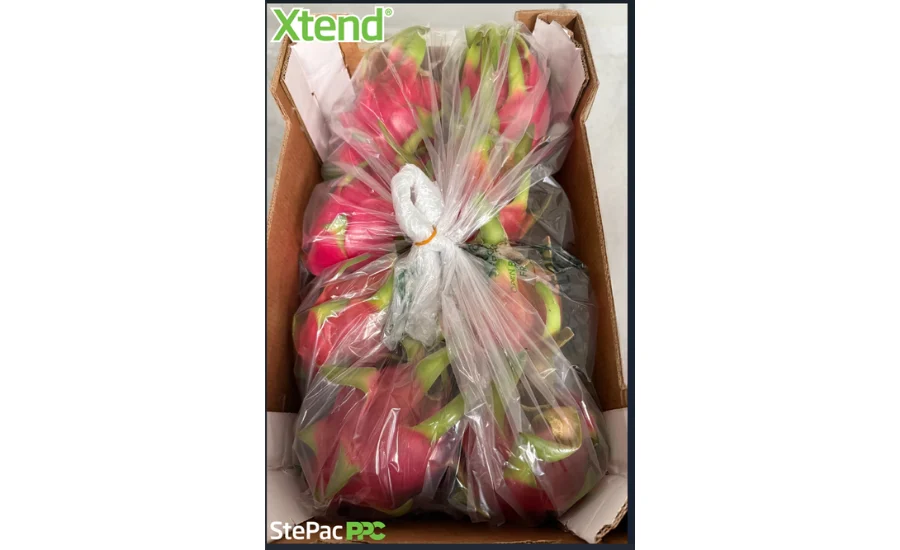
The solution lies in the adaptation of StePacPPC’s signature Xtend® Modified Atmosphere/Modified Humidity (MA/MH) films. This is not a "one-size-fits-all" plastic bag; rather, it is a sophisticated, semi-permeable membrane engineered with precision. The technology works by creating a customized micro-atmosphere within the bulk packaging. By precisely regulating the exchange of gases, the film maintains an optimal balance of oxygen ($O_2$) and carbon dioxide ($CO_2$). This specific gas mix effectively "puts the fruit to sleep," slowing down its respiration rate and significantly delaying the ripening process.
Perhaps more importantly, the Xtend® solution incorporates advanced moisture management properties. One of the most common failures in traditional MAP is the buildup of condensation, which encourages fungal growth. StePacPPC’s film features a tailored Water Vapor Transmission Rate (WVTR) and integrated antifog properties. This ensures that while enough moisture is retained to prevent the fruit from dehydrating and losing weight, excess humidity is allowed to escape. This delicate equilibrium keeps the bracts turgid and green and prevents the skin from losing its characteristic glossy sheen.
The development process involved more than just laboratory testing. StePacPPC’s technical experts conducted numerous site visits to Ecuadorian packing houses, working in tandem with exporters to fine-tune the packaging’s performance under real-world conditions. This collaborative approach allowed the team to optimize every variable, from the initial cooling protocols to the final sealing of the bulk liners. The result is a packaging paradigm that provides a robust safety net for exporters, allowing them to shift from expensive air freight to more sustainable and cost-effective sea freight without sacrificing product quality.
The implications of this technology extend far beyond the borders of Ecuador. While South America is a major player, Southeast Asia—specifically Vietnam, Thailand, and Malaysia—represents a massive hub for dragon fruit cultivation. These regions have long struggled with the "distance-to-market" problem, often being forced to limit their exports to neighboring countries. With the validation of the Xtend® solution in the Ecuadorian corridor, StePacPPC is now eyeing expansion into Asian markets, offering growers there the opportunity to reach the high-value markets of the European Union and North America with confidence.
Furthermore, this innovation aligns with broader global trends toward sustainability and food waste reduction. According to the Food and Agriculture Organization (FAO) of the United Nations, approximately one-third of all food produced for human consumption is lost or wasted, with fruits and vegetables having the highest wastage rates. By extending the shelf life of the pitaya and ensuring it arrives in a marketable state, StePacPPC is directly contributing to the reduction of postharvest loss. This not only improves the profit margins for growers and retailers but also reduces the environmental footprint associated with producing and transporting food that ultimately ends up in a landfill.
The pitaya-specific film is the latest addition to a portfolio that has already seen significant success with other tropical and subtropical crops. StePacPPC’s Xgo™ and Xtend® lines are already considered the industry standard for shipping passion fruit from Colombia. In that application, the packaging has been instrumental in preventing the "shriveling" effect that often plagues passion fruit, which consumers frequently mistake for over-ripeness or decay. Similarly, in South Africa, the company’s solutions are used for the bulk transport of green bananas. In a unique application of the technology, the bananas are ripened while still inside the sealed modified atmosphere bags, which allows for a much more controlled and uniform ripening process, providing retailers with a longer window of peak sellability.
As the fresh produce industry continues to evolve, the role of "smart" packaging is becoming increasingly central. No longer is packaging merely a vessel for transport; it is a functional tool that interacts with the biological processes of the produce. StePacPPC’s commitment to "lean packaging"—using the minimum amount of material necessary to achieve the maximum preservation effect—is a testament to this shift. By focusing on the science of postharvest physiology, the company is helping to unlock new geographical markets for exotic fruits that were previously deemed too "high-risk" for long-distance trade.
Dr. Gary Ward views this breakthrough as a template for the future of the industry. He notes that the success in Ecuador is a perfect example of identifying a specific "pain point" in the supply chain and engineering a bespoke solution to solve it. As consumer demand for diverse, healthy, and exotic produce grows, the ability to maintain the "orchard-fresh" experience across thousands of miles of ocean will be the defining factor of successful global trade.
In conclusion, the introduction of StePacPPC’s new MAP solution for pitaya represents a significant milestone in agricultural technology. It bridges the gap between the remote tropical farms of the Southern Hemisphere and the discerning consumers of the North. By preserving the vibrant color, firm texture, and nutritional value of the dragon fruit, StePacPPC is not just protecting a product; it is safeguarding the livelihoods of exporters and fulfilling the global promise of the "superfruit" revolution. As this technology becomes more widely adopted, the sight of perfectly fresh, glowing dragon fruit in a local grocery store in London or New York will no longer be a rarity, but a testament to the power of scientific packaging.