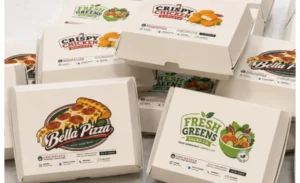

The landscape of global food packaging is undergoing a seismic regulatory shift, driven by an increasing demand for consumer protection and chemical transparency. At the heart of this transformation is the German Printing Ink Ordinance (GIO), a legislative framework that has set a new benchmark for the safety of substances used in the printing of food contact materials. While the industry at large is bracing for the official implementation of these rules in 2027, hubergroup Print Solutions, a global leader in the manufacture of printing inks and chemicals, has announced a significant milestone: its entire portfolio of food packaging products is already fully compliant with the new standards. This proactive achievement not only positions hubergroup as a pioneer in regulatory adherence but also provides a vital safety net for printers, converters, and brand owners who must navigate the complexities of a changing legal environment.
The German Printing Ink Ordinance, formally known as the 21st Amendment to the Consumer Goods Ordinance, represents one of the most stringent regulatory efforts to date regarding the chemistry of packaging. For decades, the industry relied on a mix of voluntary self-regulation, such as the guidelines provided by the European Printing Ink Association (EuPIA), and broader European Union frameworks like the Framework Regulation (EC) No 1935/2004. However, the GIO introduces a more granular approach by establishing a "positive list" of substances. Only the monomers, additives, and photoinitiators explicitly vetted and listed by the German Federal Ministry of Food and Agriculture (BMEL) are permitted for use in the production of printing inks for food packaging. This shift from general safety requirements to a strictly defined list of approved ingredients necessitates a massive undertaking for ink manufacturers, involving extensive research, reformulation of existing products, and rigorous toxicological testing.
Initially, the transition period for the GIO was slated to conclude earlier, but the German Federal Council recently extended the deadline to December 31, 2026. This extension was granted to allow the industry sufficient time to adapt to the logistical and technical challenges of reformulating thousands of ink recipes without compromising on print quality, drying speeds, or substrate adhesion. Despite this breathing room, hubergroup has chosen not to wait. By completing its compliance transition a full year ahead of the mandatory deadline, the company has demonstrated a robust internal infrastructure capable of rapid innovation and a deep-seated commitment to the "MGA" (Migration-Guarantee-Application) philosophy that has defined its food-grade products for years.
The significance of this compliance cannot be overstated in the context of migration science. When an ink is applied to the exterior of a food package, there is a risk that chemical components could migrate through the substrate or transfer via "set-off" (where the printed side of a sheet comes into contact with the unprinted side during stacking) into the food product itself. These migrating substances, if not properly managed, can alter the sensory properties of the food or, more critically, pose health risks to consumers. The GIO addresses these risks by limiting the migration of non-evaluated substances to a maximum of 0.01 mg/kg and ensuring that evaluated substances do not exceed their specific migration limits (SML). Hubergroup’s early compliance ensures that its customers are using materials that have already been optimized to meet these exact thresholds.
Alessandro Moresco, the Consumer Care Manager and Product Safety Expert at hubergroup, emphasized the strategic importance of this development. According to Moresco, the company’s ability to declare full GIO compliance across its entire relevant portfolio is the result of systematic preparation and a deep understanding of the regulatory trajectory. He noted that all products intended for food packaging applications now meet the requirements defined by the GIO, offering a "future-proof" solution for the entire value chain. This announcement covers a vast array of printing technologies and applications, ensuring that no matter the medium, safety remains constant.
The scope of hubergroup’s GIO-compliant portfolio is comprehensive, touching every major segment of the packaging market. Among the highlighted product lines is the Gecko series, which includes flexo and gravure inks and varnishes. The Gecko range is a staple in the flexible packaging industry, used for everything from snack wrappers to stand-up pouches. Ensuring that these high-speed, solvent-based systems meet GIO standards is a technical feat that requires balancing solvent evaporation rates with the strict toxicological requirements of the new positive list.
For the sheet-fed offset sector, hubergroup’s MGA (Migration-Guarantee-Application) conventional inks have long been the industry standard for folding cartons. These inks are formulated with vegetable oils and are designed to be low-migration and low-odor. By confirming GIO compliance for the MGA line, hubergroup ensures that traditional carton printers can continue their operations without fearing a sudden regulatory shutdown. Similarly, the NewV Pack MGA series addresses the growing demand for UV-curable inks in food packaging. UV technology offers immediate drying and high gloss, but the use of photoinitiators has historically been a point of regulatory scrutiny. Hubergroup’s ability to bring these UV systems into full GIO compliance represents a significant advancement in radiation-curing chemistry.
Water-based systems also feature prominently in the compliance report. The ACRYLAC MGA water-based varnishes and the HYDRO-X GA water-based inks provide environmentally friendly alternatives for paper and board packaging. These products are essential for the corrugated and folding carton markets, where water-based chemistry is preferred for its sustainability profile. Furthermore, the iray MGA UV flexo inks, which are increasingly used for high-end labels and flexible packaging, have also been certified as compliant, rounding out a portfolio that leaves no stone unturned.
Beyond the technical specifications, hubergroup’s early compliance provides what the company calls "planning security." In the world of global FMCG (Fast-Moving Consumer Goods), brand owners like Nestlé, Unilever, and P&G operate on long lead times. A change in packaging regulations can trigger a cascade of supply chain disruptions if converters are forced to switch ink systems at the last minute. By offering proven, GIO-compliant solutions today, hubergroup allows these brand owners and their printing partners to transition their designs and production processes gradually, without the pressure of a looming legal deadline. It minimizes the risk of product recalls and ensures that packaging remains a safe vessel for the food it protects.
The broader implications of the GIO and hubergroup’s response to it also highlight a trend toward "de facto" global standards. While the GIO is a German national regulation, its influence extends far beyond Germany’s borders. Many multinational food companies adopt the strictest available standard as their global baseline to simplify their supply chains. Consequently, the German Printing Ink Ordinance is effectively becoming a European, if not a global, benchmark. By leading the charge in Germany, hubergroup is simultaneously setting the pace for international safety standards in printing ink manufacture.
Hubergroup’s journey toward this milestone is rooted in its long history as a chemical specialist. Founded over 250 years ago, the company has transitioned from a small ink lab in Munich to a global powerhouse with its own chemical production facilities. This vertical integration—where hubergroup produces many of its own raw materials, including pigments and resins—gives it a unique advantage in regulatory compliance. The company’s experts can trace the chemical lineage of an ink from the molecular level to the finished product, providing a level of transparency that is increasingly required by modern legislation.
As the industry looks toward the January 2027 enforcement date, the focus will shift from preparation to implementation. For hubergroup, the work of development and reformulation is largely complete, allowing the company to focus on supporting its customers through the transition. This includes providing detailed documentation, such as Statements of Composition and Declarations of Compliance, which are essential for the "paper trail" required by food safety auditors.
In conclusion, the early confirmation of GIO compliance by hubergroup Print Solutions is more than just a regulatory checkmark; it is a testament to the company’s role as a steward of consumer safety. In an era where the chemical safety of packaging is under intense microscope, the ability to deliver high-performance inks that meet the world’s toughest standards is a competitive necessity. For the printers and brand owners who rely on hubergroup, the message is clear: the future of food packaging safety is not a distant goal—it is a reality that is available for implementation today. Through technical expertise and a proactive regulatory strategy, hubergroup has ensured that the "MGA" seal remains a symbol of trust in an ever-evolving marketplace.