
The premium honey sector is currently undergoing a significant transformation, driven by a consumer base that increasingly demands transparency, authenticity, and a tactile sense of luxury. At the forefront of this shift is Rowse® Honey, a cornerstone brand within the Valeo Foods Group portfolio, which has recently announced a comprehensive packaging overhaul for its prestigious Manuka Honey range. This strategic redesign, executed in a high-level collaboration with global packaging leader Coveris, represents more than just a cosmetic update; it is a sophisticated fusion of advanced material science, sustainable engineering, and high-end brand storytelling. By reimagining the visual and physical presence of its most elite product line, Rowse is reinforcing its market leadership while setting a new benchmark for the "premiumization" of the functional food category.
The Manuka honey market is uniquely positioned within the global pantry. Unlike standard wildflower or clover varieties, Manuka honey—sourced from the Leptospermum scoparium tree native to New Zealand—is prized for its unique antibacterial properties, measured by Methylglyoxal (MGO) levels. Because of its high price point and medicinal reputation, the packaging must perform a dual role: it must act as a guarantor of authenticity and a beacon of premium quality on a crowded retail shelf. The new Rowse Manuka identity, available in both traditional jars and modern squeezy formats, achieves this through a meticulous selection of substrates and decorative finishes that communicate the product’s value before the consumer even opens the lid.
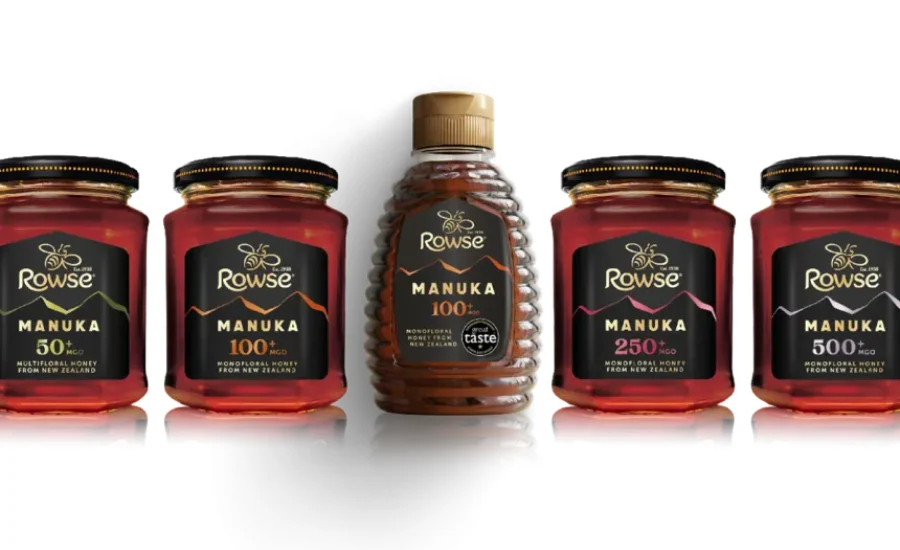
A central pillar of this redesign is the transition from conventional labeling materials to a more artisanal, tactile approach. Moving away from the standard silver paper often found in mass-market honey products, Rowse and Coveris opted for uncoated, textured substrates. This choice is rooted in the psychology of "haptic" marketing—the idea that the physical feel of a product influences a consumer’s perception of its value. The natural, slightly rough texture of the paper evokes a sense of raw, unadulterated nature, aligning perfectly with the monofloral origins of Manuka honey. To complement this organic base, the design incorporates advanced metallic detailing and sharp print definition, ensuring that the brand’s heritage is balanced with a modern, clinical precision.
The technical execution of these labels required a nine-month developmental cycle, involving rigorous trials and collaboration between multiple stakeholders. While Coveris handled the complex printing and material engineering, the creative vision was spearheaded by The Space Creative, with Aire Global providing essential support in the realization of the print-ready assets. One of the most striking features of the new range is the use of dual hot foil applications. This technique involves stamping two different colors of metallic foil onto a single label, a process that requires extreme registration accuracy to prevent overlapping or misalignment. For the Rowse Manuka range, each SKU (Stock Keeping Unit) is assigned a specific foil color corresponding to its MGO rating. For instance, the high-potency 500+ MGO variant features a distinct hue that allows customers to quickly differentiate between levels of activity. This color-coding system not only aids in shelf navigation but also creates a "collectible" or tiered aesthetic across the product family.
Beyond the visual and tactile enhancements, the new packaging incorporates invisible technology designed to protect the integrity of the supply chain. Given that Manuka honey is a high-value item, it is frequently a target for retail shrinkage. To combat this, the back labels now feature integrated SourceTag RF (Radio Frequency) technology. This innovation allows for seamless integration with in-store security systems without compromising the clean lines of the packaging design. By embedding security directly into the label production process, Rowse provides retailers with a "shelf-ready" solution that reduces the need for bulky, external security tags that can detract from the premium consumer experience.
Sustainability remains a non-negotiable directive for both Valeo Foods Group and Coveris. The redesign of the Manuka range served as a catalyst for deepening the environmental partnership between the two companies. A standout element of this collaboration is the utilization of Coveris’s "ReCover Paper" facility. In the high-volume world of self-adhesive label production, the waste generated from release liners—the backing paper that is discarded once a label is applied—can be substantial. Over the past year, Rowse Honey has successfully diverted significant quantities of this waste through the RafCycle™ program, a circular economy initiative developed by UPM Adhesive Materials.
The statistics associated with this green initiative are impressive. By recycling approximately 42kg of release liners over a twelve-month period, Rowse has prevented an estimated 9 tonnes of CO2 emissions from entering the atmosphere—the equivalent of what would have been produced had the material been sent to a landfill or incinerated. This effort is a vital component of Coveris’s broader "No Waste" vision, which aims to eliminate waste across the entire packaging lifecycle, from production to end-of-life. For the consumer, this means that the luxury of the Manuka range is backed by a verifiable commitment to ecological responsibility, a factor that is increasingly influential in purchasing decisions.
The industry has already taken note of the technical prowess involved in this project. The Rowse Manuka 500+ MGO Monofloral Honey label has been named a finalist in the prestigious UK Packaging Awards 2025 for "Label of the Year." This recognition is a testament to the complexity of the double foil stamping and the successful integration of textured substrates in a high-speed production environment. It validates the decision to invest nine months in research and development, proving that even in a category as traditional as honey, there is significant room for disruptive innovation.
This milestone is also a celebration of a long-standing corporate relationship. Coveris and Rowse Honey have worked together for over two decades, a partnership built on a shared history of navigating market fluctuations, evolving consumer tastes, and technological leaps. This twenty-year tenure allowed the teams to communicate with a high degree of trust during the redesign process, ensuring that the final product remained true to Rowse’s core brand values while pushing the boundaries of what is possible in label decoration.
As the food industry looks toward the future, the Rowse Manuka redesign serves as a blueprint for how legacy brands can modernize without losing their soul. It demonstrates that premium packaging is not just about "looking expensive," but about creating a cohesive narrative that spans security, sustainability, and sensory engagement. The move to uncoated materials reflects a broader trend toward "quiet luxury" in the food and beverage sector—a move away from the loud, glossy plastics of the early 2000s toward materials that feel grounded, authentic, and high-quality.
For those interested in seeing the engineering behind these labels firsthand, Coveris will be showcasing the new Manuka range at the upcoming Packaging Innovations tradeshow. The event, which stands as the United Kingdom’s premier gathering for the packaging industry, will take place on February 11-12, 2026, at the NEC in Birmingham. Visitors to stand J114 will be able to experience the tactile quality of the textured substrates and the depth of the dual hot foil stamping in person.
In conclusion, the collaboration between Rowse® Honey and Coveris has resulted in a packaging solution that is as potent as the honey it contains. By prioritizing technical innovation and environmental stewardship, Rowse has secured its position at the apex of the Manuka category. The new visual identity is a sophisticated blend of art and science, proving that the right packaging can transform a simple jar of honey into a premium wellness experience. As the 500+ MGO variant heads toward the UK Packaging Awards, it carries with it the weight of twenty years of partnership and a clear vision for the future of sustainable luxury.