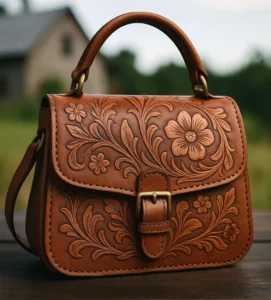

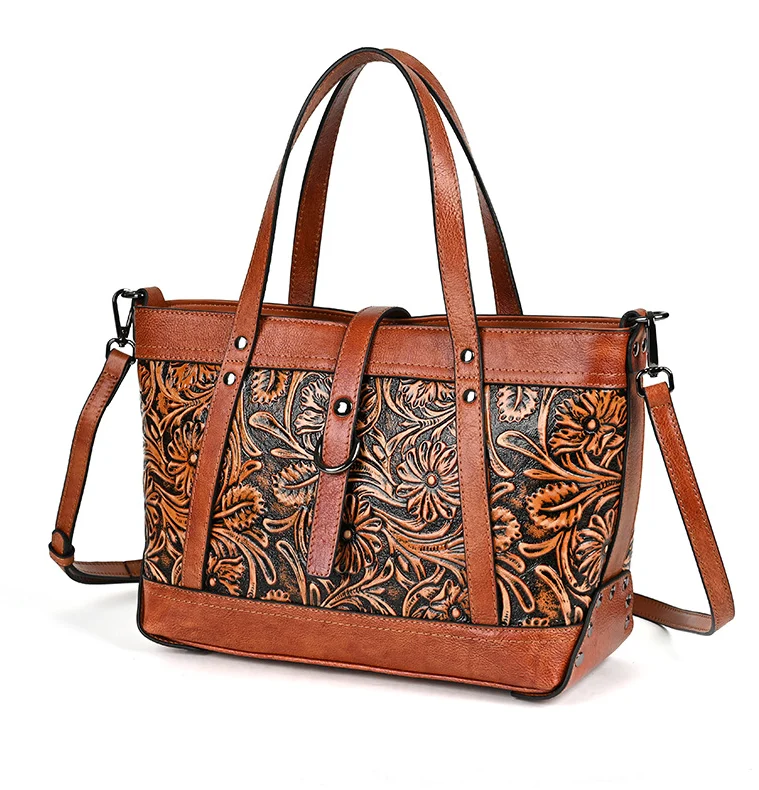
The modern accessory market is a sprawling landscape of fleeting trends and mass-produced utility, yet standing apart in defiance of disposability is the hand-carved, vegetable-tanned leather large tote. This object is not merely a container for daily essentials; it is a profound synthesis of traditional craft, sustainable material science, and functional artistry. The creation of such a piece represents a meticulous, months-long process—a commitment to quality that transcends typical commercial timelines and delivers an heirloom quality item destined to age gracefully, reflecting the life and journey of its owner.
To truly appreciate the value proposition of a hand-carved tote, one must first understand the fundamental commitment required by its primary material: vegetable-tanned leather. This ancient, laborious technique is the antithesis of the industry standard, chrome tanning, which uses harsh chemicals to process hides in a matter of days. Vegetable tanning, conversely, is an act of profound patience, often taking anywhere from one to three months. The hides are soaked in vats filled with natural tannins—organic compounds derived from tree barks (like oak, chestnut, and mimosa), wood, leaves, and fruits. This process is inherently sustainable; the effluent is biodegradable, and the resulting leather possesses a rigidity, depth of color, and unique aroma that chrome-tanned leather cannot replicate.
The slow absorption of tannins results in a leather that is dense, highly durable, and structurally superior. Crucially, vegetable-tanned leather develops a spectacular patina over time. Unlike mass-market leather goods that degrade and crack, this material darkens, softens, and gains a rich luster as it interacts with natural oils, sunlight, and handling. The resulting markings are not flaws but a visual diary, ensuring that no two vegetable-tanned totes, even those cut from the same hide, will ever look exactly alike after years of use. This "living leather" quality is what elevates the tote from a simple accessory to a cherished companion.
Layered upon this foundation of superior material is the painstaking art of hand-carving. This intricate process requires not only immense skill but specialized knowledge of leather tooling mechanics. The artisan begins by dampening the leather, bringing it to a state known as ‘casing’—the perfect moisture level where the fibers are pliable yet hold their shape permanently once compressed. Using a specialized swivel knife, the artisan meticulously cuts the design outline into the leather’s surface. This is followed by a painstaking process of stamping, beveling, and shading.
Beveling tools are employed to push down the background surrounding the main design elements, creating a three-dimensional effect where the carved motif appears raised and prominent. Shading tools then introduce depth and texture, transforming a flat piece of hide into a sculpted relief. The choice of motif—whether intricate Celtic knots, flowing floral patterns, geometric tessellations, or classic Western scrollwork—is dictated by the artisan’s regional heritage and the client’s specifications. A single, large tote panel might require dozens of hours of focused, physically demanding hand-tooling, a stark contrast to the instantaneous, uniform output of machine embossing. The unique signature of the artisan’s hand—the minute variations in the depth of the cuts and the placement of the stamps—ensures that the final product is genuinely one-of-a-kind, irreplaceable by any industrial process.
The "Large Tote" designation speaks directly to the need for practical capacity, marrying this luxurious artistry with everyday utility. A successful tote of this scale must handle substantial weight without compromising its structural integrity. This is often where the ‘Canvas Bag’ element, referenced in the original naming convention, plays a crucial role. High-quality, tightly woven canvas is frequently integrated into the design, typically as a robust lining material, internal dividers, or even as secondary side panels. The use of canvas serves several practical functions: it reduces the overall weight of the bag (leather, especially vegetable-tanned leather, is heavy), protects the delicate interior of the leather from abrasion, and provides a smooth, durable lining for electronics and smaller items. The collaboration between the rigid, sculpted leather exterior and the supportive, lightweight canvas interior achieves a balance of elegance and endurance.
Structurally, the large tote must feature reinforced stress points. This involves heavy-duty stitching, often using waxed linen thread known for its strength and resistance to rot, and strategically placed copper or brass rivets at the handle attachments and corner seams. The handles themselves are usually constructed from multiple layers of rolled or stacked vegetable-tanned leather, ensuring they can bear significant loads without stretching or tearing. The careful selection of hardware—solid brass buckles, high-grade zippers, and robust foot studs (metal protectors on the base)—further cements the tote’s investment status, ensuring that every component is designed to last a lifetime, not just a season.
This extreme dedication to time, material, and craft is the key driver of the tote’s high value. In an economy increasingly dominated by speed and low cost, a hand-carved, vegetable-tanned tote is a statement against obsolescence. When consumers encounter premium pricing for such goods, they are paying not just for the raw materials, but for the artisanal legacy: the weeks of tanning time, the hundreds of hours of focused carving labor, and the generational knowledge passed down through master leatherworkers.
The market for bags, however, is extraordinarily diverse, representing a vast spectrum of utility and longevity. On one end resides the high-end artisan craft, exemplified by this hand-carved leather masterpiece. On the opposite end lies the world of disposable, mass-market utility. This stark contrast is perfectly illustrated by the pervasive presence of highly affordable, utilitarian items, such as the abshoo Classical Basic Travel Backpack, frequently sold for a minimal price point, as noted in affiliate data snippets ($19.99, as of the recorded date).
This low-cost backpack, typically constructed from synthetic, water-resistant fabrics and relying on automated assembly lines, serves a specific, immediate need: cheap, functional transport for school or travel. It is designed for maximum accessibility and minimum long-term investment. Its purpose is purely utilitarian and ephemeral, reflecting the modern consumer’s willingness to sacrifice permanence for immediate affordability. The price point is accurate as of the indicated time (January 29, 2026, 23:31 GMT +08:00), underscoring the dynamic, price-sensitive nature of the general retail market where swift turnover is the norm. The existence of such a product highlights the sheer gulf in manufacturing philosophy: one product emphasizes speed and volume (the backpack); the other, timelessness and singular quality (the hand-carved tote).
For the discerning consumer, the choice is philosophical. Investing in the hand-carved vegetable-tanned leather large tote is an investment in durability, artistry, and sustainability. It is a commitment to an object that will not only endure but will improve with age, accumulating character and unique history with every outing. It is a rejection of the fast-fashion cycle, positioning the tote as a generational asset—a piece of wearable art capable of being passed down, its patina telling the story of the hands that made it and the life it has witnessed. In a world saturated with the easily replaceable, the artisan-crafted tote remains a powerful symbol of enduring quality and individual expression.