
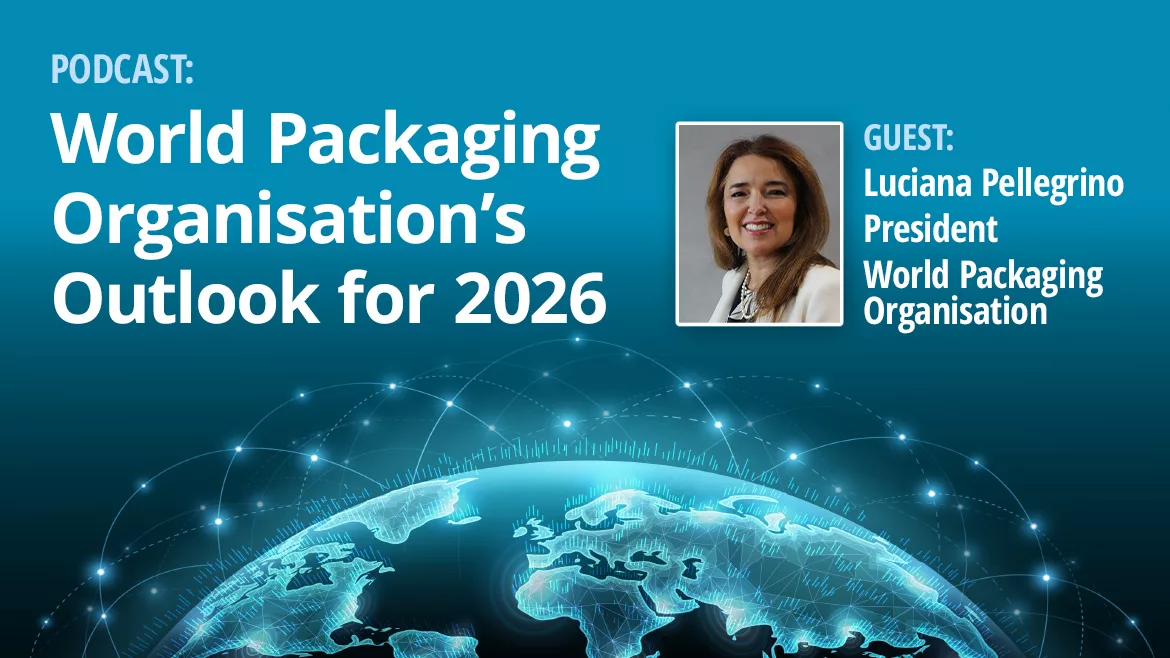
As the global community moves toward the midpoint of the decade, the packaging industry finds itself at a critical crossroads, balancing the urgent demands of environmental sustainability with the logistical complexities of a globalized supply chain. In a comprehensive dialogue held in São Paulo, Brazil, Luciana Pellegrino, the President of the World Packaging Organisation (WPO), provided an illuminating look into the organization’s roadmap for 2026. Pellegrino, who also serves as the Executive President of the Brazilian Packaging Association (ABRE), brings a unique dual perspective to the role, bridging the gap between emerging markets in the Global South and the established industrial frameworks of the Global North. Under her leadership, the WPO is transitioning from a body primarily recognized for its prestigious awards programs into a formidable global advocate for policy, education, and technical standardization.
The WPO, headquartered in Vienna, Austria, operates as the definitive international federation for national packaging institutes and associations. Its influence has expanded significantly in recent years, now encompassing 66 member countries. According to Pellegrino, this growth is far from over. Each year, new nations seek membership, recognizing that packaging is not merely a logistical necessity but a cornerstone of economic development and public health. For nations that lack a formal national packaging body, the WPO serves as an incubator, providing the structural blueprints and expertise necessary to establish these vital institutions. This expansion is critical as the global packaging market is projected to exceed a valuation of $1.3 trillion by 2028, driven by the rise of e-commerce, the pharmaceutical needs of an aging population, and the rapid industrialization of Southeast Asia and Africa.

One of the most significant pillars of the WPO’s 2026 outlook is its deepened collaboration with the United Nations Industrial Development Organization (UNIDO). This partnership is designed to address one of the most pressing challenges in the developing world: the lack of adequate packaging infrastructure. In many emerging economies, post-harvest food loss can reach as high as 40% to 50% simply because farmers and distributors lack the means to protect, preserve, and transport goods safely. By working with UNIDO, the WPO aims to enhance the "packaging capacity" of these nations, providing technical training and helping to establish local manufacturing hubs. This initiative does more than just reduce waste; it empowers local economies by enabling them to meet the stringent packaging standards required for international export, thereby integrating them into the global trade network.
A central theme of Pellegrino’s vision is the reframing of packaging’s role in the fight against food insecurity. While packaging is often criticized for its environmental footprint, its primary function—the preservation of resources—is frequently overlooked. To address this, the WPO has partnered with the Netherlands-based FSSC Foundation to align and promote the "Save Food Packaging Design Principles." These principles provide a scientific framework for designers to create packaging that maximizes shelf life and minimizes spoilage. In a world where roughly one-third of all food produced for human consumption is lost or wasted—amounting to approximately 1.3 billion tons annually—the WPO views smarter packaging design as a primary catalyst for achieving the UN Sustainable Development Goal of zero hunger. By 2026, the organization intends to have these principles integrated into standard manufacturing protocols across its member nations.
Sustainability, however, remains the dominant narrative in the industry, and the WPO is taking a proactive stance on the circular economy. The organization’s "Design for Recycling Guide" has long been a foundational document for engineers and brand owners. However, its technical depth and sheer volume have occasionally served as a barrier to implementation for small and medium-sized enterprises (SMEs). Pellegrino revealed that a major objective for 2026 is the distillation of this guide into a more accessible, "digestible" format. This streamlined version will focus on universal recycling symbols, material compatibility, and end-of-life processing instructions. Furthermore, the WPO is prioritizing the translation of these guides into a multitude of languages, ensuring that a factory manager in Vietnam or a designer in Peru has the same access to high-level sustainability data as their counterparts in Germany or the United States.
This move toward simplification reflects a broader trend in global regulation. With the European Union’s Packaging and Packaging Waste Regulation (PPWR) setting a high bar for recyclability and recycled content, other regions are looking for guidance on how to harmonize their local laws with international expectations. The WPO acts as a diplomatic bridge in this regard, ensuring that the "voice of packaging" is heard in policy discussions. Pellegrino emphasizes that the industry must move away from a fragmented approach where every country has different rules for what constitutes "recyclable." By fostering a unified global language for packaging design, the WPO hopes to reduce the "greenwashing" phenomenon and provide consumers with clearer information.
The conversation with Pellegrino also touched upon the evolution of the WorldStar Awards, the industry’s most coveted global competition. While the awards continue to celebrate aesthetic and functional excellence, the criteria have shifted heavily toward environmental stewardship and social impact. In the 2026 cycle, the WPO expects to see a surge in entries featuring mono-material structures, bio-based alternatives to traditional plastics, and "smart" packaging that utilizes QR codes and NFC technology to provide consumers with traceability data. These awards serve as more than just accolades; they act as a global database of innovation, showcasing proven solutions that can be scaled across different markets.
Looking ahead, the WPO is also turning its attention to the human element of the industry—education and workforce development. As packaging technology becomes more sophisticated, incorporating AI-driven design and advanced polymer science, the need for a highly skilled workforce is paramount. Pellegrino noted that the WPO is expanding its educational webinars and certification programs to ensure that the next generation of packaging professionals is equipped to handle the complexities of a circular economy. This includes a focus on "systems thinking," where designers are taught to consider not just the package itself, but the entire lifecycle of the product, from raw material extraction to the consumer’s curbside bin.

The interview concluded with a reflection on the role of the President herself. Operating from São Paulo, Pellegrino’s leadership symbolizes the decentralization of industrial power. Her presence on the global stage highlights the importance of the Latin American market, which is currently seeing significant investment in sustainable pulp and paper production, as well as innovative recycling technologies. Her dual role at ABRE and WPO allows her to bring real-world, regional challenges to the international table, ensuring that global standards are inclusive of the realities faced by diverse economies.
As 2026 approaches, the World Packaging Organisation is positioning itself as much more than a trade group. Under Luciana Pellegrino’s guidance, it is evolving into a strategic global partner for governments, NGOs, and the private sector. By focusing on the intersection of food security, environmental sustainability, and economic development, the WPO is asserting that packaging is not a problem to be solved, but a solution to be optimized. The outlook for 2026 is one of radical transparency, simplified technical standards, and a relentless pursuit of a world where packaging delivers maximum value with minimum environmental impact. Through advocacy, education, and the "Save Food" initiative, the WPO is ensuring that the industry is prepared to meet the needs of a global population that is expected to reach 8.5 billion by 2030.