
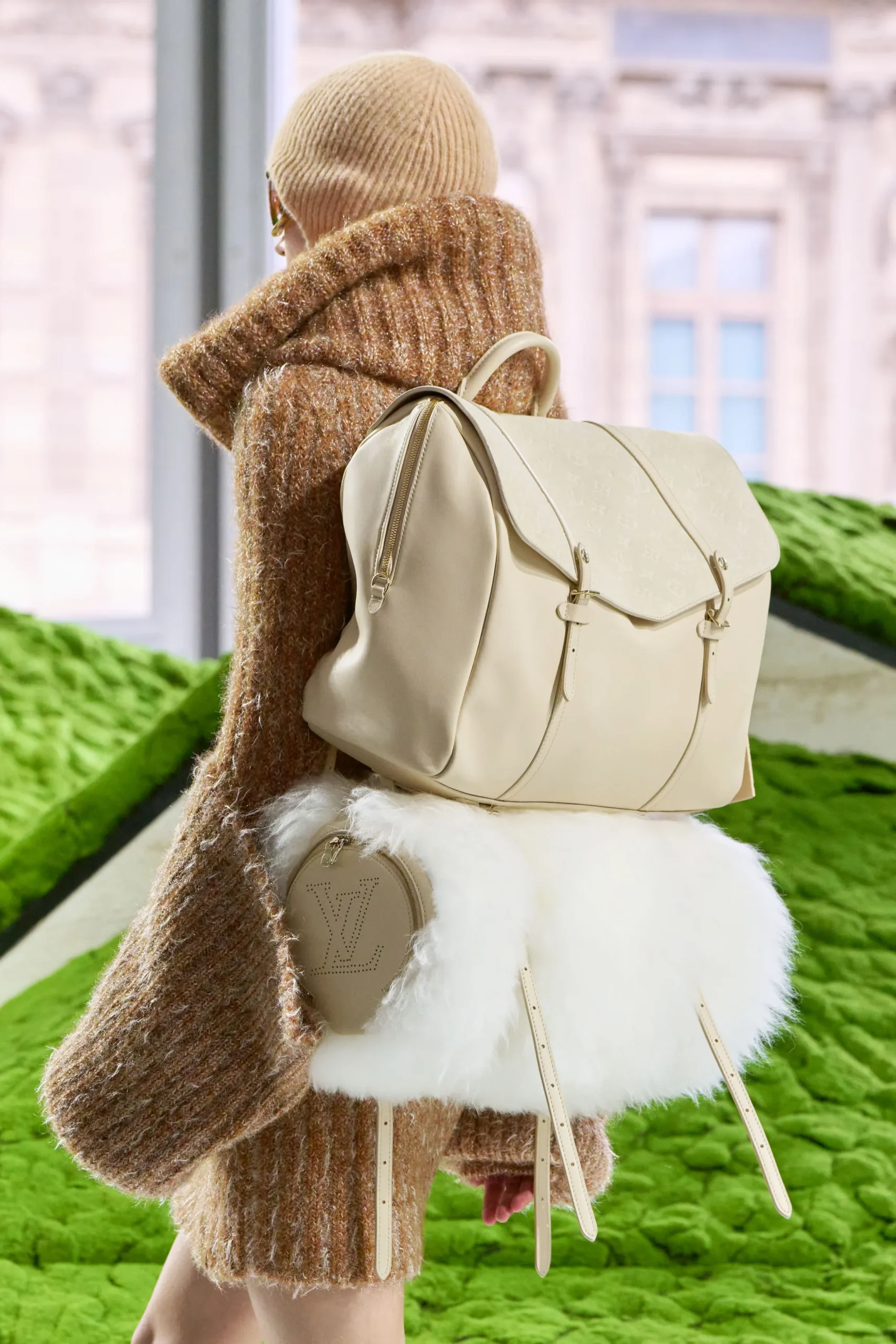
On March 10, 2026, the hallowed Cour Carrée of the Musée du Louvre became the backdrop for Louis Vuitton’s Fall–Winter 2026 ready-to-wear presentation, a spectacle that married high fashion with a rustic, almost pastoral dreamscape. Creative Director Nicolas Ghesquière envisioned a collection that existed in a state of elegant suspension between antiquity and the near future, creating a tableau that echoed the verdant, rolling valleys of the Jura Mountains—the birthplace of the House’s founder. While the clothing was defined by dramatic, voluminous silhouettes and powerful shoulder lines, the accompanying handbag collection provided a masterclass in thematic accessorizing, subtly weaving in the collection’s narrative threads through innovative designs and playful reinterpretations of iconic styles.
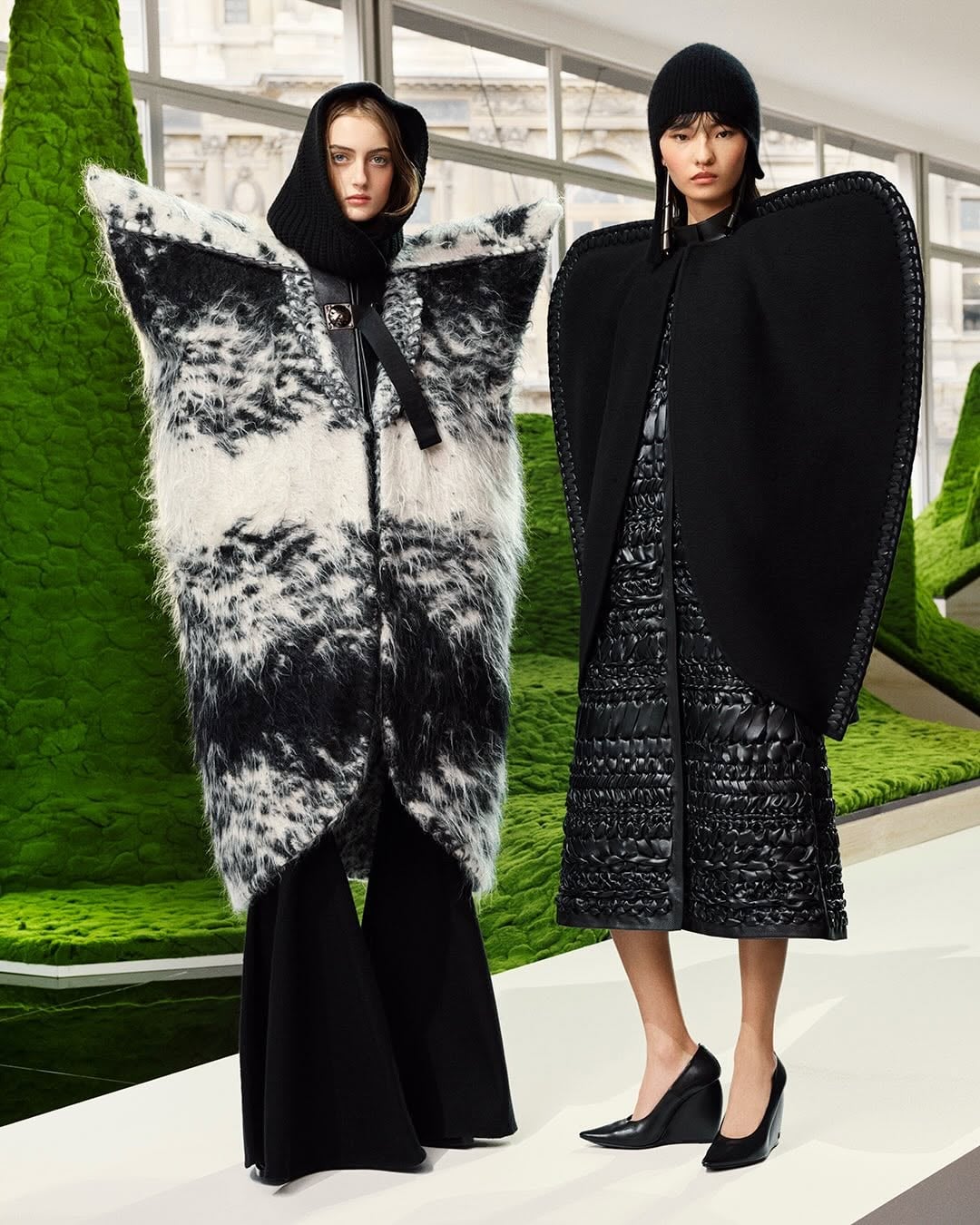
The seasonal palette, characterized by grounding tones of charcoal, deep browns, and creamy ivory, punctuated by electric flashes of fuchsia and burgundy, set a sophisticated stage for the accessories. Textural richness was paramount in the ready-to-wear, featuring dramatic fringe and voluminous feathers, a tactile quality that was thoughtfully translated into the bag hardware and detailing. To ground the collection in its winter context, luxurious furs were draped, and accessories were often paired with the functional, yet highly stylized, accoutrements of a shepherd or traveler—rolled blankets, sleeping bags attached to larger packs, and even shepherd’s sticks used to carry delicate pieces.
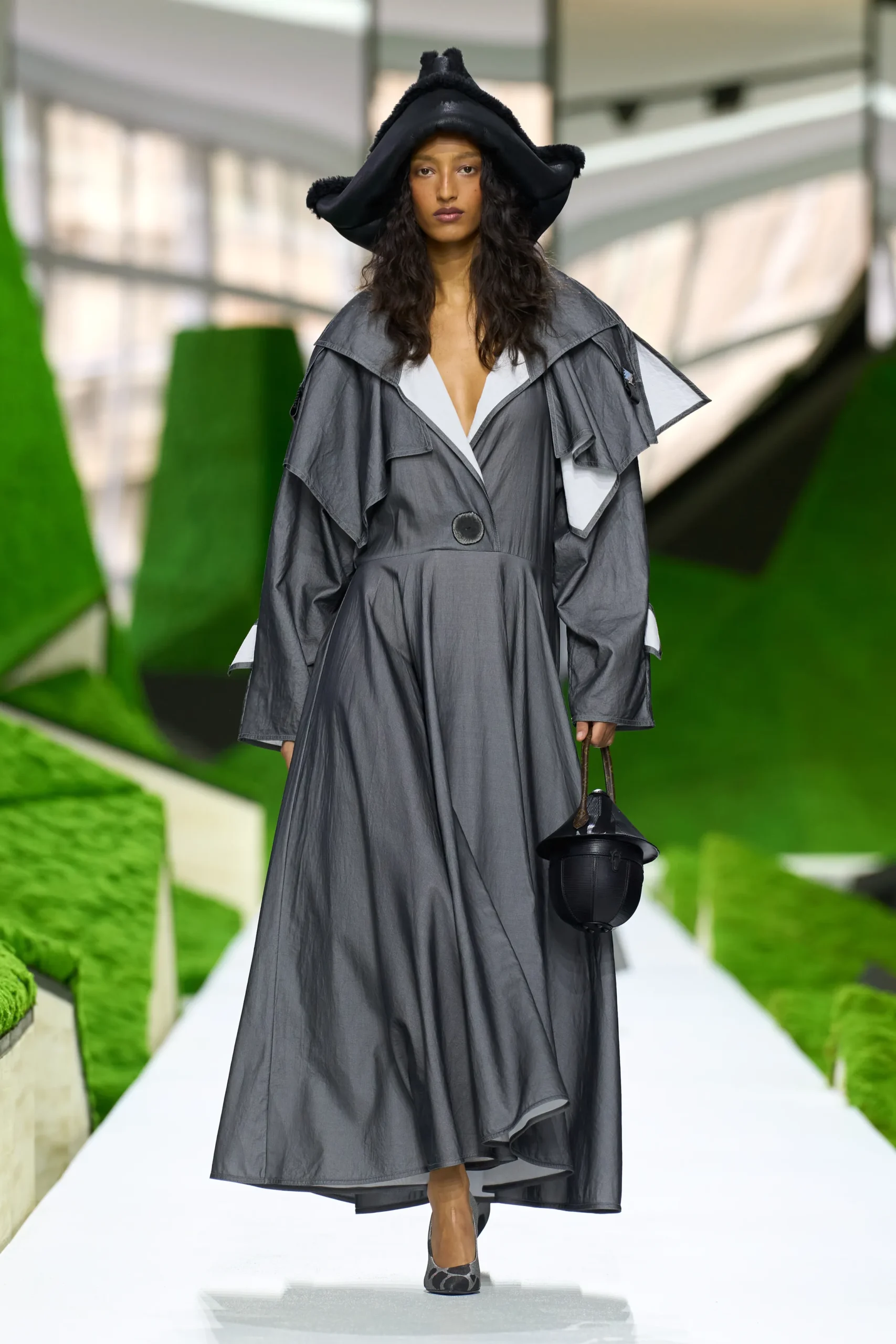
The accessory focus was decidedly on modernized trunks and reimagined classics, all unified by a tongue-in-cheek nod to the pastoral theme: the traditional Speedy clochette was often replaced by a charming, slightly oversized cowbell charm, offering a delightful juxtaposition against the luxury materials.
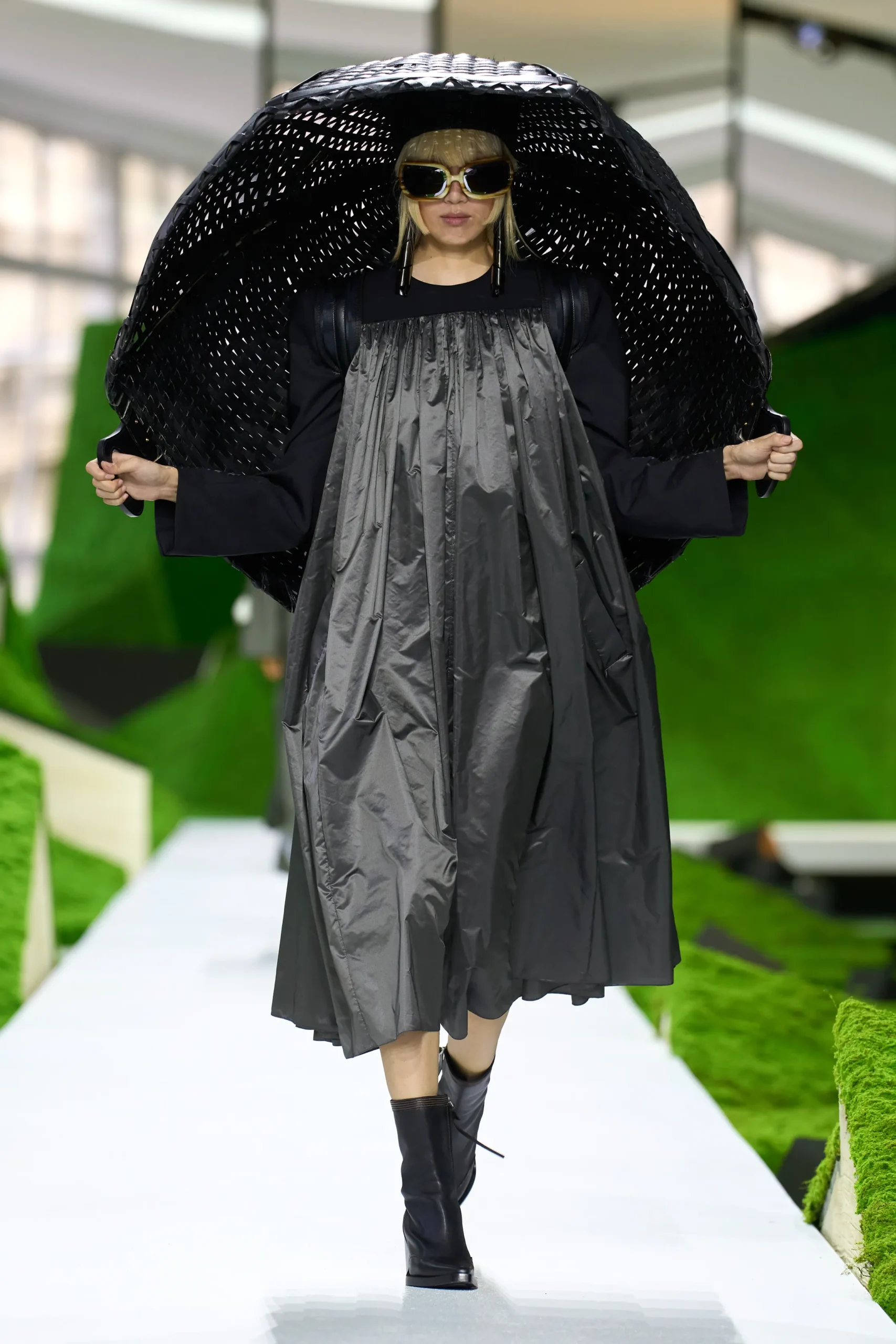
The Architectural Newcomer: Louis Vuitton Knotted Bag
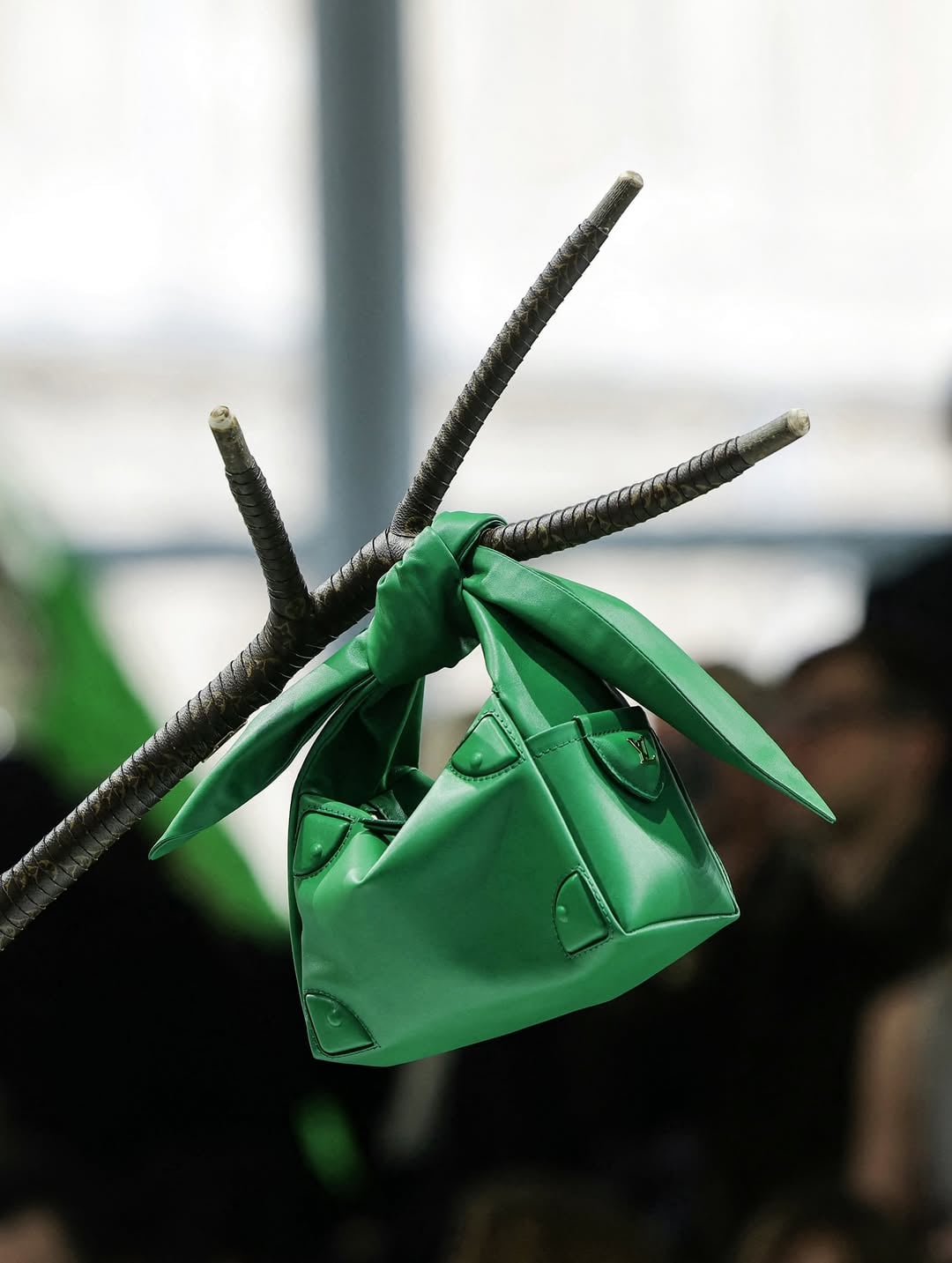
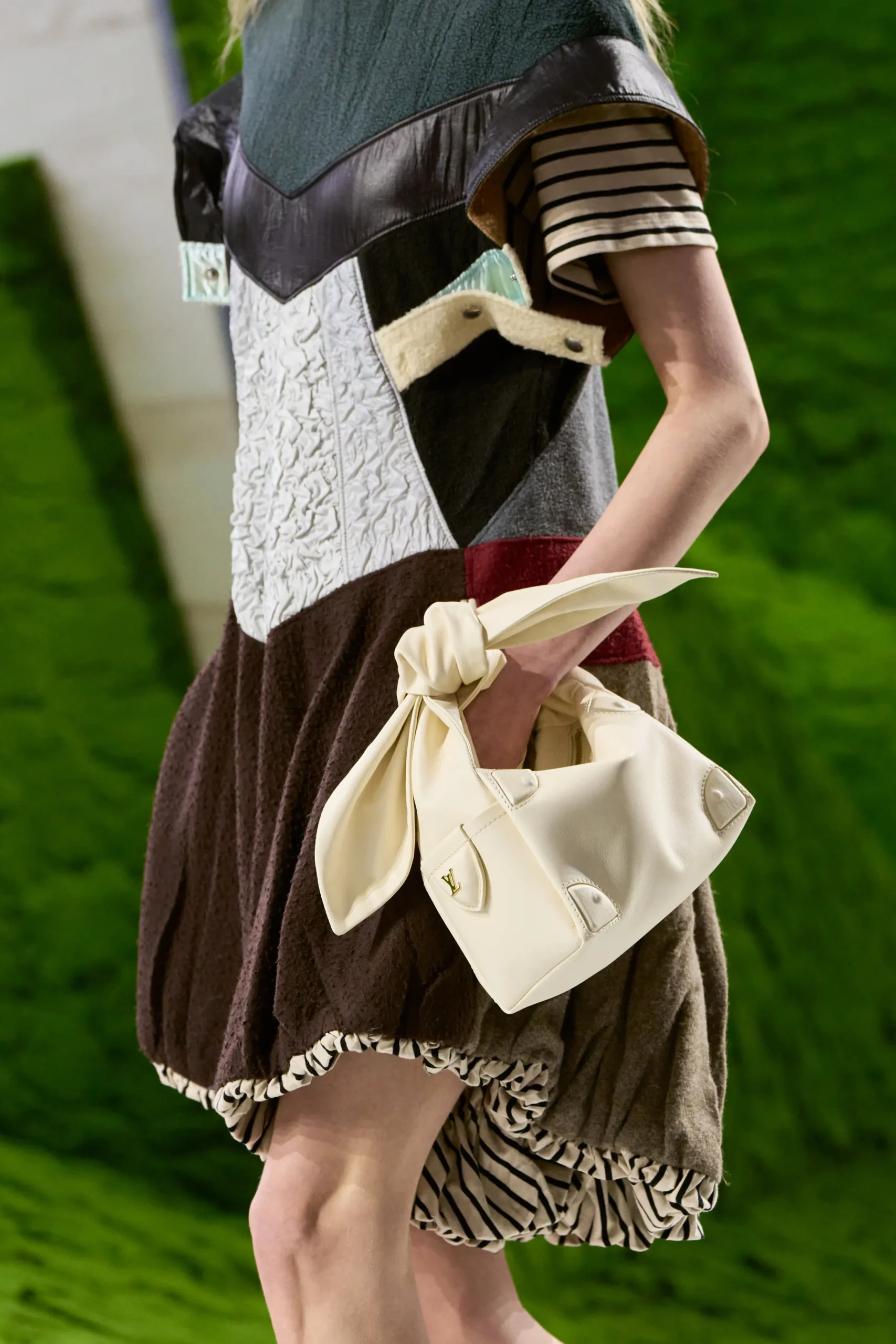
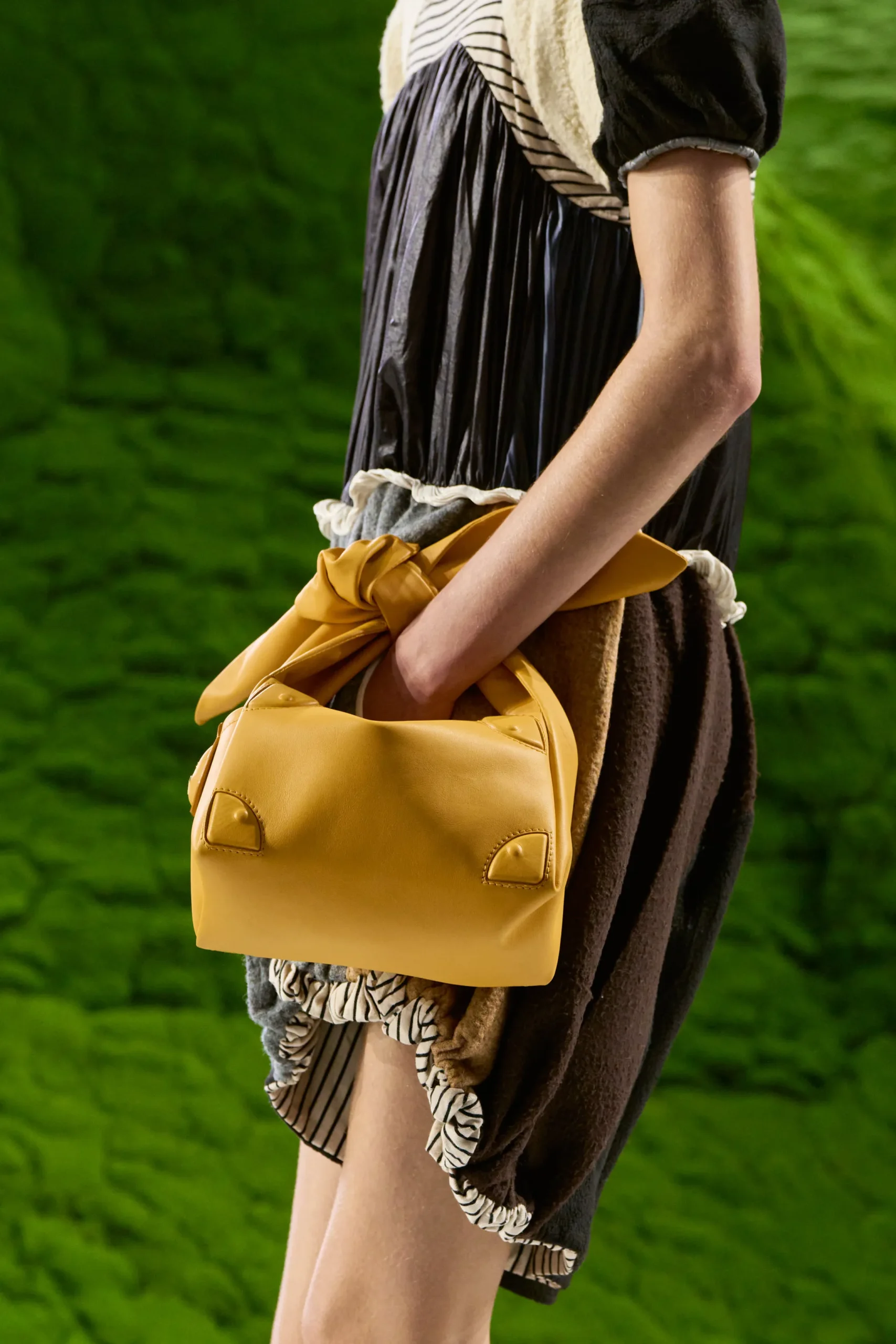
The most immediate statement piece emerging from the accessories lineup was the Louis Vuitton Knotted Bag. This style represents a departure into soft structure, heavily referencing the heritage of the Side Trunk while prioritizing supple leather construction. It avoids overt metallic hardware, instead favoring a sleek, tone-on-tone leather finish that speaks to minimalist sophistication.
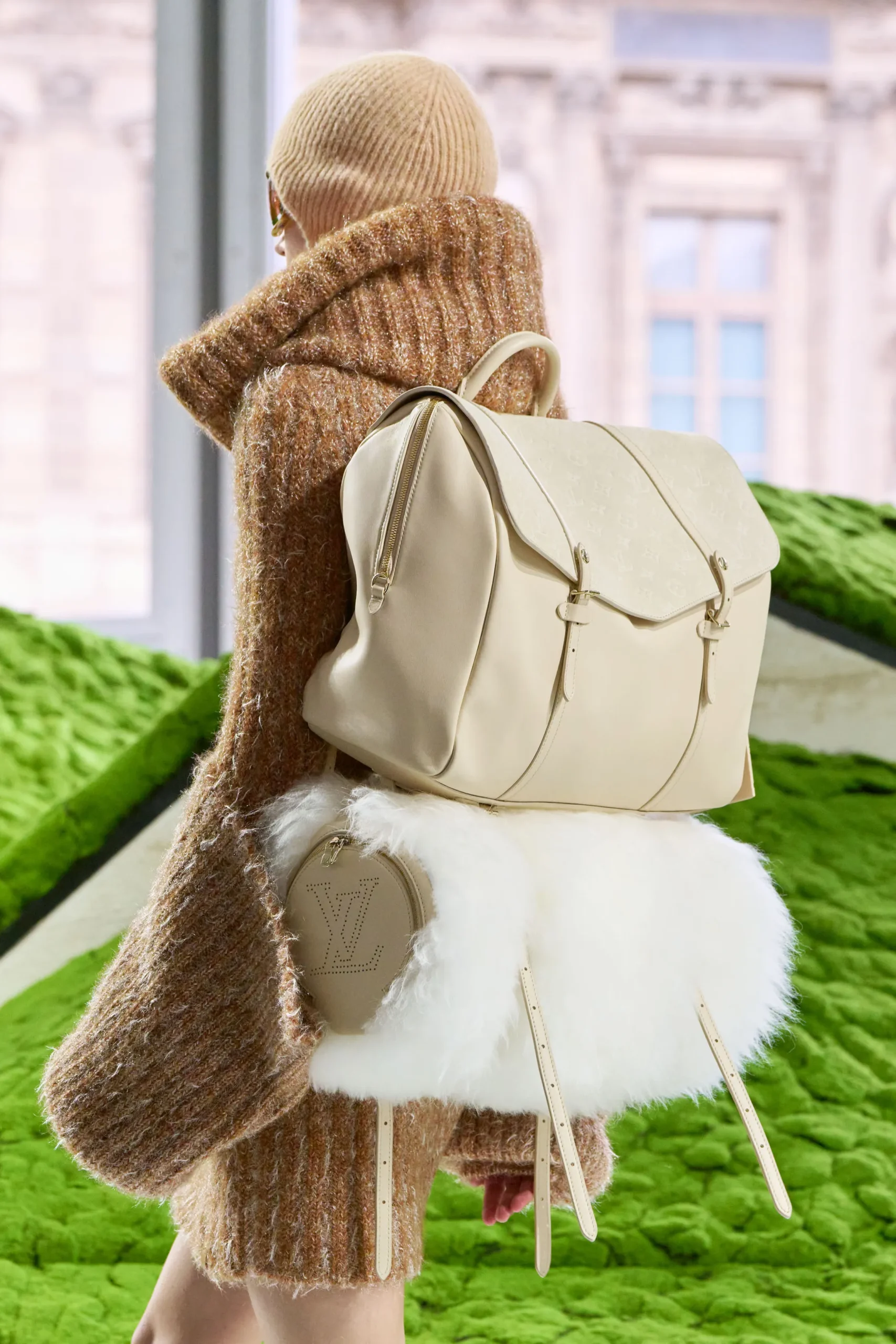
This bag’s defining feature is its dramatically oversized, knotted top handle. This feature appears to be an amplification of the knot detail seen previously on the Mahina Why Knot bag, scaled up for a more substantial, sculptural presence. The body of the bag is generously proportioned, featuring reinforced corner details that subtly recall the rigid structure of a classic trunk. Functional patch pockets adorn each end, secured with small, LV-branded tab fastenings. The bag was showcased in a versatile range of colors, including stark black, pristine white, vibrant emerald green, and a sunny, deep yellow. Its styling on the runway was particularly noteworthy: models carried it looped over the aforementioned shepherd’s sticks, emphasizing its dual role as a functional carryall and a piece of pastoral art.
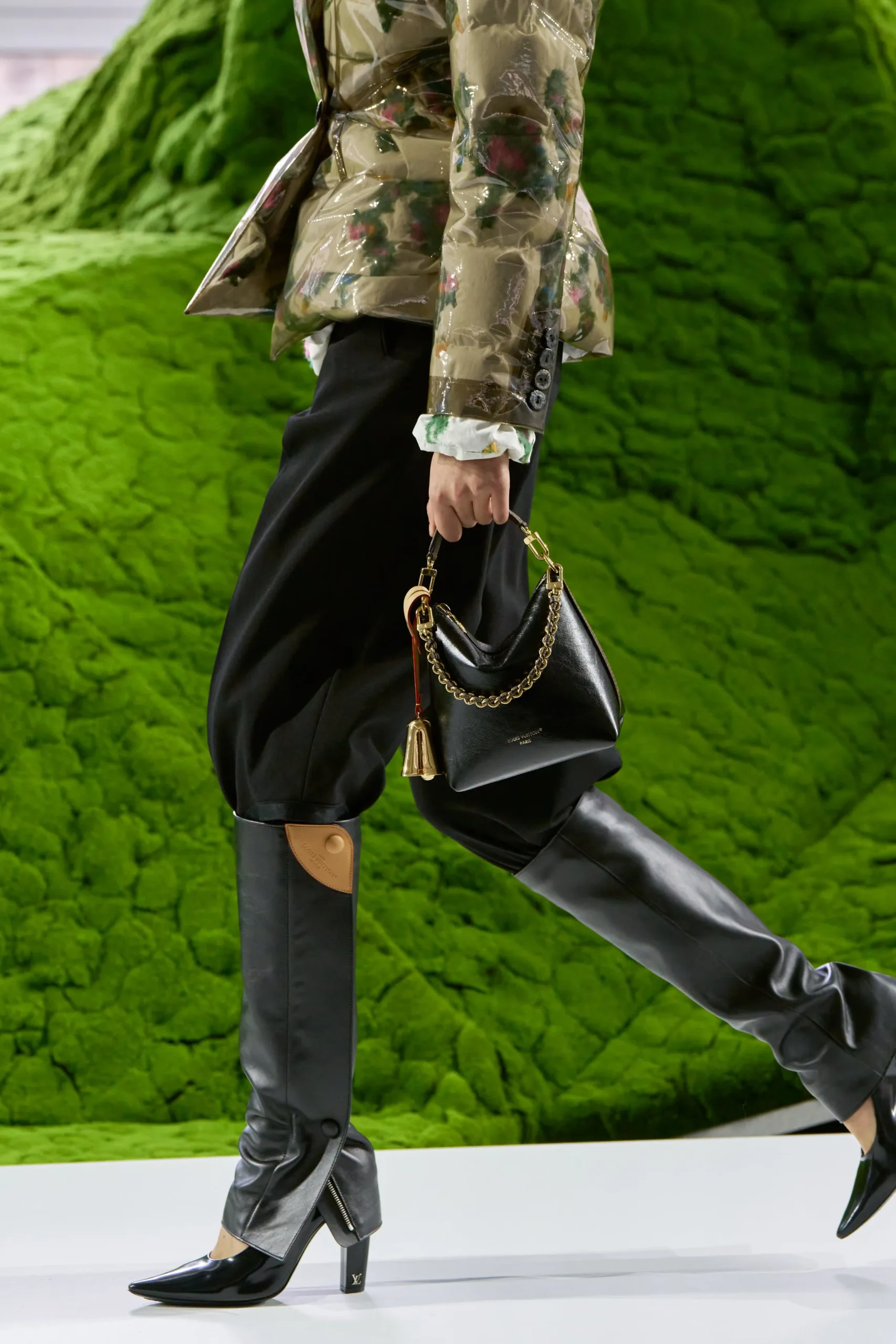
A Soft Evolution: The Petite Malle Shoulder Bag
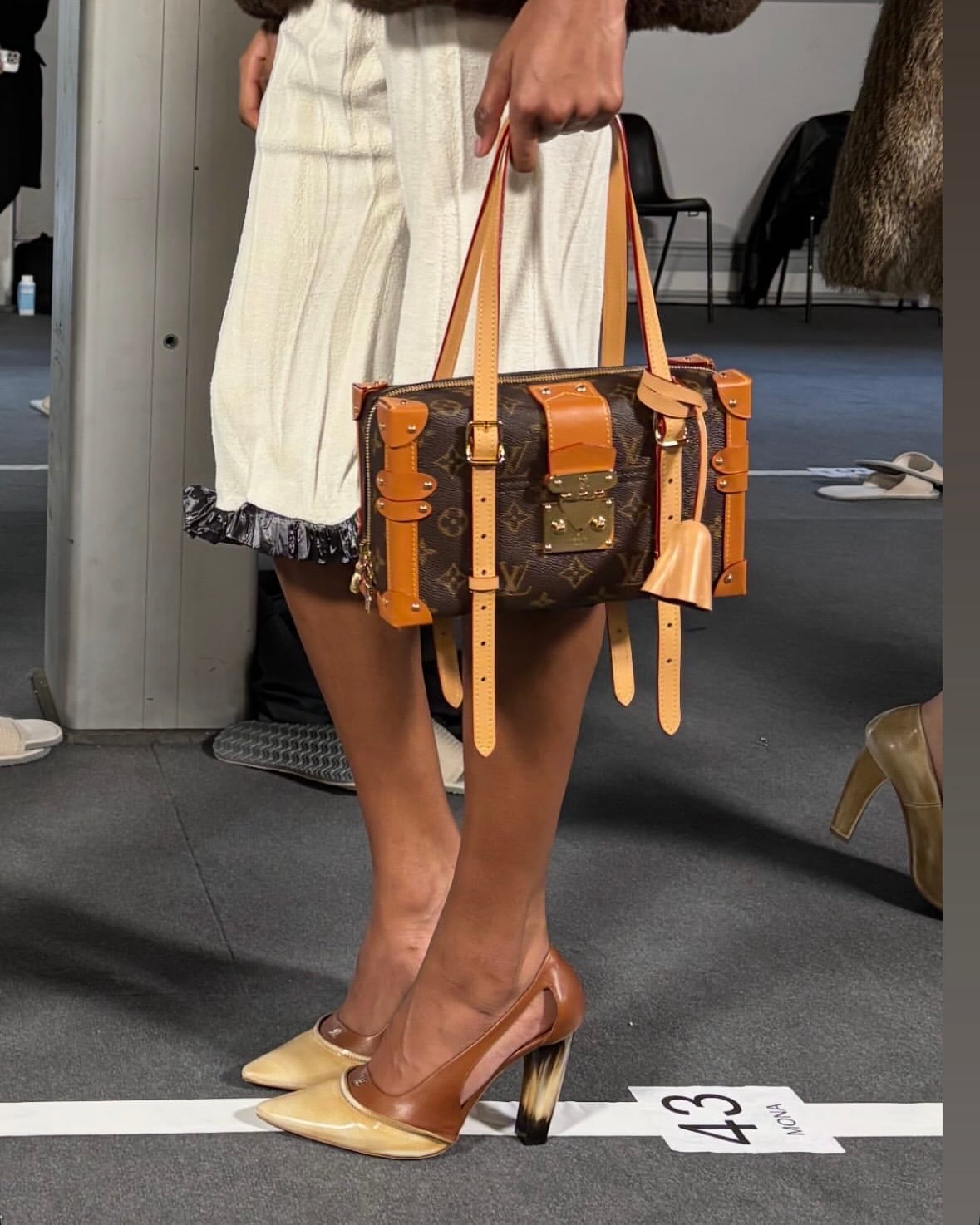
Nicolas Ghesquière revisited one of his earlier successes, the hard-sided Petite Malle, first introduced in Fall/Winter 2014, presenting a significantly updated Louis Vuitton Petite Malle Shoulder Bag. The primary transformation lies in its structure: the rigid box shape has been softened, resulting in a more relaxed and pliable silhouette, though the signature reinforced corners remain as a historical echo.
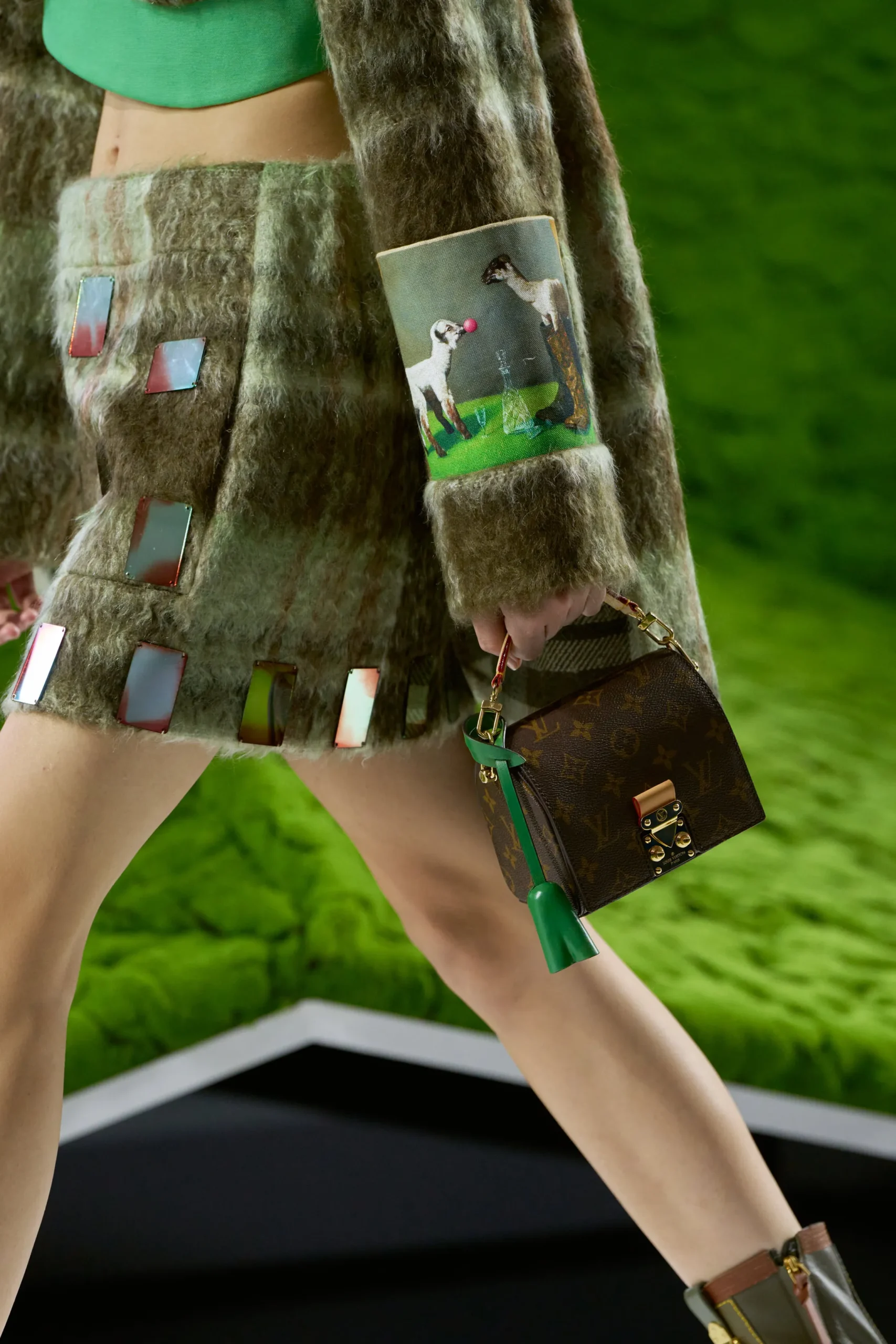
This iteration streamlines the design by minimizing external hardware, focusing instead on clean lines. It retains the essential zip-around closure and the recognizable S-lock clasp, but the carrying mechanism is updated with adjustable, elongated shoulder straps attached directly to the body of the bag, allowing for comfortable over-the-shoulder wear or hand carriage. True to the collection’s whimsical spirit, the clochette on these models was substituted with the aforementioned cowbell charm. The bag was rendered beautifully in classic Monogram canvas paired with Vachetta leather, alongside a richly textured, braided tan leather variation.
Beyond the standard soft update, the Petite Malle concept was pushed to high-concept extremes on the runway. Two highly stylized versions featured an elaborate, layered exterior composed entirely of leather straps, each fastened with individual buckles. This created a dense, almost armor-like surface. One dramatic version utilized a moody palette of gray and blue straps, while another opted for warmer, tonal browns. Both statement pieces were invariably accessorized with the thematic cowbell clochette. Furthermore, two hard-sided versions appeared, one in classic black leather and another in Monogram canvas, distinguished by an all-over belted embellishment, marrying the trunk’s traditional hardware with the collection’s strapping motif, all while retaining the functional S-lock.
Hybrid Iconography: The Peekaboo Speedy
Perhaps the most intriguing introduction was the Louis Vuitton Peekaboo Speedy, a silhouette that seems to borrow conceptual DNA from both the classic Speedy barrel shape and Ghesquière’s own Fall/Winter 2025 Express bag, while incorporating a fascinating "inside-out" design element reminiscent of Fendi’s iconic Peekaboo.
Crafted in smooth, luxurious black leather, this bag maintains the familiar cylindrical profile of the Speedy but flips its internal structure outward. On the runway, models displayed versions where the outer shell was intentionally left partially open or designed to reveal a contrasting interior lining. In one striking example, the opening exposed a rich tan crocodile interior, secured by the central S-lock. Another iteration showcased the classic Monogram canvas lining peeking through the exterior. This "peekaboo" effect suggests an exploration of duality—what is usually concealed is now part of the design statement. Elongated shoulder straps are affixed to the bag’s exterior edges, facilitating easy opening and closing of the main compartment. Unsurprisingly, this hybrid also featured the playful cowbell clochette, completing its narrative as a sophisticated traveler’s piece gone momentarily astray in the French countryside.
The Louis Vuitton Fall/Winter 2026 bag collection successfully served as the perfect punctuation mark to Ghesquière’s architectural, earth-toned vision. From the avant-garde knotting of the new carryall to the conceptual deconstruction of the Petite Malle and the playful reveal of the Peekaboo Speedy, these accessories promise to be highly coveted interpretations of seasonal storytelling for the coming year. The question remains: which of these expertly crafted novelties—the knotted handle, the deconstructed classic, or the revealing hybrid—will capture the attention of collectors first?