
The intersection of holiday tradition and environmental stewardship is reaching a new peak as Mondelēz International, one of the world’s preeminent snacking powerhouses, unveils a comprehensive overhaul of its packaging strategy for the 2026 Easter season. In a move that signals a profound shift toward a circular economy, the company has announced that its iconic Cadbury Mini Eggs and seasonal chocolate tablets will transition to packaging containing high levels of certified recycled plastic. This initiative is not merely a localized update but a strategic cornerstone in Mondelēz’s broader "Pack Light and Right" global ambition, aiming to decouple business growth from environmental impact while maintaining the rigorous food safety standards required for confectionery.
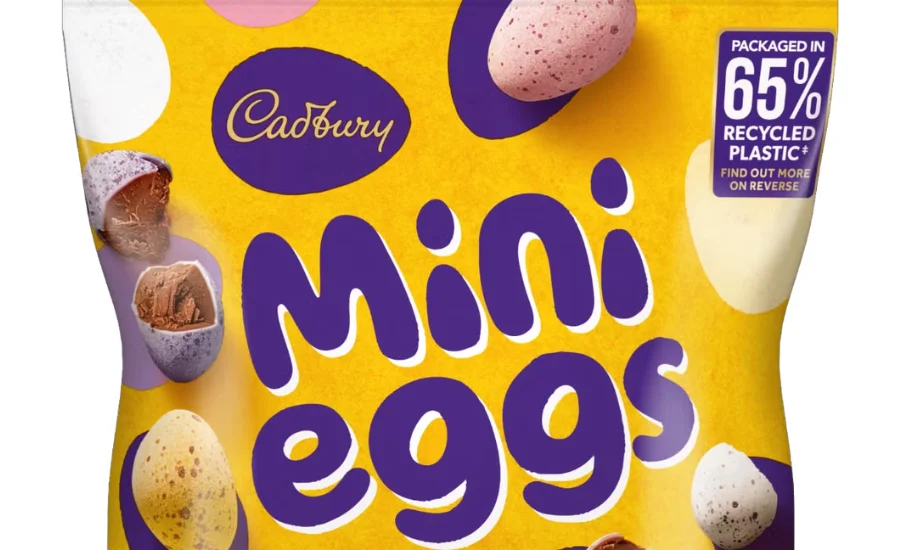
Central to this transition is the adoption of advanced recycling technologies and a mass balance approach, allowing Mondelēz to integrate recycled content into flexible film packaging—a material historically difficult to recycle for food-grade applications. For the Easter 2026 window, the 31.9g, 74g, and 256g bags of Cadbury Mini Eggs will be manufactured using 65% certified recycled plastic. This is complemented by an even more aggressive target for Cadbury’s Easter tablets; both small and large formats will be wrapped in packaging containing 80% certified recycled plastic. These figures represent some of the highest recycled content percentages currently seen in the high-volume confectionery sector, reflecting a maturation of the supply chain for post-consumer recycled (PCR) resins.
The technical execution of this shift relies heavily on the "mass balance" methodology. In the complex world of polymer production, mass balance is a chain-of-custody accounting system that allows recycled feedstocks to be co-processed with virgin raw materials. While the physical molecules of recycled plastic may be mixed with virgin plastic during the manufacturing of the film, the mass balance approach ensures that the volume of recycled material entering the system is accurately allocated to the final products. This is essential for scaling up the use of chemically recycled plastics, which are broken down to their molecular building blocks to remove impurities, resulting in a material that is indistinguishable from virgin plastic in terms of performance, durability, and, most importantly, food safety.
This transformation is being realized through a long-standing strategic partnership with Amcor, a global leader in responsible packaging solutions. The 2026 Easter range will utilize Amcor’s AmFiniti™ Recycled Content technology. This specific platform focuses on converting post-consumer plastic waste—often material that would otherwise be destined for landfills or incineration—into high-quality, food-grade packaging film. By utilizing advanced (or chemical) recycling, Amcor and Mondelēz are bypassing the traditional limitations of mechanical recycling, which often struggles to produce a clear, odor-free, and safe film for direct food contact.
The scale of this environmental intervention is substantial. Mondelēz estimates that the shift will facilitate the sourcing of approximately 134 tonnes of post-consumer recycled plastic for the Easter range alone. To put this into a consumer perspective, this volume of material is equivalent to the packaging required for roughly 70 million bags of Mini Eggs and 16 million seasonal chocolate tablets annually. By redirecting these 134 tonnes of waste back into the production cycle, the company is actively contributing to the reduction of virgin plastic demand, a key metric in the global fight against plastic pollution.
However, the 2026 roadmap is not limited to plastic film. Mondelēz is adopting a multi-material approach to sustainability that addresses various components of the packaging architecture. For instance, the Cadbury Special Gesture Easter Egg range will see a structural change: the traditional ribbon handle, which often posed challenges in standard recycling streams, is being replaced with a fully recyclable cardboard handle. This follows previous successful interventions, such as the introduction of the Cadbury Easter Favourites Pouch featuring paper-based outer packaging and the systematic removal of 6.4 million plastic "windows" from Easter egg boxes. These windows, while providing visibility for the product, frequently contaminated cardboard recycling batches or were discarded as non-recyclable waste.
The 2026 Easter initiative is a high-profile milestone within Mondelēz’s overarching ESG (Environmental, Social, and Governance) framework. The company has set a global goal to ensure that 98% of its packaging is designed for recyclability by 2030, a target it is rapidly approaching with 96% of its current portfolio already meeting these criteria. Furthermore, the "Pack Light and Right" strategy mandates a 25% reduction in virgin plastic usage across its rigid plastic packaging by the end of the decade. By integrating recycled content into flexible packaging—a category that accounts for a significant portion of the company’s environmental footprint—Mondelēz is tackling one of the most difficult hurdles in the packaging industry.
Transparency and consumer education are also central to this rollout. Recognizing that modern shoppers are increasingly scrutinizing the environmental claims of the brands they purchase, Mondelēz is integrating digital connectivity into its packaging. The 2026 Mini Egg bags will feature scannable QR codes on the reverse side. When scanned, these codes will direct consumers to a dedicated digital platform detailing the product’s use of recycled materials, the science behind the mass balance approach, and the company’s broader progress toward its sustainability targets. This move toward "connected packaging" serves two purposes: it validates the brand’s eco-credentials and empowers consumers to make more informed purchasing decisions.
Joanna Dias, the UK & Ireland Sustainability Lead at Mondelēz International, emphasized that the Cadbury Mini Eggs range is an iconic staple of the British and Irish Easter experience. She noted that applying these innovations to such a high-velocity product line is a "fantastic milestone" that demonstrates the company’s commitment to reducing virgin plastic reliance. Her sentiments were echoed by Janice Narainsamy, Senior Product Development Engineer at Amcor, who highlighted that the collaboration demonstrates how innovation and partnership can align to integrate circular solutions at a massive industrial scale without compromising the quality or performance of the packaging.
The broader context of this move is the intensifying regulatory and social pressure on the Fast-Moving Consumer Goods (FMCG) sector. Governments across Europe and the UK are implementing stricter Plastic Packaging Taxes and Extended Producer Responsibility (EPR) schemes, which penalize the use of virgin plastics and reward the adoption of recyclable or recycled content. By proactively shifting its 2026 seasonal range toward high-PCR content, Mondelēz is not only fulfilling its ethical obligations but also future-proofing its operations against a shifting regulatory landscape.
Furthermore, the transition to advanced recycling helps solve a critical "end-of-life" issue for flexible plastics. While rigid plastics like PET bottles have well-established recycling streams, flexible films have long been the "missing link" in the circular economy. Initiatives like those from Mondelēz and Amcor provide the necessary demand-side pull to encourage investment in the infrastructure needed to collect, sort, and chemically recycle flexible plastics. When a brand of Cadbury’s scale commits to 134 tonnes of recycled resin for a single holiday season, it sends a powerful signal to waste management companies and polymer producers that there is a viable, long-term market for recycled feedstocks.
As Easter 2026 approaches, the chocolate aisle will serve as a living laboratory for the future of sustainable retail. The combination of 80% recycled content in tablets, 65% in Mini Egg bags, and the elimination of non-recyclable ribbons and windows represents a holistic redesign of the seasonal experience. Through the "Pack Light and Right" strategy, Mondelēz International is proving that even the most established and beloved brands can evolve, ensuring that the "joy of Easter" is not overshadowed by the environmental cost of its packaging. This initiative sets a high bar for the confectionery industry, suggesting that the path to net-zero and a truly circular economy is paved with technological innovation, strategic partnerships, and a willingness to reinvent the very materials that wrap our favorite traditions.