
The global packaging landscape underwent a seismic shift in 2025, transitioning from a focus on mere containment to a sophisticated emphasis on lifecycle management, material science, and operational throughput. As regulatory pressures mount and consumer expectations for sustainability reach an all-time high, the industry has responded with a wave of innovations that bridge the gap between environmental responsibility and industrial efficiency. From the high-traffic corridors of Major League Baseball stadiums in San Francisco to the stringent recycling infrastructures of Western Europe, the narrative of packaging is being rewritten. This evolution is defined by four pivotal breakthroughs: the integration of compostable ecosystems in professional sports, the automation of high-speed labeling in retail, the chemical engineering of PFAS-free barrier papers, and the realization of mono-material circularity in the ready-meal sector. Together, these advancements represent a holistic approach to the challenges of modern foodservice, proving that the path to a greener future is paved with technical precision.

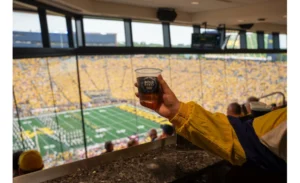
In the heart of San Francisco, the intersection of professional sports and environmental stewardship has reached a new milestone through a landmark partnership between Eco-Products and the San Francisco Giants. Named an Official Zero Waste Partner, Eco-Products is now tasked with providing the compostable foodservice packaging infrastructure for Oracle Park, a venue long recognized for its leadership in sustainability. The significance of this partnership extends far beyond the provision of plates and cups; it represents a systemic solution to one of the most difficult challenges in waste management: the high-contamination environment of a crowded stadium. In traditional recycling streams, food-soiled paper and plastic-lined containers often render entire batches of recyclables unprocessable. By transitioning to a fully compostable suite of products—including items made from sugarcane, corn-based resins, and recycled fibers—Oracle Park can streamline its waste diversion efforts. When the packaging itself is organic, food scraps become a resource rather than a contaminant. This initiative supports the Giants’ ambitious goal of diverting the vast majority of stadium waste from landfills, leveraging the power of "closed-loop" thinking where a hot dog wrapper eventually returns to the earth as nutrient-rich soil for local agriculture.
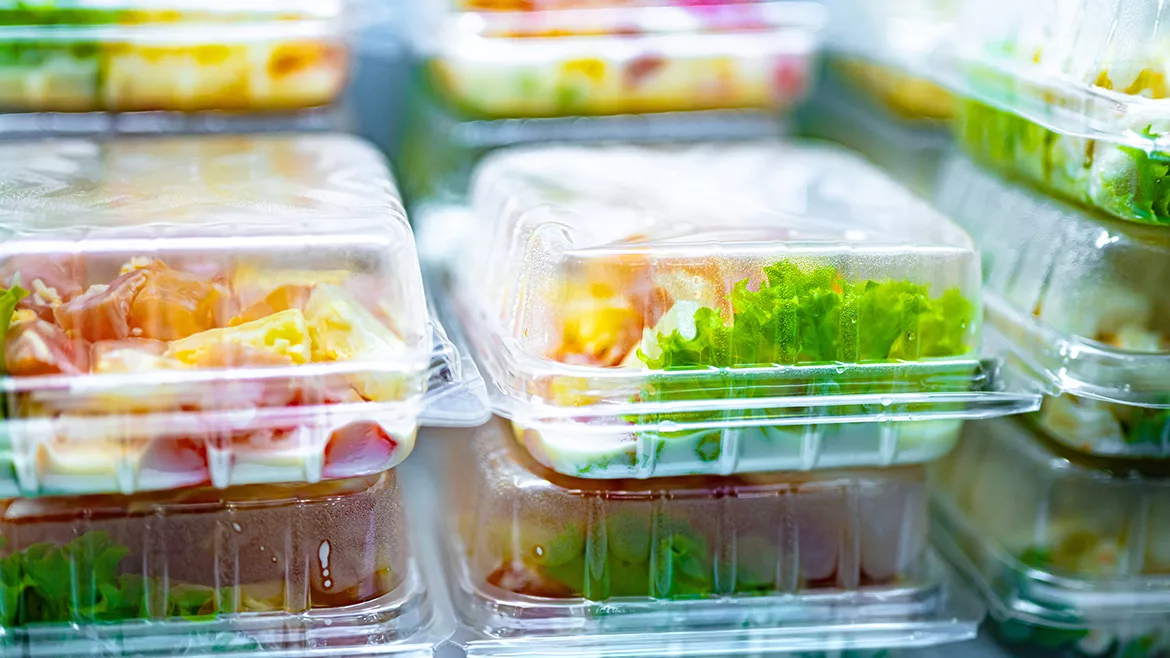
While the sports world focuses on the end-of-life cycle for packaging, the grocery retail sector is solving for the bottlenecks of the production line. HERMA, a global leader in precision labeling technology, has addressed the growing demand for "grab-and-go" convenience by revolutionizing the labeling of clamshell salad packaging. As consumer preferences shift toward fresh, pre-packaged meals, grocery chains have faced immense pressure to increase the speed of their packaging lines without sacrificing accuracy or aesthetic appeal. The challenge with clamshells lies in their irregular shapes and the need for secure, tamper-evident labeling that remains legible under refrigerated conditions. HERMA’s high-speed labeling solutions, such as the 652C Top and Bottom Labeler, utilize advanced sensor technology and synchronized drive systems to apply labels with millimeter precision at speeds that traditional machines cannot match. By automating this process, major grocery retailers are not only reducing labor costs but also minimizing downtime caused by misaligned labels or adhesive buildup. This technical reliability ensures that the supply chain remains fluid, allowing fresh produce to move from the processing facility to the retail shelf with maximum efficiency.

Simultaneously, the material science sector is grappling with a looming regulatory crisis: the phase-out of per- and polyfluoroalkyl substances (PFAS). Known as "forever chemicals," PFAS have historically been the gold standard for creating oil and grease resistance (OGR) in food wrappers and bags. However, as health and environmental concerns lead to bans across North America and Europe, the industry has scrambled for alternatives. BiOrigin Specialty Products (BSP) has emerged as a frontrunner in this space with the launch of BioGuard™, a revolutionary OGR paper designed specifically for the rigorous demands of the foodservice industry. Unlike previous generations of OGR papers, which often suffered from physical limitations such as "curling" or "cracking" during the converting process, BioGuard™ is engineered for high-performance runnability. Paper curling is a significant pain point for converters; it leads to machine jams, increased waste, and slower production speeds. By creating a 100% food-safe barrier that maintains the structural integrity of the paper, BiOrigin has provided a solution that satisfies both the chemist and the plant manager. This innovation allows for the production of burger wraps and fry bags that are not only sustainable and safe for human consumption but also economically viable to manufacture at scale.
Across the Atlantic, the focus on sustainability is being driven by the European Union’s rigorous Packaging and Packaging Waste Regulation (PPWR) and France’s pioneering "Loi Anti-Gaspillage" (Anti-Waste Law). In this climate, Amcor, a global titan in responsible packaging, has partnered with the French food manufacturer Cofigeo to solve a long-standing puzzle in the ready-meal market: the recyclable microwaveable tray. Traditionally, multi-compartment trays used for ambient meals required complex, multi-layer plastics to provide the necessary oxygen barriers and heat resistance. These multi-layer structures are notoriously difficult to recycle because the different polymers cannot be easily separated. Amcor’s breakthrough involves a bespoke three-compartment tray designed for Cofigeo’s William Saurin brand, constructed entirely from a mono-material polypropylene (PP). This engineering feat ensures that the tray is fully compatible with France’s existing "Extension des Consignes de Tri" (ECT) recycling infrastructure, which aims to collect and reprocess all plastic packaging. By utilizing a mono-material approach, Amcor has ensured that once the consumer finishes their meal, the tray can be tossed into a yellow bin and transformed into new plastic products, effectively closing the loop on a high-volume consumer good.

The convergence of these four innovations—Eco-Products’ compostables, HERMA’s automated labeling, BiOrigin’s OGR paper, and Amcor’s mono-material trays—signals a new era of "integrated sustainability." It is no longer enough for a package to be "recyclable" in theory; it must be supported by the infrastructure of the venue where it is used, the machines that label it, the chemistry that coats it, and the national regulations that govern its disposal. In the case of the San Francisco Giants, the success of the packaging is tied to the fan’s willingness to use the correct bin. For HERMA, success is measured in the reduction of mechanical friction and the optimization of throughput. For BiOrigin, it is about the molecular stability of the paper fibers under heat and pressure. And for Amcor, it is about aligning corporate R&D with national environmental policy.
As we look toward the remainder of the decade, these developments suggest that the "packaging of the future" will be characterized by invisible complexity. To the consumer, a salad clamshell or a microwaveable tray may look the same as it did ten years ago, but the engineering beneath the surface has been completely transformed. We are moving away from the era of "disposable" convenience and toward an era of "functional circularity." The innovations highlighted from San Francisco to France demonstrate that when the packaging industry collaborates with sports franchises, grocery giants, and chemical engineers, the result is a more resilient, efficient, and responsible global economy. These game-changing solutions are not just incremental improvements; they are the foundational blocks of a world where packaging serves the planet as much as it serves the consumer.