

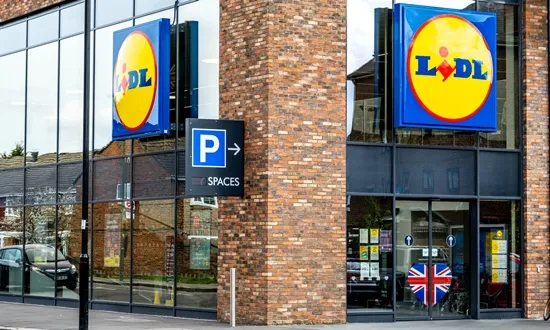
Supermarket giant Lidl GB has significantly bolstered its environmental commitments, announcing an ambitious new target to slash food waste by a staggering 70%, marking a substantial escalation from its previous goals. This bold move comes hot on the heels of the retailer successfully surpassing its earlier objective to achieve a 40% reduction in waste against a 2016 baseline, a milestone reached ahead of schedule by April of this year. The enhanced target underscores Lidl’s dedication to tackling one of the most pressing environmental and social challenges facing the food industry today, solidifying its position as a proactive leader in sustainable retail practices.
Matt Juden-Bloomfield, Head of Sustainability at Lidl GB, emphasized the strategic importance of this updated benchmark. He acknowledged the significant strides already made but stressed the imperative for continued, accelerated action. “While we are proud of the considerable progress achieved in reducing waste across our operations, we firmly believe that the responsibility to minimize environmental impact does not cease at meeting existing benchmarks,” Juden-Bloomfield stated. “We are committed to pioneering further innovations and collaborating intensively with our industry partners to ensure that our efforts translate into tangible, lasting benefits for the planet and the communities that place their trust in us every day.”
The context for Lidl’s heightened ambition is set against the backdrop of broader industry initiatives. Lidl is an active participant in WRAP (Waste and Resources Action Programme)’s UK Food and Drink Pact. This voluntary agreement commits signatories to a collective goal of halving food waste by 2030, measured against a 2007 baseline. While Lidl’s new internal target is significantly more aggressive than the Pact’s general benchmark, it aligns with the spirit of driving rapid, measurable change within the retail sector.
Lidl’s internal success in hitting the 40% reduction milestone was largely attributed to targeted operational efficiencies, particularly within its highly visible in-store bakeries. By employing sophisticated demand forecasting and dynamic pricing strategies, the retailer has managed to closely align the daily production of fresh baked goods with customer purchasing patterns. Furthermore, proactive markdowns applied to items nearing their sell-by date as closing time approaches have proven highly effective in diverting edible surplus away from landfill.
The competitive landscape highlights the seriousness of the waste reduction drive. Fellow discount supermarket chain Aldi recently announced it had already met its internal target of halving food waste against a 2017 baseline. Aldi has since raised its sights, setting an even more challenging objective of achieving a 90% reduction by 2030. It is noteworthy that both major discounters measure their performance as a percentage of the total volume of food they handle, offering a consistent metric for comparison across their respective operations.
Estelle Herszenhorn, WRAP’s Director of Food System Transformation, praised Lidl’s sustained engagement and concrete actions. Herszenhorn noted that Lidl has been a dedicated member of the UK Food and Drink Pact for a decade, consistently adopting best practices. “It has been genuinely impressive to observe Lidl’s tangible commitment,” Herszenhorn commented. “Their early adoption of initiatives like selling loose fruits and vegetables, which empowers consumers to purchase exact quantities, and their diligence in applying best practice labelling standards, clearly demonstrates a culture focused on prevention.” She further commended the bakery optimization strategy, stating it perfectly mirrors WRAP’s core philosophy: preventing waste before it even occurs within the supply chain.
Crucially, Lidl is placing significant emphasis not just on waste prevention, but also on maximizing the redistribution of unavoidable surplus food. The company is set to deepen its collaboration with the community platform Neighbourly, expanding its network for feeding those in need. This summer, Lidl GB will pilot Neighbourly’s specialized ‘Surplus Saviours’ initiative in the Midlands region. This new trial is designed to streamline the process, enabling trained volunteers to collect surplus food directly from stores on a more frequent and immediate basis, ensuring maximum freshness and utility for recipient charities.
The ongoing partnership between Lidl and Neighbourly through the ‘Feed It Back’ scheme has already yielded substantial social returns. Since its inception in 2016, this flagship program has successfully facilitated the donation of over 50 million meals to local community groups and food banks across the UK. The expansion of these redistribution channels is central to achieving the new 70% reduction target, demonstrating a holistic approach that marries operational efficiency with robust social responsibility.
To fully appreciate the scale of the food waste challenge Lidl is addressing, it is essential to consider the national figures provided by WRAP. The UK generates over 10 million tonnes of food waste annually. Critically, the retail sector contributes a relatively small fraction of this total—estimated at just 2% of the overall national waste, equating to a mere 0.44% of the total food handled by retailers. In stark contrast, the hospitality sector is estimated to be responsible for wasting approximately 18% of the food it purchases. This disparity underscores why Lidl’s focus on internal supply chain and in-store management, alongside robust redistribution efforts, is so vital to tackling the industry’s specific challenges.
The new 70% reduction target signals Lidl’s intention to narrow the gap between its performance and industry leaders, while setting a high bar for sustainability within the competitive discount grocery market. By investing in advanced demand management technology, empowering customers through better produce choices, and solidifying key charity partnerships, Lidl aims to integrate waste minimization into the very fabric of its daily operations, moving beyond compliance to genuine environmental stewardship. The success of the upcoming Surplus Saviours pilot in the Midlands will be a key indicator of how this enhanced commitment translates into on-the-ground impact moving forward.