

Bridging the Manufacturing Gap: Natural Negative Secures Strategic Funding to Revolutionize Bio-Plastic Integration. As the global push toward a circular economy intensifies, the primary obstacle to replacing conventional fossil-fuel-based plastics is no longer the scientific viability of sustainable polymers, but rather the rigid infrastructure of modern industrial manufacturing. Addressing this critical bottleneck, the biotech innovator Natural Negative has successfully secured a fresh round of grant funding, an infusion of capital that will be exclusively deployed to bridge the chasm between laboratory-scale innovation and high-volume factory production.
For decades, the petrochemical industry has meticulously refined its manufacturing processes to suit the specific physical and chemical properties of fossil-fuel plastics. Consequently, the global supply chain is locked into a symbiotic relationship with traditional plastics; injection molding machines, extruders, and blow-molding equipment are calibrated to perfection for these specific synthetic resins. When sustainable alternatives—such as bio-polymers—are introduced, they frequently fail to perform under the high-pressure, high-speed conditions of an industrial plant. They may become brittle, clog machinery, or require excessive cooling times, rendering them economically unviable for mass-market adoption.
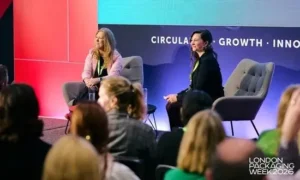
Natural Negative, under the leadership of co-founder Phoebe Heseltine, is fundamentally shifting the paradigm of material science. Rather than following the traditional industry trajectory—where scientists develop a revolutionary new material and then task engineers with finding a way to process it—Natural Negative is adopting a "manufacturing-first" approach. By working backward from the specific technical constraints of existing production lines, the company is engineering bio-materials that behave like their traditional counterparts, effectively "dropping in" to existing infrastructure without requiring expensive hardware retrofits or operational downtime.
The grant funding comes at a pivotal moment. While consumer sentiment and government regulations are increasingly demanding a move away from single-use fossil plastics, manufacturers have remained hesitant. The transition risk—the threat of slowed production cycles, increased waste, and the potential for machinery damage—has kept many industrial players tethered to traditional plastics. Natural Negative’s mission is to dissolve these fears by ensuring that their bio-based formulations possess the rheological properties and thermal stability required to thrive within the standard industrial environment.
"The biggest barrier to replacing fossil plastics is no longer the materials themselves, but the manufacturing systems behind them," explains Phoebe Heseltine. "Much of the industry has focused on creating ideal, lab-grown alternatives, but the reality is that manufacturers need materials that work in real production environments, without introducing risk or downtime."
This philosophy represents a major departure from the status quo. In the past, companies seeking to adopt bio-plastics were often forced to choose between sustainability and efficiency. If a manufacturer opted for a bio-based material, they frequently had to invest millions in new, specialized machinery or accept lower throughput rates. Natural Negative is aiming to eliminate this trade-off entirely. Their research and development process starts with a rigorous analysis of the manufacturer’s existing equipment. By understanding the heat profiles, shear rates, and pressure limits of the machinery, the team at Natural Negative can formulate a bio-polymer that mimics the processing characteristics of the plastic it is meant to replace.
The implications for the packaging, automotive, and consumer goods sectors are profound. By allowing companies to maintain their existing capital investments while transitioning to sustainable materials, Natural Negative is lowering the "barrier to entry" for corporate sustainability. This strategy essentially democratizes the use of bio-plastics, making them accessible to mid-sized manufacturers who may not have the resources to overhaul their entire production facility for a single product line.
Furthermore, the environmental impact of this approach is compounded by its scalability. By focusing on materials that can be processed at high speeds, Natural Negative is helping to achieve the economies of scale necessary to make bio-plastics cost-competitive with fossil-fuel plastics. As production volumes increase, the cost per unit drops, creating a virtuous cycle that accelerates the displacement of oil-based materials across the global market.
The grant funding will be utilized to expand the company’s pilot facilities and bolster its technical team, which is tasked with fine-tuning the formulation processes for various industrial applications. This includes deep dives into material durability, shelf-life, and compostability metrics to ensure that the materials meet both performance standards and end-of-life environmental requirements.
The shift toward bio-based materials is an inevitable evolution, yet the speed of this transition has been hampered by a lack of engineering pragmatism. Natural Negative is positioning itself as the missing link in this transition. By acknowledging that manufacturers are not going to discard billions of dollars in functional machinery overnight, the company has chosen to meet the industry where it currently stands. This collaborative, pragmatic approach is likely to yield faster results than the purely idealistic path taken by many of its competitors.
As the industry moves forward, the focus must remain on the synergy between material science and industrial engineering. The success of Natural Negative underscores a broader trend: sustainability is no longer a niche pursuit restricted to eco-conscious start-ups. It is becoming a core industrial requirement. By proving that bio-plastics can be as reliable, efficient, and cost-effective as their fossil-fuel counterparts, Natural Negative is not just creating a new product; it is creating a blueprint for the future of manufacturing.
The upcoming phase of development for the company will involve rigorous testing in live manufacturing environments. By partnering with key industry players to run pilot programs, Natural Negative aims to gather the empirical data needed to reassure skeptical plant managers that their sustainable materials can withstand the rigors of 24/7 production cycles. These trials will serve as the final hurdle before widespread commercial deployment.
Ultimately, the challenge of plastic waste is as much an engineering problem as it is an environmental one. By recognizing that the machines of today define the possibilities of tomorrow, Natural Negative is ensuring that the transition to a sustainable future is not hindered by the physical reality of our industrial legacy. Through this grant, they are empowered to continue their work of "backward-engineering" the solution, ensuring that the shift to bio-plastics is seamless, economical, and, most importantly, inevitable.
In an industry often crowded with empty promises and "green" marketing, Natural Negative stands out for its commitment to the hard, unglamorous work of industrial integration. Their approach suggests that the path to a plastic-free world will be paved with the pragmatic, incremental, and highly technical adjustments that allow existing systems to evolve. As they continue to refine their formulas and expand their influence, they offer a compelling vision of how modern industry can adapt to the ecological necessities of the 21st century without sacrificing the productivity that powers the global economy. The investment they have secured is a testament to the belief that the future of plastic is not in a lab, but on the factory floor.