
As the global population becomes increasingly conscious of environmental footprints and the logistical complexities of the modern supply chain, the year 2025 has emerged as a watershed moment for the foodservice packaging industry. The transition from a linear "take-make-waste" model to a circular economy is no longer a distant aspiration but a functional reality being implemented by industry leaders across the globe. From the high-energy atmosphere of San Francisco’s Oracle Park to the precision-driven grocery aisles of Europe, a new wave of innovations is tackling the most persistent challenges in packaging: waste diversion, labeling efficiency, material performance, and recyclability. These breakthroughs, spearheaded by companies like Eco-Products, HERMA, BiOrigin Specialty Products, and Amcor, represent a multi-pronged strategy to harmonize consumer convenience with ecological stewardship.

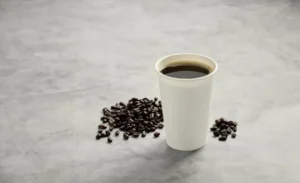
In the United States, the intersection of professional sports and environmentalism has reached a new pinnacle through a landmark partnership between Eco-Products and the San Francisco Giants. As the "Official Zero Waste Partner" of the Giants, Eco-Products is transforming Oracle Park into a laboratory for large-scale waste diversion. Stadiums are notoriously difficult environments for waste management due to the high volume of "contaminated" materials—food scraps mixed with paper and plastic. By introducing a comprehensive suite of compostable foodservice packaging, the Giants are effectively eliminating the confusion that often plagues fans at the disposal bin. When both the hot dog tray and the leftover bun are compostable, the entire unit can be processed together, significantly reducing the amount of waste sent to landfills. This partnership is not merely about branding; it is a logistical overhaul. The compostable items are designed to break down in commercial composting facilities, eventually returning to the soil as nutrient-rich fertilizer, some of which may even find its way back to local agricultural projects in Northern California. This closed-loop system serves as a scalable model for other major league venues seeking to minimize their carbon footprint while maintaining the fast-paced service required by thousands of hungry fans.
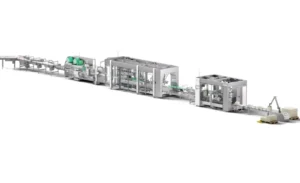
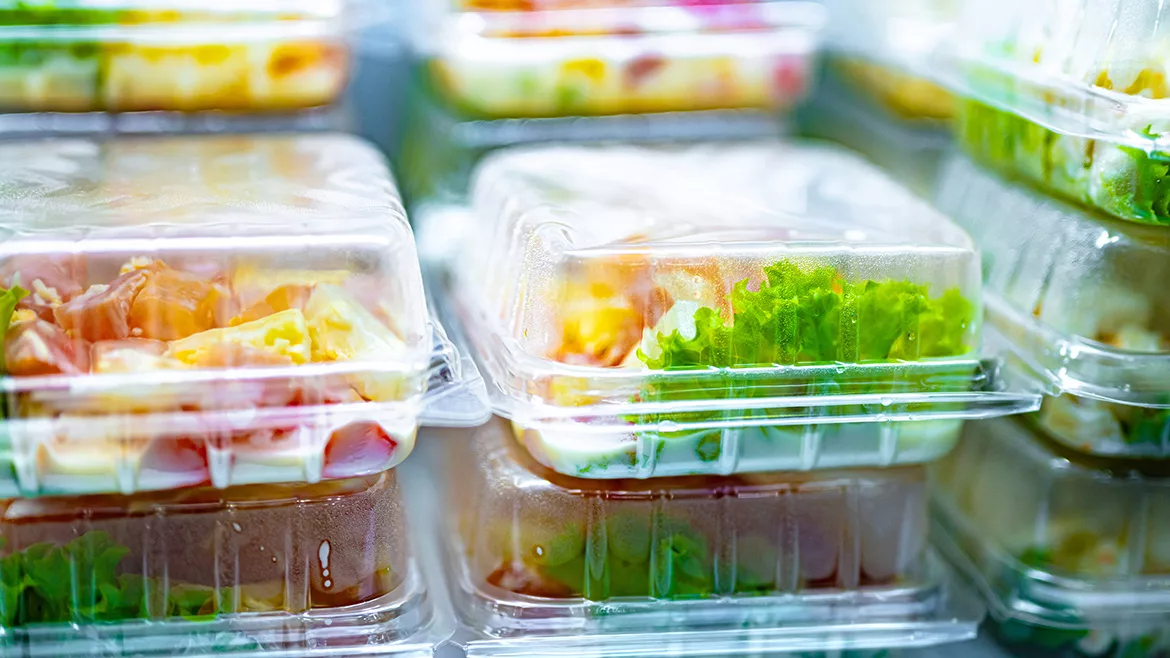
While San Francisco focuses on the end-of-life cycle for stadium snacks, the technical side of retail packaging is seeing a revolution in labeling precision. HERMA, a global powerhouse in labeling technology, has addressed a significant bottleneck in the grocery industry: the high-speed labeling of clamshell salad containers. As the demand for fresh, grab-and-go produce continues to skyrocket, grocery chains have struggled with the inefficiencies of traditional labeling lines, which often suffer from misalignments or slow throughput. Partnering with one of the top grocery retailers in the United States, HERMA has deployed its advanced 652C Top and Bottom Labeler to streamline the application of nutritional and branding information. This system is designed for the rigorous demands of the fresh-cut industry, where moisture, temperature fluctuations, and the physical shape of clamshells can interfere with adhesive performance. By ensuring that every salad container is labeled with surgical precision at maximum speeds, HERMA is helping retailers reduce labor costs and minimize the waste associated with mislabeled or rejected products. This innovation highlights a critical truth in the packaging world: sustainability and efficiency are two sides of the same coin.

Parallel to these advancements in labeling is a fundamental shift in the chemistry of the materials themselves. BiOrigin Specialty Products (BSP) has introduced a game-changer for the quick-service restaurant (QSR) and bakery sectors with its new BioGuard paper. For decades, the industry relied on oil and grease resistant (OGR) papers that often contained per- and polyfluoroalkyl substances (PFAS), chemicals that have come under intense regulatory scrutiny due to their persistence in the environment. BSP’s BioGuard is a 100% food-safe, PFAS-free solution that provides a robust barrier against grease migration, preventing the unsightly leaks that can ruin a consumer’s experience with a burger or a pastry. However, the innovation goes beyond safety. For the converters who turn large rolls of paper into bags and wrappers, OGR paper has historically been a difficult material to work with, often prone to curling and cracking during the manufacturing process. BioGuard’s proprietary formulation eliminates these mechanical issues, allowing for smoother runs on converting machinery. This increase in efficiency reduces energy consumption and material scrap during production, proving that better material science can lead to a more streamlined industrial process.
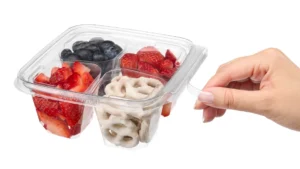
Across the Atlantic, the focus on circularity has taken a more structural form in France, where Amcor has developed a groundbreaking solution for the ambient ready-meal market. In response to France’s ambitious AGEC law (Anti-Waste Law for a Circular Economy), which mandates high levels of recyclability for plastic packaging, Amcor partnered with the specialist manufacturer Cofigeo to create a bespoke three-compartment meal tray. This tray is notable for its use of a mono-material polypropylene (PP) construction. Traditionally, multi-compartment trays utilized complex multi-layer plastics to ensure shelf stability and heat resistance, but these layers are notoriously difficult to separate in standard recycling facilities. By engineering a tray from a single material that still meets the rigorous requirements of microwave heating and long-term shelf storage, Amcor has ensured that the packaging is fully compatible with France’s existing recycling infrastructure. This development is particularly vital for the "single-serve" market, which caters to busy urban professionals and elderly consumers who prioritize convenience. The Amcor tray proves that the convenience of a "heat-and-eat" meal does not have to come at the expense of the environment, provided the packaging is designed with the end-of-life infrastructure in mind.

When viewing these four innovations collectively, a clear narrative emerges: the future of packaging is being built on the pillars of material science, automation, and strategic partnerships. The era of "one-size-fits-all" packaging is over. Instead, we are seeing solutions tailored to specific use cases—whether that is a compostable cup at a baseball game or a recyclable PP tray in a French kitchen. These advancements are also a response to a shifting regulatory landscape. In the European Union, the Packaging and Packaging Waste Regulation (PPWR) is setting strict targets for recycled content and recyclability, while in the United States, state-level extended producer responsibility (EPR) laws are forcing companies to take more accountability for the waste they generate.
The data suggests that these innovations are arriving at a critical time. Market research indicates that nearly 70% of consumers are willing to pay more for sustainable packaging, but they are unwilling to compromise on performance. A grease-resistant bag that leaks or a compostable tray that falls apart during a game will not win over the public. This is why the technical achievements of BiOrigin and Eco-Products are so significant; they offer a "no-compromise" solution where the sustainable choice is also the high-performance choice. Similarly, the work of HERMA and Amcor demonstrates that industrial efficiency and environmental compliance can coexist. By reducing the complexity of labeling and the composition of plastic trays, these companies are removing the friction that often prevents sustainable practices from being adopted at scale.

As we move further into the decade, the lessons learned from these 2025 milestones will likely dictate the next phase of global trade. The integration of high-speed automation with eco-friendly materials is setting a new benchmark for what is possible. From the shores of San Francisco to the industrial hubs of France, the packaging industry is proving that it has the ingenuity to solve the waste crisis. The innovations of today are the standard operating procedures of tomorrow, ensuring that the convenience of modern foodservice remains compatible with the long-term health of the planet. Through the combined efforts of material engineers, logistics experts, and visionary brand owners, the transition to a truly circular economy is well underway, marking a significant victory for both the consumer and the environment.