
The landscape of modern agriculture is undergoing a seismic shift, driven by the intersection of high-technology indoor farming and a growing consumer demand for both premium quality and environmental stewardship. Leading this charge is Oishii, the vertical farming pioneer that first captured the world’s attention with its ultra-luxury Omakase Berry. Today, the company is signaling a new era in its evolution with the debut of a sophisticated, stay-fresh top-seal packaging for its Nikko Berry. This move, rolling out to grocery store shelves this month, represents more than just a change in aesthetics; it is a calculated effort to modernize the produce category, enhance sustainability, and provide a level of transparency rarely seen in the fresh fruit sector.
The Nikko Berry, the third varietal in Oishii’s portfolio, has rapidly become the company’s most significant bridge between the world of niche luxury produce and the everyday grocery aisle. Named after the Japanese word for “sunshine,” the Nikko Berry was developed to embody the brightness and sweetness of a perfect summer day, regardless of the actual season outside. While the Omakase Berry remains the brand’s flagship artisanal offering, the Nikko Berry is designed for high-volume accessibility. Since its initial introduction to the market, the varietal has served as a benchmark for how Oishii can scale its proprietary "Smart Farm Grown" technology to serve a wider demographic without compromising the flavor profile that has made the brand a cult favorite among chefs and food enthusiasts.
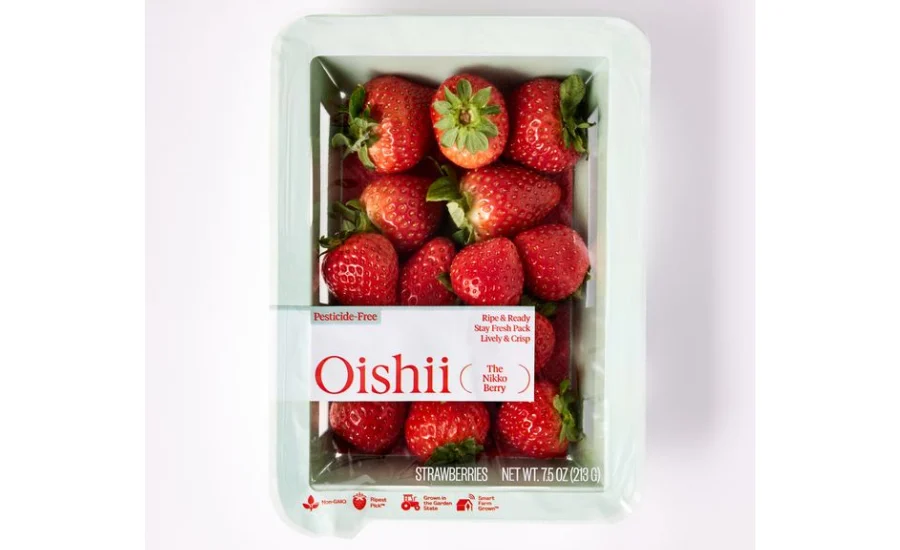
At the heart of this latest announcement is a radical departure from traditional produce housing. The new packaging features a thoughtfully engineered cardboard base topped with a lightweight, stay-fresh seal. This hybrid design is a direct response to the environmental criticisms leveled at the berry industry, which has historically relied on bulky, non-recyclable PET plastic clamshells. By transitioning to this new format, Oishii has successfully reduced its plastic usage by more than 80% compared to standard strawberry packaging. This reduction is not merely a gesture toward corporate social responsibility; it is a fundamental redesign that improves the product’s shelf-forward footprint for retailers and offers an eco-friendlier experience for the end consumer.
The technical benefits of the top-seal format extend beyond sustainability. Traditional clamshells are notorious for allowing moisture to build up or, conversely, letting berries dehydrate too quickly due to inconsistent airflow. Oishii’s new top-seal technology creates a micro-environment that helps maintain berry quality for a longer duration than conventional methods. By stabilizing the atmosphere around the fruit, the packaging ensures that the "just-harvested" texture and aroma are preserved from the moment the berries leave the smart farm until they reach the consumer’s table. This focus on longevity is crucial for a brand that prides itself on year-round consistency, especially as it expands its reach into more mainstream retail environments.
To underscore their confidence in this new packaging and their controlled growing process, Oishii is also introducing an industry-first freshness guarantee. Printed directly on the back of every tray is a ten-day promise from the date of harvest. This bold initiative invites customers to hold the brand to the highest standards, offering a direct line of communication if the berries do not meet the expected level of sweetness and vitality. In the volatile world of fresh produce, where spoilage is a constant risk, such a guarantee is virtually unheard of. It is made possible only by Oishii’s total control over the cultivation environment. Unlike traditional outdoor farms that are subject to the whims of weather, pests, and soil depletion, Oishii’s smart farms are closed-loop ecosystems where every variable—from light intensity and humidity to CO2 levels—is monitored and optimized by artificial intelligence and robotics.
The journey of the Nikko Berry mirrors the rapid maturation of the vertical farming industry at large. When it first hit the market, it carried a premium price tag of $9.99, reflecting the high costs of innovation and early-stage infrastructure. However, as Oishii refined its Smart Farm Grown systems, the company achieved significant operational efficiencies. In a move that defied the inflationary trends seen across the food industry last fall, Oishii actually reduced the price of the Nikko Berry while simultaneously increasing the pack size. This trajectory demonstrates the company’s long-term vision: to prove that high-tech, pesticide-free, and non-GMO produce can eventually compete with—and surpass—the value proposition of traditional industrial farming.
The technology behind these berries is a marvel of modern engineering. Oishii’s farms utilize a combination of sophisticated sensors and automated systems to mimic the ideal Japanese climate. Perhaps the most unique aspect of their operation is the integration of biological elements within the tech stack. While many vertical farms struggle with pollination, Oishii has successfully integrated bees into their indoor environments. These bees live and work alongside the robots, pollinating the strawberry blossoms just as they would in nature. This harmony between biology and technology is what allows Oishii to produce fruit that is harvested at peak ripeness, a luxury that traditional supply chains often sacrifice in favor of durability during long-distance shipping.
Retailers and industry partners are getting an early look at this packaging milestone at the Natural Products Expo West. This event serves as a critical platform for Oishii to demonstrate how it is redefining consumer expectations. For years, the produce section has been treated as a commodity market where price is the primary differentiator. Oishii is challenging this notion by positioning the Nikko Berry as a branded experience defined by quality, sustainability, and a literal guarantee of satisfaction. The new 7.5 oz pack is designed to stand out on the shelf, signaling to the shopper that the contents inside are the result of a superior agricultural process.
The implications of Oishii’s innovations extend to the broader conversation about food security and environmental impact. Traditional strawberry farming is one of the most chemically intensive sectors of agriculture, often appearing at the top of "Dirty Dozen" lists for pesticide residue. By growing in a sterile, controlled indoor environment, Oishii eliminates the need for pesticides entirely. Furthermore, the localized nature of vertical farming significantly reduces the carbon footprint associated with transportation. As the company rolls out its new packaging, it is reinforcing a circular philosophy: better technology leads to better yields, which leads to better prices and, ultimately, a better planet.
As the new Nikko Berry packs begin to appear in stores this month, they carry with them the weight of Oishii’s ambition. The company, founded by Hiroki Koga, has always maintained that the goal was never just to sell expensive berries to a handful of people in New York City or Los Angeles. The goal was to rewrite the blueprint for how we grow food in a world facing climate uncertainty and resource scarcity. The Nikko Berry, in its new, eco-efficient, top-sealed home, is a tangible manifestation of that goal. It represents a future where the "sunshine" of a perfect strawberry is available to everyone, everywhere, every day of the year, packaged in a way that respects the earth as much as the fruit itself.
With this rollout, Oishii is not just launching a new box; they are launching a new standard. By combining the precision of Japanese horticulture with the efficiency of American tech innovation, they have created a product that sits at the vanguard of the "produce 2.0" movement. For the consumer, the benefit is clear: a berry that lasts longer, tastes better, and leaves behind significantly less waste. For the industry, the message is equally sharp: the days of the flimsy, planet-harming plastic clamshell are numbered, and the era of the smart, sustainable, and guaranteed-fresh berry has officially arrived.