
The architectural landscape of Chavez Ravine is undergoing a subtle yet profound transformation, signaling a new chapter in the intersection of international fashion and American pastime. In a move that bridges the cultural gap between Tokyo’s sleek urban aesthetics and the sun-drenched tradition of Los Angeles baseball, Uniqlo has officially entered into a multi-year partnership with the Los Angeles Dodgers. This collaboration represents more than just a standard sponsorship agreement; it marks Uniqlo’s inaugural foray into major United States sports partnerships, positioning the Japanese retail giant as a primary fixture within one of the most storied venues in professional athletics.
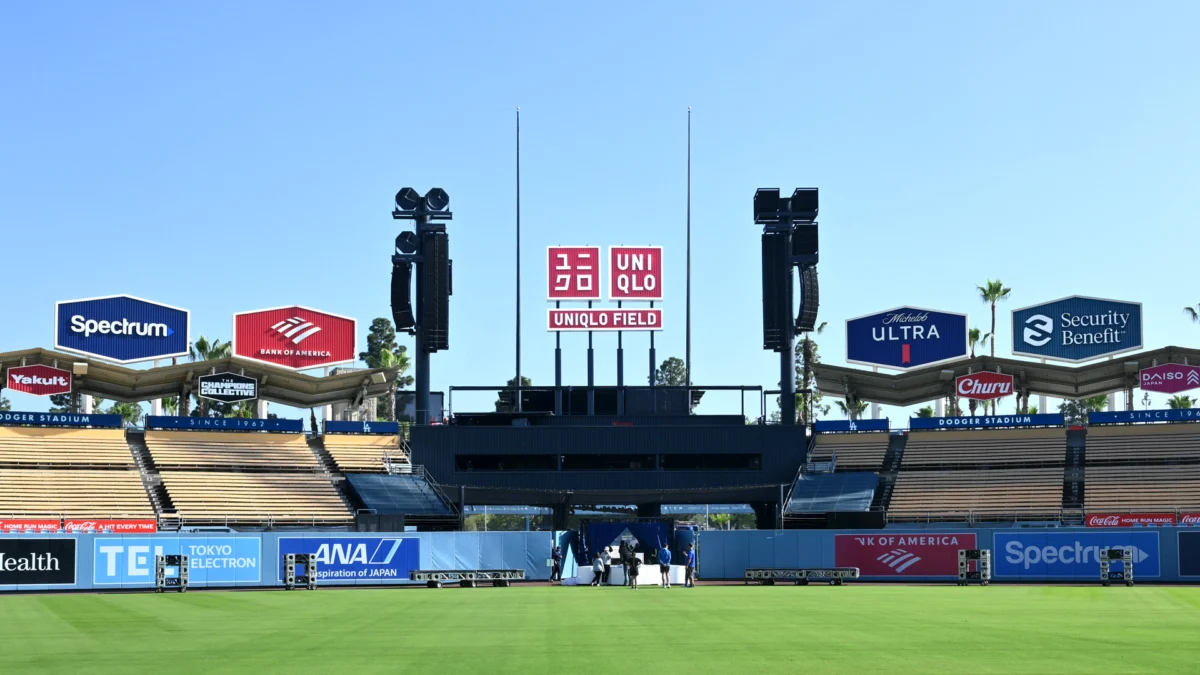
Central to this agreement is a significant rebranding of the playing surface itself. While the historic venue remains Dodger Stadium, the grass and dirt where legends are made will now be designated as “Uniqlo Field at Dodger Stadium.” This naming rights deal ensures that the Uniqlo brand is woven into the very fabric of the game-day experience. Fans and television viewers alike will encounter the brand’s presence through high-visibility signage strategically placed across the ballpark. Most notably, the Uniqlo logo will now adorn the "batter’s eye"—the monochromatic area in center field essential for hitters’ visibility—as well as the facade beneath the press box and prominent placements along the baselines. This visual saturation ensures that the brand remains a constant backdrop to the high-stakes drama of Major League Baseball.
For Uniqlo, a subsidiary of the global retail powerhouse Fast Retailing, this partnership is a calculated masterstroke in its broader strategy to dominate the North American market. For years, the brand has been a dominant force across Asia and has established a robust presence in Europe, but the United States remains the final frontier in its quest for global retail supremacy. By aligning itself with the Los Angeles Dodgers—a franchise that currently sits at the epicenter of the global sports conversation—Uniqlo is leveraging the massive cultural gravity of Southern California to accelerate its growth.
The timing of this partnership is hardly coincidental. The Dodgers have recently become the focal point of a "Japanese Wave" in Major League Baseball, following the historic signings of international superstars Shohei Ohtani and Yoshinobu Yamamoto. This influx of Japanese talent has turned the Dodgers into Japan’s de facto national team, drawing unprecedented viewership from across the Pacific. By securing this deal, Uniqlo is not only reaching the local Los Angeles fanbase but is also reinforcing its brand identity back home in Japan and across the global diaspora of baseball enthusiasts. It is a symbiotic relationship where the Dodgers provide the platform and Uniqlo provides the lifestyle bridge.
Tadashi Yanai, the visionary founder of Uniqlo and the wealthiest individual in Japan, has long viewed the United States as a "key pillar" of his company’s expansion goals. This sentiment was echoed by Koji Yanai, who manages global marketing for Fast Retailing. In a statement regarding the partnership, Koji Yanai emphasized that this is not a "traditional" sports sponsorship. Instead, it is a "milestone partnership" designed to deepen the public’s understanding of Uniqlo’s "LifeWear" philosophy.
LifeWear is the ideological engine behind Uniqlo’s business model. Unlike the "fast fashion" cycles of its competitors, LifeWear focuses on the creation of functional, high-quality, and accessible everyday clothing that transcends seasonal trends. The philosophy prioritizes longevity, comfort, and simplicity—values that Uniqlo believes resonate deeply with the diverse and hardworking population of Los Angeles. By placing the Uniqlo name on a baseball field, the company is attempting to associate the durability and reliability of its garments with the timeless, everyday nature of the sport of baseball.
The Dodgers, led by Chief Executive Officer Stan Kasten, see the partnership as a way to further solidify their status as a global brand. Kasten has frequently spoken about the Dodgers as an "international asset," and partnering with a Japanese company of Uniqlo’s stature fits perfectly into that narrative. The collaboration is framed as a meeting of two industry leaders who share a commitment to excellence and a desire to set new standards in their respective fields. For the Dodgers, it is an opportunity to tap into Uniqlo’s innovative retail expertise; for Uniqlo, it is an entry point into the hearts and minds of the American consumer through the lens of community and sport.
While this is Uniqlo’s first major venture into the American team sports landscape, the brand is no stranger to the world of high-performance athletics and cultural influence. Uniqlo has a long history of curating a select group of "Global Brand Ambassadors" who embody the LifeWear ethos. This roster includes tennis icon Roger Federer, who famously left a lifelong Nike deal to join the Uniqlo family, as well as professional golfer Adam Scott and tennis star Emma Raducanu. Beyond individual athletes, the company has collaborated with the Swedish Olympic and Paralympic Committees, providing technical apparel that balances performance with everyday wearability. However, the Dodgers deal is fundamentally different in scale and scope, moving from individual endorsement to a massive infrastructural and community-based integration.
The partnership is set to extend far beyond mere signage. Plans are already in motion for a series of "retail activations" and fan-centric events throughout the Los Angeles area. Fans attending games at Dodger Stadium can expect "LifeWear giveaways," where the brand’s signature technology—such as its AIRism cooling fabrics or HEATTECH thermal layers—will likely be showcased to the public. These activations are designed to convert brand awareness into tangible consumer experiences, allowing fans to feel the quality of the products in the context of their favorite pastime.
Furthermore, both organizations have signaled a strong commitment to community-based initiatives. While specific details are being kept under wraps until a formal unveiling in May, the partnership is expected to include programs that benefit local Los Angeles neighborhoods, potentially focusing on youth sports, sustainability, or education. This community-centric approach is vital for Uniqlo as it seeks to embed itself into the local culture of California, a state that serves as the gateway for its North American operations.
From a business perspective, the "Uniqlo Field" deal is a testament to the evolving nature of sports marketing. We are moving away from an era of simple "logo placement" toward an era of "lifestyle integration." Uniqlo isn’t just selling a t-shirt or a pair of chinos; it is selling a philosophy of living that it believes is compatible with the spirit of the Dodgers. In a city like Los Angeles, where fashion and sports are inextricably linked, this partnership feels like a natural evolution. The "Blue Heaven" of Dodger Stadium is now sharing its space with the minimalist red and white of Uniqlo, creating a visual and cultural hybrid that reflects the modern, globalized state of professional sports.
As the 2024 season progresses, the impact of this deal will become increasingly visible. When a player slides into second base or a home run clears the center-field wall, the Uniqlo branding will be there, captured in high-definition replays broadcast to millions of homes from Tokyo to New York. For Uniqlo, the goal is simple: to become as synonymous with the American lifestyle as the game of baseball itself. By planting its flag at the corner of Academy Road and Elysian Park Avenue, Uniqlo has made its most definitive statement yet that it is here to stay, not just as a retailer, but as a permanent fixture of the American cultural landscape.
The upcoming May announcements are expected to detail the full breadth of the collaboration, including exclusive merchandise, in-store experiences at Uniqlo’s Southern California locations, and the specific charitable foundations the partnership will support. For now, the message is clear: the Dodgers have found a partner that matches their global ambition, and Uniqlo has found the perfect stage to showcase its vision of the future of clothing. The grass may be green, but the future of Dodger Stadium is looking decidedly more "LifeWear."