
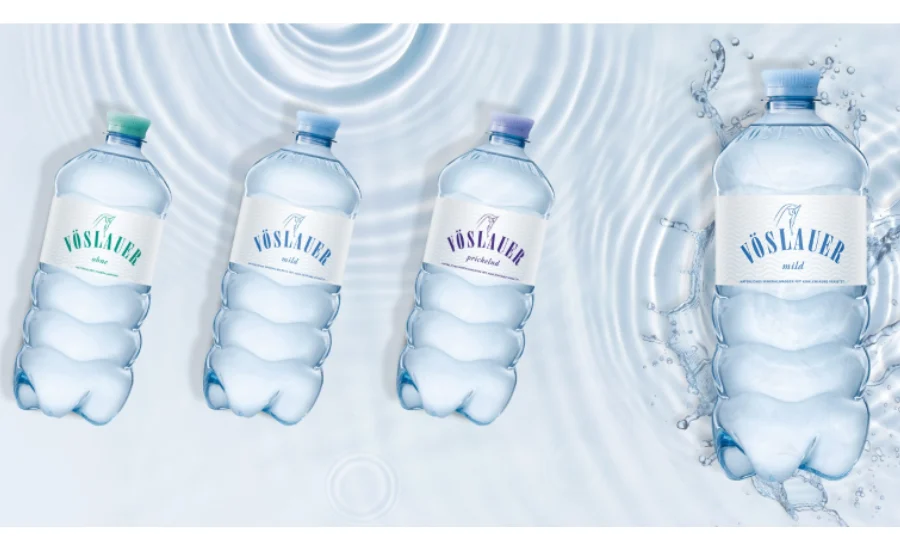
The landscape of the European beverage industry is undergoing a seismic shift, driven by a combination of rigorous environmental legislation and a growing consumer demand for sustainable functionality. At the forefront of this evolution is a strategic collaboration between Amcor, a global titan in the development of responsible packaging solutions, and Vöslauer Mineralwasser, Austria’s premier mineral water brand. This partnership has recently culminated in the rollout of a sophisticated tethered closure system for Vöslauer’s iconic bottle designs, a move that transcends mere regulatory compliance to set a new benchmark for design excellence and circular economy integration.
As the global community grapples with the proliferation of plastic waste, the European Union has taken a decisive stand through the Single-Use Plastics (SUP) Directive. One of the most visible mandates of this directive is the requirement for closures to remain attached to beverage containers of up to three liters. This regulation, which officially took effect in July 2024, aims to ensure that caps are collected and recycled alongside their parent bottles, thereby preventing the small, easily discarded pieces of plastic from entering the environment as litter or marine debris. Amcor’s latest contribution to Vöslauer’s portfolio is a direct response to this mandate, yet it represents far more than a simple technical adjustment. It is a masterclass in how industrial design can harmonize environmental responsibility with an elevated user experience.
The engineering behind the new tethered closure is a testament to Amcor’s commitment to "inclusivity and design excellence." One of the primary criticisms of early tethered cap designs was their tendency to interfere with the consumer’s drinking experience, often snapping back toward the face or making it difficult to pour. Amcor and Vöslauer addressed this through a specialized hinge mechanism. The new closure opens to an exceptionally wide angle and, crucially, "clicks" into a locked position once fully retracted. This audible and tactile feedback ensures the cap remains securely out of the way, facilitating a comfortable and unobstructed drinking experience. Furthermore, for those who do not consume the entire bottle in one sitting, the closure is designed for effortless re-sealing, maintaining the carbonation and freshness of the mineral water with the same reliability as traditional screw caps.
Vöslauer Mineralwasser has long been recognized as a pioneer in the Austrian market, particularly regarding its ecological footprint. The brand was among the first to transition its entire PET bottle range to 100% recycled PET (rePET), a feat that requires high-quality material streams and advanced processing. By adopting Amcor’s tethered closures, Vöslauer ensures that the cap—typically made from High-Density Polyethylene (HDPE) or Polypropylene (PP)—accompanies the PET bottle through the recycling chain. In modern sorting facilities, these materials are easily separated via float-sink tanks, allowing both the bottle and the cap to be recycled into high-quality secondary raw materials. This synergy is vital for achieving the high collection and recycling rates necessary to meet the EU’s ambitious circularity targets.
The history of collaboration between Amcor and Vöslauer provides context for this latest innovation. This is not the first time the two entities have disrupted the market. Vöslauer previously introduced Amcor’s "Secure Flip" sports cap, a solution that also focused on the concept of non-detachable components. The Secure Flip featured a tamper-evident band that remained part of the closure assembly after opening, eliminating the small, detachable plastic ring that is frequently discarded. That design also prioritized ergonomics, featuring a thumb tab for intuitive, one-handed operation and a 180-degree opening angle. The transition to the new tethered closure for the standard mineral water range is a natural progression of this shared philosophy: that packaging should be as sophisticated as the product it protects.
Mag. Yvonne Haider-Lenz, a key representative for Vöslauer Mineralwasser, emphasized that the brand’s commitment to quality is holistic. For a premium mineral water brand, the packaging is the first point of physical contact with the consumer. If a cap is difficult to open or intrusive during use, it reflects poorly on the brand’s perceived quality. By partnering with Amcor, Vöslauer ensures that its sustainability goals do not come at the expense of the premium "Vöslauer experience." This focus on the "human element" of packaging is what Sarah de la Mare, Product Line Director for Closures at Amcor Rigid Packaging Solutions International, refers to when she speaks about the role of closures in influencing brand perceptions. A closure is not just a lid; it is a critical interface that ensures product safety, hygiene, and ease of access.
The broader implications of this development for Amcor are significant. As a global leader, Amcor has pledged that 100% of its packaging will be recyclable or reusable by 2025. The development of tethered solutions is a cornerstone of this strategy. The technical challenge of creating a tethered cap lies in the precision of the manufacturing process. The hinge must be strong enough to withstand multiple opening and closing cycles without tearing, yet flexible enough to allow for a wide opening angle. It must also be lightweight to minimize material usage—a core tenet of sustainable design. Amcor’s ability to scale this technology across various bottle neck finishes and carbonation levels makes them an essential partner for beverage brands navigating the complexities of the modern regulatory environment.
In Austria, where environmental consciousness is high, Vöslauer’s move serves as a blueprint for other regional players. The Austrian beverage market is characterized by a high demand for purity and a strong preference for domestic brands. By being an early adopter of advanced tethered technology, Vöslauer reinforces its position as a market leader that listens to its consumers while respecting the planet. The "click-to-lock" feature, in particular, has been praised for its intuitive nature, solving a common pain point in the "stay-on" cap category.
Furthermore, the implementation of these closures supports the infrastructure of Deposit Return Schemes (DRS). Many European countries, including Austria, are enhancing their collection systems to ensure that beverage containers are returned for recycling. When a bottle is returned with its cap attached, the system operates at peak efficiency. This prevents the loss of valuable plastic polymers and reduces the energy required to source virgin materials. The environmental benefit is compounded when considering the reduction in microplastic pollution; caps are among the most common items found during beach cleanups, and tethering them effectively removes them from the "litter cycle."
As the beverage industry continues to move toward a more circular model, the role of material science and industrial design will only grow in importance. The collaboration between Amcor and Vöslauer illustrates that the most successful solutions are those developed through long-term partnership rather than transactional supply. By aligning their sustainability roadmaps, these two companies have managed to turn a regulatory requirement into a competitive advantage.
Looking ahead, the success of the Vöslauer tethered cap is likely to influence Amcor’s offerings in other markets beyond the EU. As other regions contemplate similar plastic reduction strategies, the "Vöslauer model"—one that combines rePET bottles with high-performance tethered closures—will serve as a global reference point. It proves that with the right engineering and a shared vision, the industry can deliver packaging that is both convenient for the consumer and gentle on the Earth.
Ultimately, the new closure on Vöslauer’s bottles is a small piece of plastic with a very large story to tell. It is a story of innovation, of adapting to a changing world, and of the unwavering pursuit of quality. For the consumer, it is a seamless part of their daily hydration. For the environment, it is a significant step toward a future where packaging never becomes waste. Through the combined expertise of Amcor and the brand heritage of Vöslauer, the simple act of opening a bottle of water has become a statement of environmental stewardship and a masterclass in modern industrial design.