

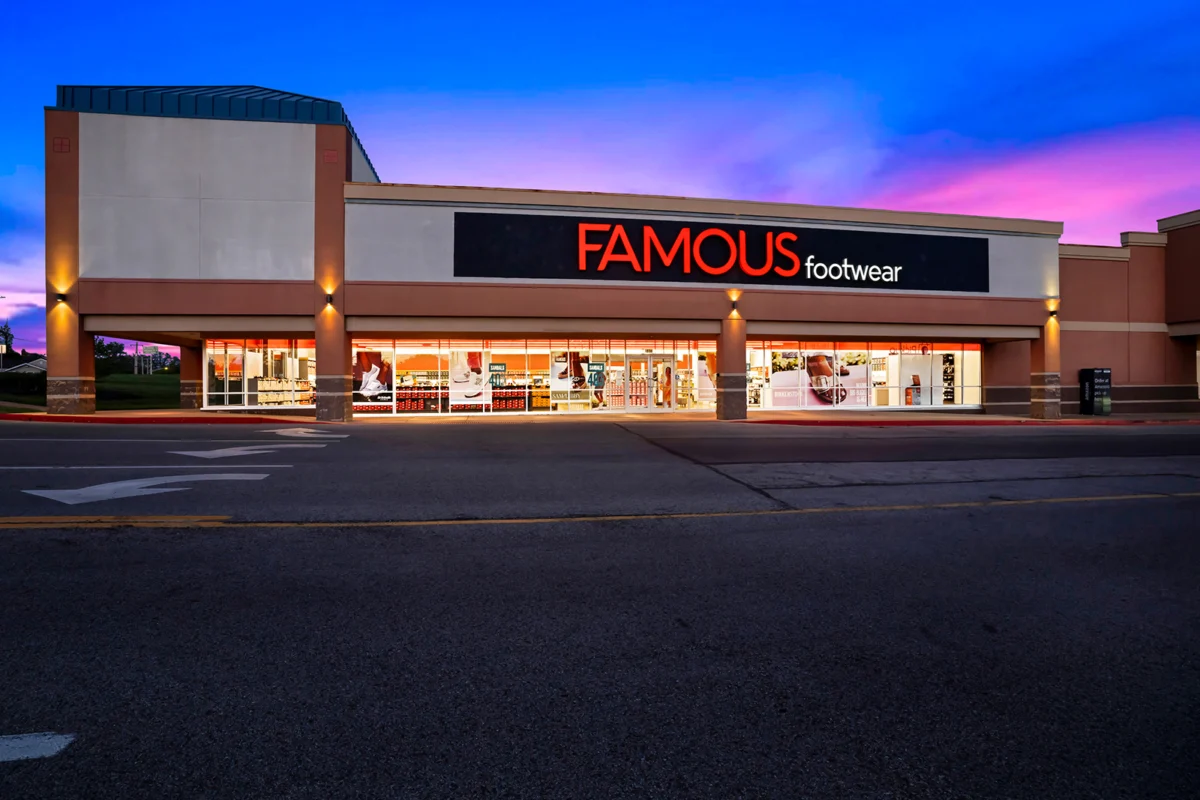
The financial markets reacted with resounding optimism on Thursday as Caleres Inc. (NYSE: CAL), the St. Louis-based footwear powerhouse, delivered a fourth-quarter fiscal 2025 performance that comfortably outpaced Wall Street’s cautious projections. In a display of corporate resilience, shares of the company—which serves as the parent organization for household names like Famous Footwear, Sam Edelman, and the recently acquired Stuart Weitzman—surged by nearly 18 percent in pre-market trading. This bullish momentum reflects a growing investor belief that the company’s strategic pivot, centered on brand diversification and digital acceleration, is beginning to yield tangible results despite a complex macroeconomic backdrop and the inherent growing pains of a major brand integration.
For the final quarter of the fiscal year, Caleres reported consolidated net sales of $695.1 million. This represents a robust 8.7 percent increase compared to the $639.2 million recorded during the same period in the prior year. The top-line growth was significantly bolstered by the inclusion of Stuart Weitzman, a luxury icon the company is currently working to revitalize. When stripping away the contributions of this newest addition to the portfolio, the company’s core legacy sales stood at $638.7 million. While the company reported an adjusted net loss of $11.7 million, or 36 cents per diluted share, this figure was viewed favorably by the market as it landed at the top end of the company’s own guidance and exceeded the consensus among analysts. For comparison, the fourth quarter of fiscal 2024 saw net earnings of $11.1 million, or 33 cents per share. However, the current loss includes the heavy lifting associated with the Stuart Weitzman acquisition; excluding that specific brand, the adjusted net loss for the quarter was a much narrower $1.9 million, or just 6 cents per share.
Wall Street analysts, according to data aggregated by Yahoo Finance, had been bracing for a much bleaker quarter. Predictions for net sales had hovered between $680.4 million and $691.2 million, while the anticipated net loss was pegged anywhere from 35 cents to 43 cents per share. By landing at the more optimistic end of these ranges, Caleres demonstrated a superior ability to manage costs and capture consumer demand in a competitive retail environment.
The internal dynamics of the Caleres portfolio reveal a tale of two distinct segments, each playing a vital role in the company’s overarching strategy. Famous Footwear, the company’s massive retail chain aimed at families and value-conscious consumers, saw a slight 1.2 percent dip in total net sales compared to the previous year. However, the more critical "comparable store sales" metric—which measures performance at locations open for at least a year—showed a 0.1 percent increase. This stability is particularly noteworthy given the broader slowdown in discretionary consumer spending. Management attributed this resilience to the ongoing "Flair" store remodels, a strategic initiative designed to elevate the in-store experience. These modernized locations, which feature more curated and premium assortments, are reportedly outperforming the rest of the fleet and helping Famous Footwear gain market share within the competitive shoe chain sector. Furthermore, the rollout of high-demand labels like the Jordan Brand has helped the chain maintain its relevance among younger, trend-focused demographics.
On the other side of the ledger, the Caleres Brand Portfolio division—which manages the wholesale and direct-to-consumer operations for labels like Sam Edelman, Vionic, and Allen Edmonds—reported a staggering 20.3 percent increase in net sales for the quarter. Even when removing the Stuart Weitzman impact, this division saw a 1.5 percent increase in sales, proving that the company’s "lead brands" are successfully navigating a shifting fashion landscape. Jay Schmidt, the President and Chief Executive Officer of Caleres, pointed to "better than anticipated" gross margins as a primary driver of the quarter’s success. He emphasized that the company’s strategic growth vectors—specifically owned e-commerce platforms and international expansion—are performing with high efficiency.
"Our lead brands once again outperformed, and we gained market share in both women’s fashion footwear and total footwear," Schmidt stated. He also highlighted the successful, low-friction integration of Stuart Weitzman, a process that many analysts feared might distract from the company’s core operations. Instead, the integration was completed with minimal disruption, allowing the company to focus on returning the luxury brand to its former profitability.
When zooming out to look at the full fiscal year 2025, the scope of Caleres’ operations becomes even more apparent. The company generated total net sales of $2.8 billion, a 1.3 percent increase over the $2.7 billion recorded in fiscal 2024. Total adjusted net earnings for the year reached $20.5 million, or 61 cents per share. This is a significant drop from the $114.6 million ($3.30 per share) earned in the prior year, a discrepancy largely explained by the massive investments required to fold Stuart Weitzman into the corporate structure and the various macroeconomic pressures affecting the footwear industry at large. Without the Stuart Weitzman drag, the company’s adjusted net earnings for the full year would have been a more robust $40.2 million, or $1.19 per share.
Looking toward the future, Caleres is positioning 2026 as a "build-back year." The company’s guidance for the upcoming fiscal year suggests a cautious but optimistic trajectory, with total sales expected to grow in the low to mid-single digits. More importantly, the company is forecasting a "meaningful earnings recovery," with adjusted earnings per diluted share projected to land between $1.35 and $1.65. For the first quarter of 2026 specifically, Caleres anticipates a sales increase in the mid-to-high single digits and adjusted earnings per share between 25 and 30 cents.
A critical component of this recovery plan involves navigating the treacherous waters of global trade. Schmidt noted that profit improvements in the coming year will be driven largely by "tariff mitigation efforts." As a company that relies heavily on global supply chains, Caleres has been proactive in diversifying its manufacturing base away from regions most affected by shifting trade policies and potential duties. By optimizing its sourcing and logistics, the company aims to protect its margins from the inflationary pressures that have plagued the retail sector over the last 24 months.
Furthermore, the "Stuart Weitzman Turnaround Plan" remains a focal point for the executive team. The brand, known for its high-fashion boots and red-carpet heels, offers a higher price point and prestige that could significantly boost Caleres’ overall margin profile once the integration costs are fully amortized and the brand’s marketing efforts begin to resonate more deeply with the modern luxury consumer. The company is betting that its operational expertise in the mid-market can be successfully applied to the luxury tier, providing Stuart Weitzman with the supply chain efficiency it lacked under its previous ownership.
Despite the positive outlook, the leadership at Caleres remains clear-eyed about the hurdles ahead. The geopolitical landscape remains volatile, and consumer confidence is often at the mercy of interest rate fluctuations and inflationary trends. "While we have many reasons for optimism, we are also aware that the current geopolitical backdrop presents a level of risk and uncertainty," Schmidt cautioned. However, he reaffirmed the company’s commitment to its strategic roadmap, expressing confidence that the execution of these plans will drive long-term value for shareholders.
Historically, Caleres has a track record of successful evolution. Founded in 1878 as the Brown Shoe Company, it has survived through the Great Depression, two World Wars, and the radical shift from domestic manufacturing to a globalized retail model. Its ability to pivot from a traditional footwear manufacturer to a sophisticated brand portfolio manager is what has allowed it to remain a dominant player in the industry for nearly a century and a half. Today, the company competes not just with traditional shoe stores, but with direct-to-consumer giants and athletic-leisure brands that have redefined how people shop for footwear.
The 18 percent jump in stock price is more than just a reaction to a single quarter’s numbers; it is a signal that the market believes in Caleres’ ability to manage its diverse stable of brands through a period of transformation. By maintaining the health of the "cash cow" that is Famous Footwear while simultaneously investing in the growth potential of the Brand Portfolio and the luxury prestige of Stuart Weitzman, Caleres is attempting a delicate balancing act. If the 2026 guidance holds true, the company may well be on its way to cementing its position as one of the most versatile and resilient players in the global footwear market. For now, investors seem more than happy to walk alongside them.