
The grand ballroom of the Círculo de Bellas Artes in Madrid has long been a sanctuary for the city’s intellectual and artistic elite, its neoclassical architecture and soaring ceilings serving as a testament to the enduring power of European culture. On a crisp Tuesday evening, however, the venue’s storied halls were infused with a different kind of energy—a vibrant, rhythmic, and soulful spirit that could only have come from the heart of Colombia. Johanna Ortiz, the undisputed doyenne of Latin American luxury, chose this historic Spanish landmark to unveil her Fall 2026 collection, marking a significant milestone in her career. For the first time, the designer moved beyond the intimate presentations of Paris to stage a full-scale runway show in the Spanish capital, serving as the prestigious opening guest international designer for Mercedes-Benz Fashion Week Madrid.
The collection, titled with a poetic resonance that echoed through the velvet-draped hall, was inspired by the Garden of Eden. Yet, in Ortiz’s vision, this was no literal interpretation of a biblical landscape. “It’s inspired by the Garden of Eden, but in the conception that it’s not a place, but a state of mind,” she explained, her voice carrying the warmth of her native Cali. This philosophical approach to luxury—treating fashion as an internal landscape rather than a mere external covering—set the tone for a collection that felt both deeply personal and universally resonant. It was a meditation on paradise found within the self, expressed through the tactile language of silk, shearling, and meticulously placed embroidery.
For years, Johanna Ortiz has been the go-to name for women seeking the ultimate in tropical glamour. Her signature ruffles and exuberant floral prints have become synonymous with high-society destination weddings and sun-drenched galas. However, for Fall 2026, Ortiz demonstrated a profound evolution in her design vocabulary. While the spectacular evening gowns that built her empire were present, they were joined by a sophisticated expansion into separates and outerwear. This shift signaled a brand maturing into a full-lifestyle powerhouse, capable of dressing the global woman not just for her most photographed moments, but for the nuanced realities of her daily life.
The influence of Madrid, a city that sits at the crossroads of history and modernity, was woven into the very fabric of the garments. Ortiz paid homage to her Spanish hosts through subtle yet striking nods to traditional Iberian dress. Torero-inspired jackets, cropped to perfection and adorned with intricate braiding, offered a structured counterpoint to the fluid silhouettes for which she is famous. These pieces felt like a conversation between two worlds—the structured discipline of Spanish tailoring meeting the effortless movement of the Colombian soul. It was a sophisticated take on the "Traje de Luces," stripped of its costume-like qualities and reimagined for a woman who commands the boardroom as much as the ballroom.
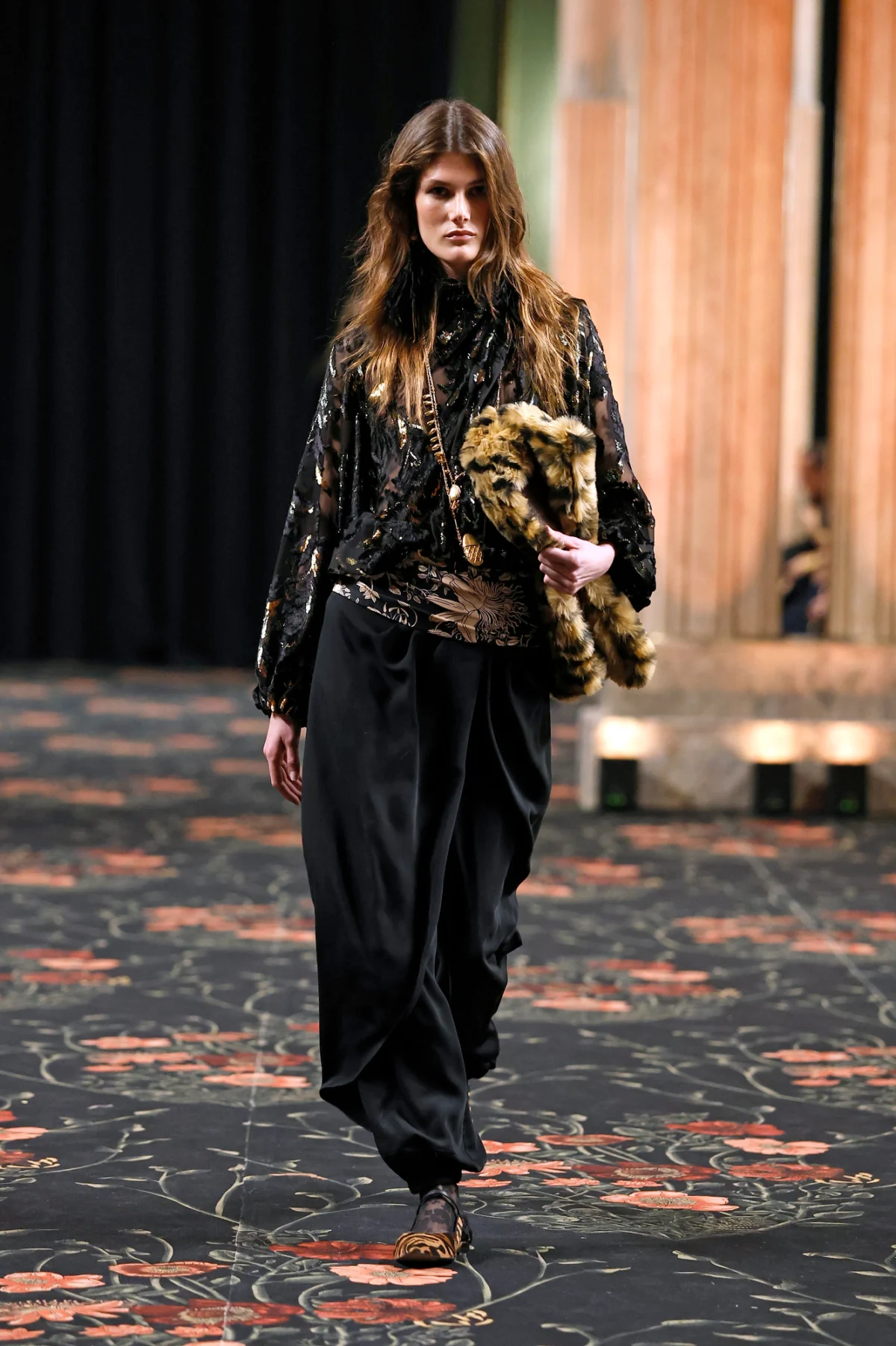
Central to the collection’s impact was the unparalleled craftsmanship emanating from Ortiz’s atelier in Colombia. The designer has long been a champion of local artisans, and this collection served as a breathtaking showcase for their skills. “We work a lot in our atelier in Colombia to give movement to embroidery and show the volume and texture of the fabrics,” Ortiz noted. This focus on movement was evident in every passage of the show. Embroidery wasn’t static; it seemed to breathe and sway with the models. Whether it was the delicate shimmer of striped sequins on a pussybow blouse or the heavy, artisanal threadwork on a cascading cape, the hand of the maker was visible in every stitch.
The Fall 2026 aesthetic embraced a "bohemian spirit" that was elevated to the heights of high fashion. There was an intentional "undone ease" to the glamour—a sense that these clothes were meant to be lived in, not just displayed. Feather-adorned caftans floated down the runway like exotic birds, while embellished shearling vests provided a rugged, textural contrast to silk dresses. The outerwear was particularly impressive, featuring great cascading capes that functioned as both a protective layer and a dramatic fashion statement. These pieces were designed for a woman who travels the world, shifting seamlessly from the high altitudes of the Andes to the cobblestone streets of Madrid.
One of the most talked-about elements of the show was Ortiz’s innovative take on the tuxedo. Proposing what she calls the “JO” version of equestrian-tinged tuxedo pants, she introduced gaucho-inspired trousers tucked into structured boots. This look, rooted in the heritage of the South American pampas, offered a fresh, feminist alternative to traditional evening wear. It was a bold statement on versatility—a theme that Ortiz returned to repeatedly during her post-show reflections. “I’m always obsessed with making things for several uses—it’s not a one-event dress, but for multiple occasions. It’s more in the styling that gives it the attitude for the occasion,” she said. This pragmatic approach to luxury resonates deeply in a modern fashion landscape where longevity and versatility are increasingly valued over disposability.
The collection’s blouses were a masterclass in the art of the "fashion statement." From signature ruffles that seemed to bloom like orchids to intricate floral prints that felt like heirlooms, these separates were designed to be the anchor of a wardrobe. Ortiz pointed out that an embroidered top from this collection could just as easily be paired with jeans for a casual dinner as it could with a floor-length skirt for a gala. This democratic view of high fashion—where the most exquisite pieces are allowed to be functional—is perhaps why Ortiz has cultivated such a loyal global following.
Layering also emerged as a key narrative thread. Ortiz, ever the astute businesswoman, has spent years studying her global clientele. She understands that the woman who buys a Johanna Ortiz dress in New York or London needs more than just a beautiful silhouette; she needs a wardrobe that responds to the climate. The Fall 2026 collection provided ample solutions for cold-weather dressing without sacrificing the brand’s inherent warmth. The interplay of textures—the softness of silk against the grit of shearling, the lightness of feathers against the weight of wool—created a sensory experience that felt rich and protective.
As the final looks crossed the floor of the Círculo de Bellas Artes, it became clear that Ortiz was describing more than just a collection; she was describing a specific archetype of womanhood. “Fall is a collection that will show this magnificent woman who appreciates and enjoys fashion, but is not following any trends,” Ortiz explained. This "magnificent woman" is a connoisseur of craft, someone who understands the value of a hand-finished hem and the history behind a specific embroidery pattern. She is a woman who chooses her clothes based on how they make her feel, rather than what a social media algorithm dictates.
The Madrid debut of Johanna Ortiz Fall 2026 was more than just a runway show; it was a cultural exchange. By bringing her Colombian heritage to the heart of Spain, Ortiz closed a circle of history, showing how the shared language of craftsmanship can bridge continents. The collection was a triumph of texture, a celebration of the "state of mind" that is paradise, and a definitive statement on the future of the brand. As the lights dimmed in the ballroom, the audience was left with the image of a designer who has successfully navigated the transition from a niche regional favorite to a global powerhouse, all while keeping her feet firmly planted in the rich soil of her Colombian atelier. In the "Garden of Ortiz," fashion is not just something you wear; it is a sanctuary you carry with you.