

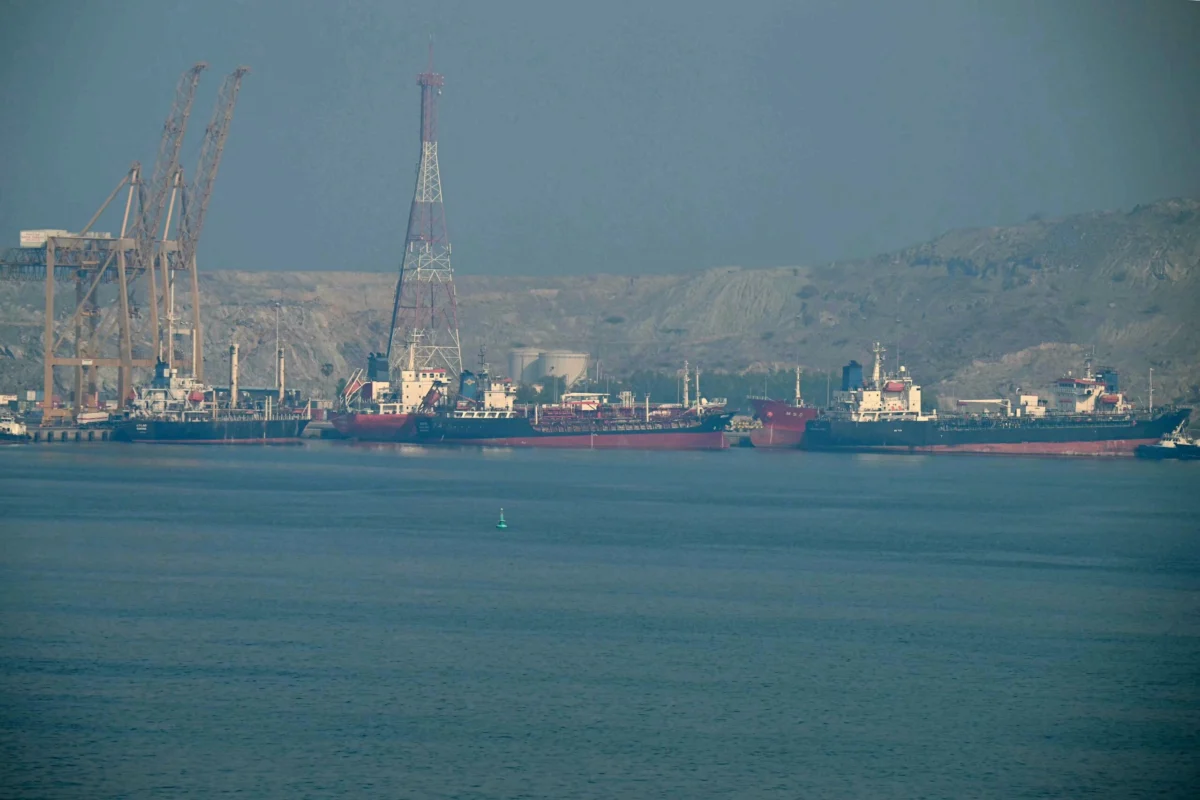
The fragile hopes for a diplomatic resolution to the escalating conflict between the United States and the Islamic Republic of Iran disintegrated over a tumultuous weekend in Pakistan, leaving the global economy teetering on the edge of a localized but high-intensity naval war. Following more than twenty hours of grueling, high-stakes negotiations held in Islamabad, the American and Iranian delegations emerged not with a peace treaty, but with a renewed sense of hostility that has effectively neutralized a tentative two-week ceasefire. The collapse of these talks has prompted President Donald Trump to take the unprecedented step of ordering the United States Navy to initiate a full-scale blockade of the Strait of Hormuz, the world’s most critical maritime choke point for energy transit.
The negotiations in Islamabad were led on the American side by Vice President JD Vance, who was tasked with finalizing a "go-forward" plan to permanently end the hostilities that have seen U.S. and Israeli forces trade blows with Iranian assets for months. Facing him across the table was Mohammad Bagher Ghalibaf, Iran’s chief negotiator and a formidable figure within the Tehran establishment. Despite the presence of massive delegations and technical experts from both nations, the fundamental divide proved insurmountable. According to Vance, the primary point of contention remained Iran’s refusal to dismantle its nuclear infrastructure. The Vice President emphasized that the abandonment of the nuclear program was the non-negotiable objective of the American military campaign, a demand that Ghalibaf and his team reportedly viewed as an infringement on national sovereignty.
The fallout from the failed summit was immediate and visceral. Taking to Truth Social on Sunday, President Donald Trump expressed his frustration with the stalemate, characterizing the Iranian position as a betrayal of the progress made during the brief ceasefire. "So, there you have it," the President wrote in his signature style. "The meeting went well, most points were agreed to, but the only point that really mattered, NUCLEAR, was not." With those words, Trump signaled a shift from targeted military strikes to a strategy of total economic strangulation. He announced that the U.S. Navy, which he described as the "Finest in the World," would begin the process of blockading all maritime traffic entering or exiting the Strait of Hormuz.
This move marks a dramatic escalation in the "Tanker War" dynamics that have sporadically plagued the region for decades. The Strait of Hormuz, a narrow waterway separating the Persian Gulf from the Gulf of Oman, is the artery through which approximately 20 percent of the world’s daily oil and liquefied natural gas (LNG) consumption flows. By ordering a blockade, Trump is attempting to strip Iran of its primary geopolitical lever: the ability to threaten global energy supplies. However, the move also places the U.S. in a direct and perilous confrontation with Iranian maritime forces, who have spent years preparing for exactly this scenario.
The President’s directive went beyond a simple blockade. He specifically targeted a controversial "toll" system that Iran had reportedly attempted to implement during the recent period of heightened tension. Trump labeled these payments "illegal" and a form of "WORLD EXTORTION," declaring that any vessel found to have paid Iran for safe passage through international waters would be subject to interdiction by the U.S. Navy. "No one who pays an illegal toll will have safe passage on the high seas," Trump warned, effectively forcing global shipping companies to choose between Iranian threats and American military intervention.
Compounding the danger is the presence of naval mines. During the Islamabad talks, Iranian officials reportedly hinted that the waters of the Strait might already be infested with sophisticated sea mines, a tactic designed to deter foreign intervention and imperil any ship attempting to transit without Tehran’s blessing. Trump addressed this threat head-on, stating that he has instructed the Navy to begin the arduous and dangerous task of seeking out and destroying these mines. This operation alone could take weeks or months, during which time the Strait would remain effectively closed to commercial traffic.
The economic consequences of this standoff are already being felt in the pockets of American consumers. The disruption of Persian Gulf logistics has sent shockwaves through the global energy market, pushing domestic gas prices to a national average of $4 per gallon. In high-cost states like California, the price at the pump has already surged past $6, sparking fears of a wider inflationary spiral. The logistics giant DHL recently issued a sobering assessment, suggesting that even if a resolution were reached today, it would take four to six months for global shipping patterns to return to any semblance of normalcy. The backlog of cargo, the redirection of tankers around the Cape of Good Hope, and the skyrocketing insurance premiums for maritime transit have created a logistical nightmare that threatens the post-war economic recovery.
In Tehran, the response to Trump’s blockade order was one of defiant escalation. The Islamic Revolutionary Guard Corps (IRGC), the elite branch of Iran’s military tasked with protecting the regime and patrolling the Strait, issued an ominous warning via social media. The IRGC asserted that all traffic through the waterway remains under their "full control" and released a propaganda video showing commercial and military vessels viewed through the crosshairs of missile systems. "The enemy will become trapped in a deadly vortex in the Strait if it makes the wrong move," the post read, suggesting that any attempt by the U.S. Navy to enforce a blockade would be met with asymmetric warfare, including swarm boat attacks and shore-based anti-ship missiles.
While the IRGC’s public relations wing later attempted to soften the rhetoric by stating that civilian vessels would be permitted to pass if they complied with "specific regulations," the caveat was clear: any military presence would be viewed as a violation of the ceasefire and met with "severe" consequences. This creates a "catch-22" for the international community. If the U.S. Navy enters the Strait to clear mines and protect tankers, it risks a full-scale naval engagement; if it stays out, Iran maintains its stranglehold on the global energy supply.
President Trump has also broadened the scope of the conflict to include Iran’s international patrons. In a move designed to isolate Tehran further, he renewed his threats to impose massive 50 percent tariffs on any nation found to be providing military aid or weaponry to the Iranian government. During an interview on Fox News, Trump specifically singled out China, Iran’s largest trading partner and a key source of diplomatic support. "If we catch them doing that, they get a 50 percent tariff, which is a staggering—that’s a staggering amount," Trump said. This threat adds a layer of extreme volatility to the upcoming summit in Beijing, where Trump is scheduled to meet with President Xi Jinping. That meeting, originally slated for early April, had already been delayed due to the outbreak of hostilities, and the new tariff threat suggests that the U.S.-China relationship is being held hostage by the situation in the Middle East.
The strategic gamble being taken by the White House is immense. By blockading the Strait, the U.S. is essentially betting that Iran will buckle under the weight of total economic isolation before the global economy buckles under the weight of $150-a-barrel oil. Military analysts warn that a blockade is technically an act of war under international law, and the enforcement of such a measure in the narrow, congested waters of the Strait of Hormuz is fraught with the potential for miscalculation. The U.S. Fifth Fleet, based in Bahrain, now finds itself on the front lines of a confrontation that could define the geopolitical landscape for the next decade.
As the U.S. Navy begins its deployment to the region, the world watches with bated breath. The failure of the Islamabad talks has closed the door on diplomacy, at least for the foreseeable future, leaving the "deadly vortex" of the Strait of Hormuz as the primary stage for a struggle that encompasses nuclear proliferation, global trade, and the very definition of freedom of navigation on the high seas. With gas prices rising and the drums of war beating louder, the "ceasefire" of last week now feels like a distant memory, replaced by the cold reality of a naval siege.